Coal, Wood, and Flame: A Chef's Guide to Building the Perfect Flavor Profile
The Fuel Is the Foundation
Every conversation about charcoal-grilled cuisine eventually returns to the same foundational question: what are you burning? The assumption that all charcoal functions identically is, among serious cooks, something of a rookie mistake. The variety of fuel selected — its density, moisture content, carbon purity, and wood origin — exerts a profound influence on heat consistency, burn duration, and, most critically, the aromatic compounds it deposits on food during cooking.
Understanding those differences is not merely academic. For chefs and dedicated home cooks alike, choosing the right fuel for a given protein or preparation is a decision as consequential as seasoning or resting time. What follows is a structured examination of the most widely used charcoal varieties and wood pairings, informed by the perspectives of professional cooks who work with live fire daily.
Hardwood Lump Charcoal: The American Workhorse
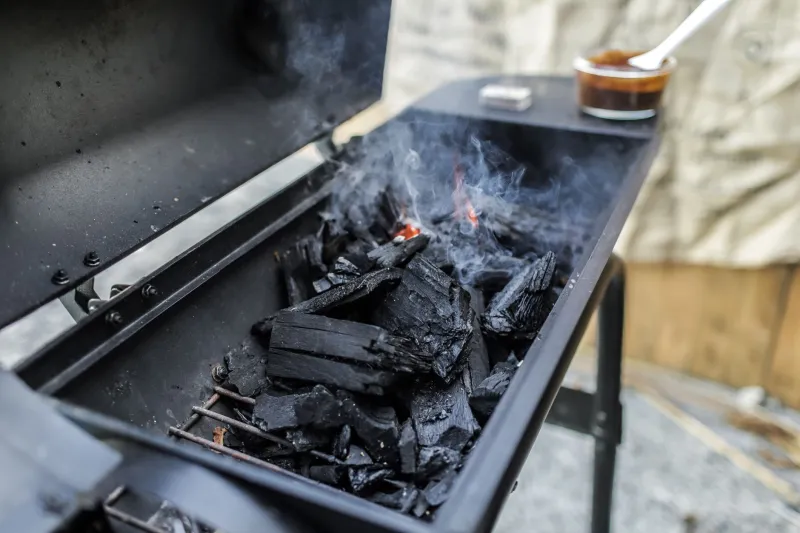
Hardwood lump charcoal — produced by charring whole pieces of hardwood in a low-oxygen environment — is the most commonly used fuel in American professional and home grilling. Its appeal is considerable: it lights relatively quickly, burns hot, and produces minimal ash. More importantly, because it is derived from real wood rather than compressed sawdust and binders, it imparts a genuine wood-smoke character to food.
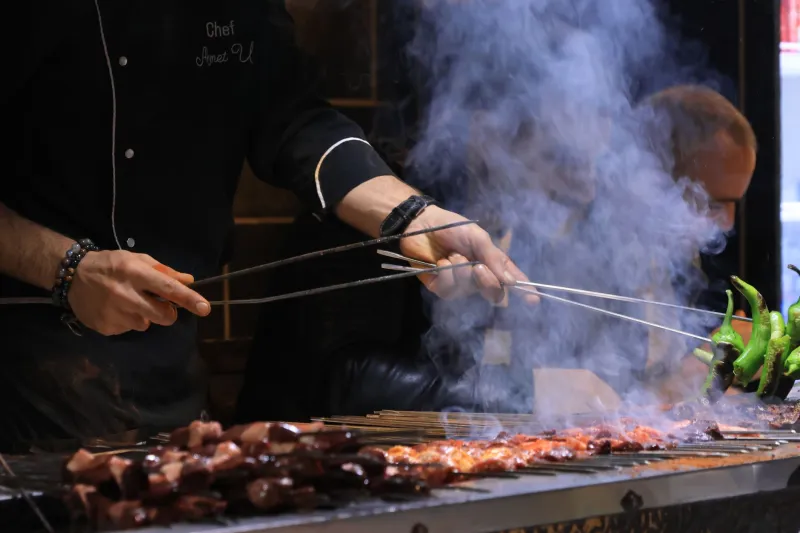
The flavor profile of hardwood lump varies meaningfully depending on its source material. Oak-based lump charcoal, particularly white oak, is prized for its balanced, medium-intensity smoke that complements beef and lamb without overwhelming more delicate proteins. Mesquite lump burns exceptionally hot and delivers a bold, slightly resinous smoke note that works beautifully with robust cuts like brisket or skirt steak but can overwhelm fish or poultry if used without restraint.
Chef Daniel Rourke of Ember & Stone in Austin, Texas, uses exclusively post oak lump for his beef preparations, citing its regional authenticity and what he describes as a "clean, honest smoke" that enhances rather than masks the flavor of well-marbled Texas beef. "Post oak is part of this landscape," he explains. "It connects the food to the place in a way that imported fuels simply cannot."
Binchotan: The Precision Instrument
For chefs seeking maximum control and a nearly neutral flavor contribution, Japanese binchotan charcoal occupies a category of its own. Produced from ubame oak using a centuries-old kiln process, binchotan is among the densest, purest forms of charcoal available. It burns at a remarkably consistent temperature for extended periods, produces almost no visible smoke, and releases very little in the way of aromatic compounds.
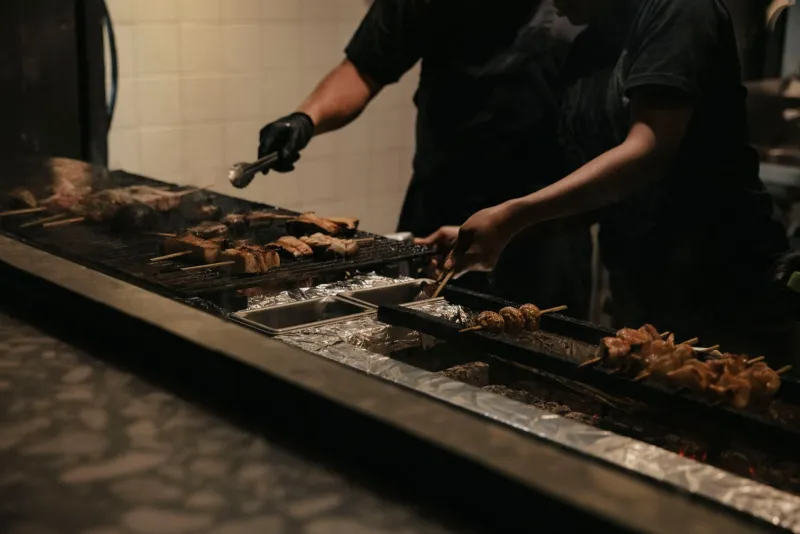
This near-smokeless quality makes binchotan the preferred fuel for yakitori preparations and other applications where the cook wants the ingredient itself — its fat, its seasoning, its inherent sweetness — to dominate the flavor narrative. At restaurants like Kunyan in San Francisco, where the yakitori program is built around binchotan-fired bincho grills, the absence of smoke is not a limitation but a deliberate choice. The charcoal provides heat; the chicken provides flavor.
The trade-off is cost and accessibility. Premium binchotan can retail for significantly more per pound than domestic hardwood lump, and it requires a longer ignition period. For chefs who value its precision, however, the investment is considered entirely worthwhile.
Briquettes: Reconsidering a Maligned Option
Few topics generate more debate among grilling purists than the use of charcoal briquettes. Long dismissed as an inferior, additive-laden alternative to lump, briquettes have undergone something of a critical reassessment in recent years — particularly among chefs who prioritize temperature consistency over flavor purity.
The best modern briquettes, including natural hardwood varieties free of petroleum-based binders, burn with admirable evenness and predictability. For long, slow preparations — whole roasted vegetables, indirect-heat poultry, or extended bone-in cuts — this consistency can be a genuine advantage. The flavor contribution is mild and relatively neutral, which some chefs find preferable for dishes where wood smoke would compete with delicate sauce work or intricate spice profiles.
Pitmaster and consultant Jacqueline Morrow, who has worked with restaurant groups across the Southeast, uses a blend of natural hardwood briquettes and lump for her indirect smoke preparations. "Lump gives me the initial heat spike and the aromatic complexity," she explains. "The briquettes sustain the bed and keep my temperatures even over a four-hour cook. Together, they do something neither can do alone."
Wood Pairings: The Aromatics of Fire
Beyond the base fuel, the addition of wood chunks or chips introduces an entirely separate dimension of flavor. The choice of wood species is perhaps the most expressive variable available to a charcoal cook, and the combinations are nearly limitless.
Hickory remains the most iconic American smoking wood, delivering the bold, bacon-adjacent smoke character associated with Southern barbecue tradition. It pairs assertively with pork ribs, pulled shoulder, and beef brisket, but requires a measured hand with lighter proteins. Apple and cherry wood, by contrast, produce a sweeter, fruitier smoke that is exceptionally well-suited to poultry, duck, and pork tenderloin. Their mild profiles allow the natural sugars in the meat to caramelize expressively without interference.
For seafood, many chefs favor alder — a Pacific Northwest staple with a delicate, slightly sweet smoke that has long been associated with salmon preparations. Cedar planking, while technically a different application, operates on similar aromatic principles. At the more adventurous end of the spectrum, some chefs are experimenting with grapevine cuttings, pecan shells, and even dried herb bundles to introduce highly specific aromatic signatures to their grilled preparations.
Heat Management: The Variable That Binds Everything Together
Even the most thoughtfully selected fuel combination will underperform if heat management is neglected. The arrangement of the coal bed — whether a two-zone setup with direct and indirect areas, a single concentrated mass for high-heat searing, or a banked configuration for slow roasting — determines how a given fuel's properties are expressed in the finished dish.
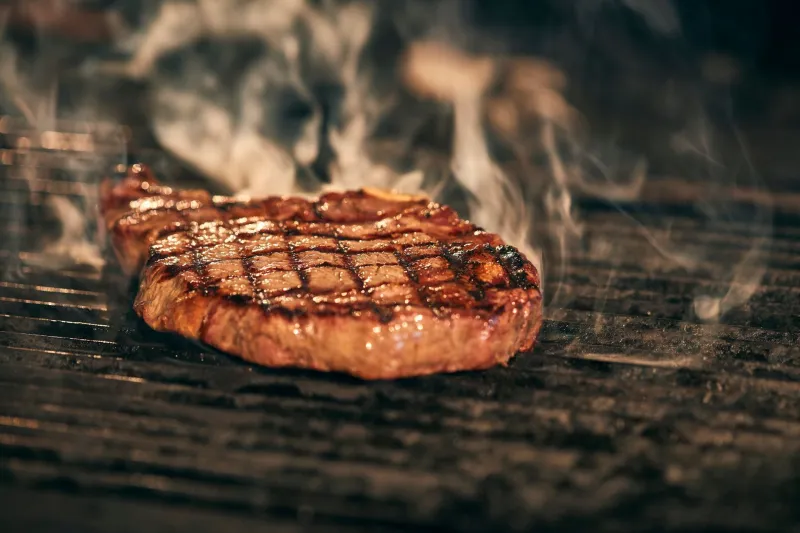
Direct, high-heat charcoal cooking over a dense bed of hardwood lump produces the Maillard reaction-driven crust that defines great grilled steaks and chops. The rapid caramelization of surface proteins and fats at temperatures exceeding 700°F generates hundreds of flavor compounds simultaneously, creating a complexity that no other cooking method replicates. Lower, indirect heat allows wood smoke to penetrate more deeply into larger cuts, building layered flavor over time.
Chef Rourke summarizes the relationship between fuel and heat management with characteristic directness: "You can have the finest post oak in Texas, but if you don't know how to build your fire, you're wasting it. The charcoal is a tool. Knowing how to use it — that's the craft."
Finding Your Fuel Philosophy
The most instructive takeaway from conversations with professional charcoal cooks is that there is no universal answer to the fuel question. The right charcoal, the right wood pairing, and the right heat configuration depend entirely on the ingredient being cooked, the flavor outcome being sought, and the culinary tradition informing the preparation. What unites every serious practitioner, however, is a shared conviction that these choices matter — that the distance between an ordinary grilled dish and a transcendent one is often measured not in technique alone, but in the quality and character of what burns beneath it.