Embers in the Dining Room: How Charcoal Cookery Claimed Its Seat at the Fine Dining Table
The Unlikely Ascent of an Ancient Technique
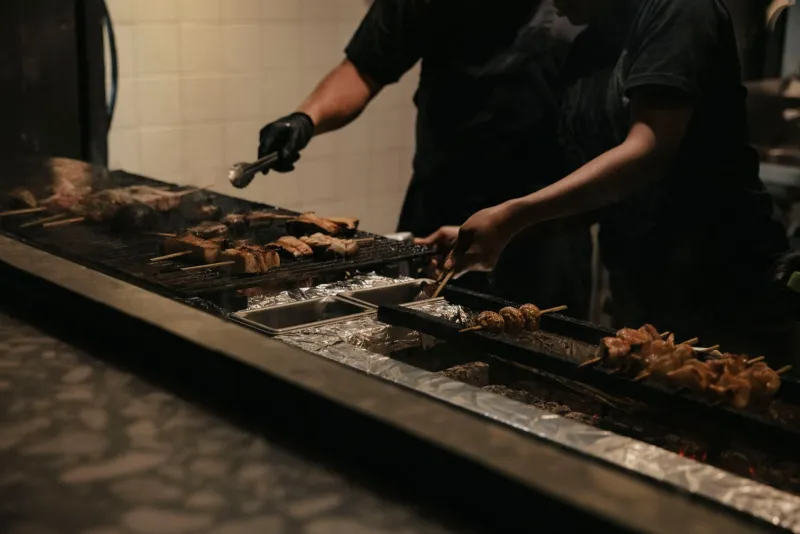
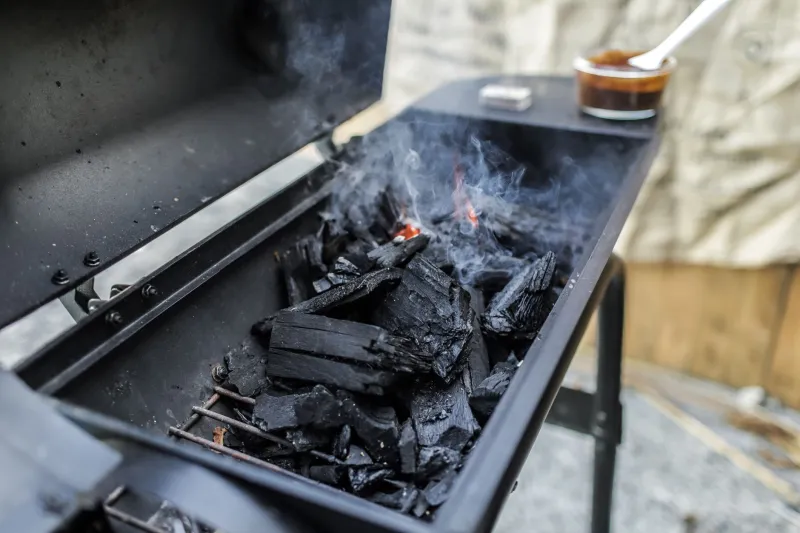
There is nothing inherently elegant about charcoal. It is, at its most elemental, partially combusted wood — blackened, dusty, and unruly. Yet walk into any number of America's most decorated restaurants today, and you will find chefs crouching before glowing Josper ovens, hand-selecting binchotan coals with the same deliberateness a sommelier applies to a wine cellar. The transformation of charcoal grilling from backyard pastime to haute cuisine cornerstone is one of the more compelling culinary stories of the past decade.
The shift did not happen overnight, nor did it emerge from a single kitchen. Rather, it gathered momentum gradually, driven by a confluence of forces: a broader cultural appetite for authenticity, a chef community increasingly skeptical of modernist technique for its own sake, and a dining public willing — even eager — to pay for the ineffable quality that only fire can produce.
When Michelin Came to the Fire Pit
The legitimization of charcoal-forward cuisine in fine dining circles gained significant traction when a handful of ambitious restaurateurs began building their entire concepts around the grill. In cities like New York, Chicago, and Los Angeles, restaurants anchored by open hearths and custom-built charcoal rigs began attracting the kind of critical attention previously reserved for white-tablecloth institutions with French-trained brigade kitchens.
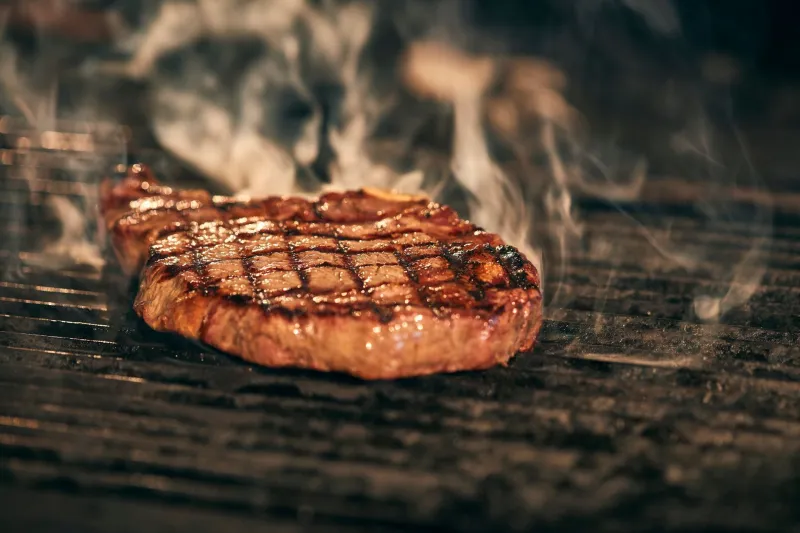
Chef Marcus Aldaine, who opened his acclaimed hearth-driven restaurant Carbone Noir in Chicago's West Loop neighborhood, describes the moment he committed fully to charcoal as something close to a philosophical awakening. "I had spent years chasing precision — sous vide baths, immersion circulators, perfect temperature curves," he explains. "And the food was technically correct, but it lacked a soul. The moment I put a dry-aged ribeye directly over hardwood charcoal, I understood what I had been missing. The flavor was alive in a way that nothing else could replicate."
Aldaine's restaurant earned its first Michelin star within eighteen months of opening — a recognition that seemed to validate not just his cooking, but the broader premise that charcoal could occupy the same rarified space as any classical technique.
What Separates a Cookout from a Culinary Experience
The obvious question, of course, is this: if charcoal grilling is something millions of Americans do on a Saturday afternoon, what precisely makes the restaurant version worthy of a $175 tasting menu?
The answer lies not in the tool, but in the mastery of it. Professional chefs working with charcoal at the fine dining level are managing variables that most home cooks never consider. Fuel selection, coal bed geometry, airflow calibration, resting protocols, and the precise moment at which a protein is introduced to the grate — each of these decisions carries consequence. A chef like Aldaine may spend years learning how different wood-based charcoals behave under varying humidity conditions, or how the fat content of a particular cut affects char formation at different radiant heat intensities.
Beyond technique, presentation and context elevate the experience considerably. At restaurants like Brasa in Minneapolis and Ox in Portland, Oregon, charcoal-kissed dishes arrive as part of a carefully composed tasting progression, accompanied by house-made condiments, estate wines selected to complement smoke-driven flavor profiles, and service teams trained to articulate the provenance of every ingredient on the plate. The grill is not merely a cooking implement — it is the philosophical center of an entire hospitality concept.
The Ingredient Imperative
Chefs who have built fine dining reputations around charcoal are nearly unanimous on one point: the technique demands exceptional raw ingredients. Unlike braises or slow-cooked preparations that can coax tenderness from modest cuts, the grill is an unforgiving medium. It amplifies everything — the quality of a heritage-breed pork chop, the freshness of a dry-scallop, the minerality of a pasture-raised beef tenderloin. There is nowhere to hide.
This insistence on sourcing has led many charcoal-focused fine dining chefs to develop unusually close relationships with farmers, ranchers, and fishmongers. Chef Selena Varga of Ascua in Miami works directly with a small network of Florida cattle ranchers to secure specific cuts that she believes perform best over her custom-built Argentine parrilla. "The charcoal is only as interesting as what you put over it," she says. "I spend as much time thinking about the animal as I do about the fire."
Varga's commitment to this philosophy has made Ascua one of the most reservation-sought restaurants in South Florida, a testament to the drawing power of charcoal cookery when it is executed with genuine rigor.
Why Diners Are Willing to Pay for Fire
Perhaps the most telling indicator of charcoal's arrival in fine dining is the willingness of American diners to spend generously for the experience. In an era of heightened scrutiny around restaurant pricing, charcoal-driven tasting menus have faced remarkably little resistance — and the reason may be psychological as much as gastronomic.
There is something deeply primal about fire. Anthropologists have long argued that cooking over open flame is one of humanity's most ancient and culturally significant behaviors. When a diner encounters a dish that carries the unmistakable perfume of charcoal smoke — a scallop with a caramelized crust, a strip steak edged in a crackling char — something instinctive responds. The experience feels honest in a way that is difficult to articulate but impossible to ignore.
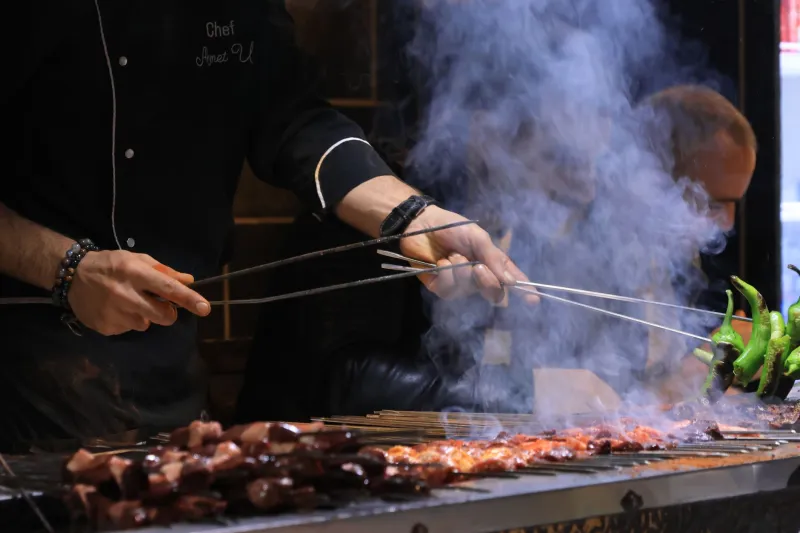
Fine dining, at its best, has always been in the business of creating moments that transcend the merely nutritive. Charcoal, it turns out, is exceptionally well-suited to that purpose. The crackle of a grate, the wisps of smoke curling above a pass, the char-blackened surface of a perfectly rested piece of protein — these are sensory signals that no other cooking method can fully replicate.
A Movement With Staying Power
Trends in fine dining are notoriously short-lived. Foams, gels, and liquid nitrogen theatrics have each had their moment before receding. Charcoal, however, appears to be a different proposition. Its appeal is rooted not in novelty but in something far more durable: flavor. And as long as exceptional chefs continue to find new ways to coax complexity and depth from live fire, the dining room and the ember bed seem destined to remain in close company.