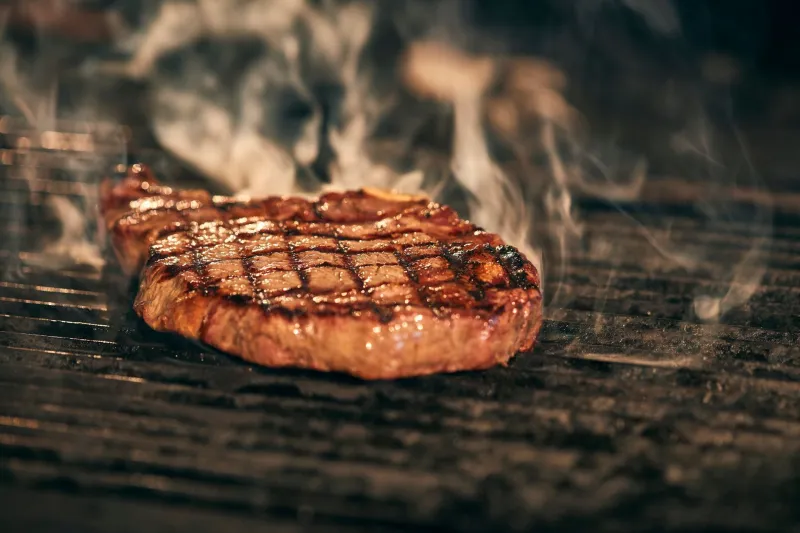
Ten American Chefs Who Turned Charcoal Into High Art
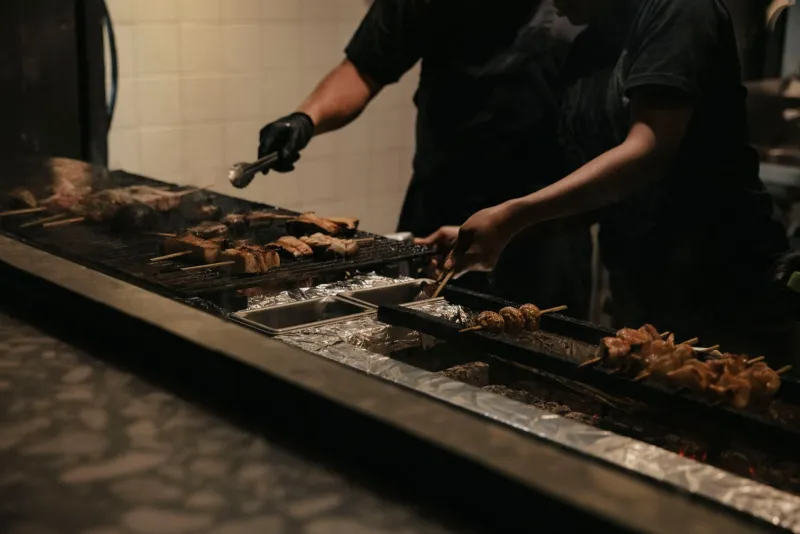
For much of the twentieth century, charcoal cooking occupied a specific, largely informal place in American food culture. It was the province of the pitmaster, the tailgate, the neighborhood cookout. Serious fine dining, the thinking went, happened indoors — in gleaming kitchens equipped with precision ovens and induction ranges.
That assumption has been thoroughly dismantled. Over the past two decades, a generation of American chefs has elevated open-fire, charcoal-forward cooking into a legitimate and highly regarded fine dining discipline. Their restaurants have earned Michelin stars, James Beard nominations, and the kind of reservation wait lists that stretch months into the future. More significantly, they have changed how the culinary establishment thinks about smoke, char, and the ancient act of cooking over live coals.
Below, Charcoal Dining profiles ten of the most compelling figures in this movement — chefs who have made fire not a method, but a medium.
1. The Philosopher of Smoke: Chef Adrienne Moss (New Orleans, LA)
Before opening her celebrated eight-seat tasting counter in the Bywater neighborhood, Adrienne Moss spent three years traveling through the American South documenting regional charcoal traditions. That research informs every element of her menu, which changes entirely with the seasons and centers on a custom-built Argentine-style parrilla. Her signature dish — a wood-charred oyster with smoked bone marrow butter and pickled green tomato — distills the entire Gulf Coast into a single, devastating bite. "Charcoal is memory," she has said in interviews. "It connects this food to every cook who came before me."
2. The Steakhouse Iconoclast: Chef Daniel Reyes (Chicago, IL)
Daniel Reyes trained in classical French technique before deciding that the tasting menu format was too removed from what he actually loved about food: the immediacy of fire and the democracy of a great piece of meat. His River North restaurant is neither a steakhouse nor a bistro — it occupies a category of its own. Reyes sources exclusively from small Midwestern ranches, ages his beef in-house, and cooks every protein over a blend of oak and cherry charcoal. His forty-day dry-aged côte de boeuf, finished with a compound butter of roasted bone marrow and charred shallot, has become one of the most discussed dishes in the city.
3. The Vegetable Radical: Chef Soo-Jin Park (Portland, OR)
In a movement dominated by meat, Soo-Jin Park has built her reputation almost entirely on charcoal-grilled vegetables and fermented grain preparations. Her Southeast Portland restaurant — a spare, wood-paneled space that seats fewer than thirty — operates on the principle that fire transforms plant-based ingredients in ways that no other cooking method can approximate. A charred whole leek served with aged miso and hazelnut brown butter has become her calling card, and it has attracted the kind of critical attention typically reserved for prime cuts. Park received a Michelin Bib Gourmand designation in the inaugural Portland guide and is widely expected to receive a star in the coming cycle.
4. The Pitmaster Turned Plater: Chef Marcus Webb (Austin, TX)
Marcus Webb came up through the barbecue circuit, competing on the regional Texas scene before transitioning to a formal restaurant setting. What he brought with him was an encyclopedic knowledge of charcoal management — how to build a coal bed, when to add wood, how to read smoke color — that most formally trained chefs simply do not possess. His East Austin restaurant occupies a converted auto shop and serves a prix-fixe menu that begins with smoked beef tallow candles and ends with a charcoal-rendered bone marrow flan. The James Beard Foundation nominated him for Best Chef: Southwest in consecutive years.
5. The Coastal Fire Keeper: Chef Lena Moreau (Charleston, SC)
Lena Moreau's relationship with charcoal is inseparable from her relationship with the South Carolina Lowcountry. She sources her wood from local peach and pecan orchards, her seafood from day-boat fishermen she has known for years, and her produce from farms within a fifty-mile radius of her downtown Charleston restaurant. The result is a menu that is intensely regional and deeply personal. Her charcoal-grilled whole flounder — butterflied, marinated in a Gullah-inspired herb paste, and cooked directly on the coals — is the dish that food writers from across the country have made pilgrimages to experience.
6. The New York Minimalist: Chef Theo Abramowitz (New York, NY)
In a city where culinary excess is practically a competitive sport, Theo Abramowitz has built a following through radical restraint. His small West Village restaurant offers a menu of precisely six savory courses, each designed to showcase a single ingredient's interaction with charcoal heat. Abramowitz spent two formative years cooking at a renowned open-fire restaurant in the Basque Country of Spain, and the influence is evident in his disciplined, almost austere approach. His charcoal-seared scallop with nothing but a pool of its own reduced liquor and a whisper of smoked sea salt has been called, by more than one critic, one of the finest bites in New York.
7. The Heritage Breed Advocate: Chef Priya Nair (Los Angeles, CA)
Priya Nair's Silver Lake restaurant began as a pop-up operating out of a borrowed backyard with a rented grill. Five years later, it holds a Michelin star and a six-month reservation wait list. Her focus is heritage breed animals — Mangalitsa pork, Red Wattle hog, Navajo-Churro lamb — cooked over fruitwood charcoal with preparations that draw on her South Indian culinary heritage. The combination is unexpected and entirely her own. A smoked Mangalitsa pork belly served with tamarind-charred onion and coconut chutney demonstrates the kind of cultural synthesis that has made her one of the most original voices in American fine dining.
8. The Farm-to-Coal Pioneer: Chef James Whitfield (Asheville, NC)
James Whitfield was farming before he was cooking professionally, and that sequence has shaped everything about his approach. His Asheville restaurant operates in direct partnership with the thirty-acre farm he co-owns in the nearby Blue Ridge foothills. Every ingredient that passes through his kitchen has been grown, raised, or foraged within that landscape, and every preparation involves some engagement with charcoal — whether as a primary cooking method, a source of ash for seasoning, or a finishing element. His use of charcoal ash as a curing agent for egg yolks has been replicated by chefs across the country.
9. The Urban Traditionalist: Chef Roberto Fuentes (San Antonio, TX)
Roberto Fuentes is the rare fine dining chef who speaks openly and proudly about the street food traditions that shaped his sensibility. Growing up in San Antonio, he watched his grandmother cook al carbón in the backyard every weekend, and those memories — of mesquite smoke and charred corn and sizzling skirt steak — became the foundation of his culinary identity. His Pearl District restaurant is a refined interpretation of those flavors: a charcoal-grilled wagyu skirt steak served with hoja santa salsa verde and house-made tortillas has become the dish that defines his career. He was named a Food & Wine Best New Chef in the year he opened.
10. The Boundary Breaker: Chef Yara Okonkwo (Washington, D.C.)
Yara Okonkwo's Shaw neighborhood restaurant is perhaps the most conceptually ambitious charcoal-focused establishment in the country. Her menus are built around the charcoal traditions of West Africa, filtered through her training in classical French and contemporary American kitchens. She uses a custom-built clay kamado-style cooker imported from Nigeria alongside a conventional charcoal grill, creating layers of smoke and heat that are unlike anything else in American fine dining. Her suya-spiced charcoal-grilled short rib with fermented locust bean jus has drawn comparisons — in terms of complexity and emotional resonance — to the most celebrated dishes at far more established institutions. A Michelin star followed within eighteen months of opening.
What unites these ten chefs is not a shared technique or a common regional tradition. It is a shared conviction: that charcoal, wielded with knowledge and intention, is capable of producing food as sophisticated, as nuanced, and as moving as any cooking method available to the modern kitchen. They have not merely adopted fire — they have made it their language.
At Charcoal Dining, that conviction is one we share deeply. The revolution is ongoing, and the coals are still burning.