Back to Basics: Why Serious Home Grillers Are Walking Away from High-Tech Smokers
Across America, a quiet but deliberate revolt is taking shape in suburban backyards and urban rooftops. Home grilling enthusiasts, once seduced by the precision of pellet smokers and digital temperature controllers, are returning to traditional charcoal with a conviction that borders on philosophical. The question is no longer simply about flavor — it is about what cooking over fire is supposed to mean.
For the better part of a decade, the pellet smoker reigned supreme in the world of serious home barbecue. Brands like Traeger and Camp Chef promised a compelling proposition: professional-grade results without the guesswork. Set a temperature, load the hopper, and walk away. The Wi-Fi-connected models even allowed users to monitor internal meat temperatures from the comfort of their living room couch. It was, by most conventional measures, a triumph of convenience.
And yet, something was lost.
The Inconvenient Truth About Convenience
Speak with members of online grilling communities — from the dedicated forums of r/BBQ to regional Facebook groups devoted to low-and-slow cooking — and a pattern emerges quickly. Many enthusiasts who invested heavily in automated smoking equipment describe a growing sense of disconnection from the process itself. The act of grilling had become, in their words, passive. A task to be managed rather than a craft to be practiced.
"I realized I was essentially using an outdoor oven," says one longtime home pitmaster from Austin, Texas, who asked to be identified only by his forum handle. "There was nothing wrong with the food. But I wasn't cooking it — the machine was. I had become a spectator at my own grill."
This sentiment is echoed widely. The tactile engagement that defines traditional charcoal cooking — building a fire from scratch, reading the coals, adjusting airflow through dampers, responding instinctively to shifting heat — demands a level of presence that no algorithm can replicate. For a growing number of enthusiasts, that demand is not a drawback. It is precisely the point.
The Psychology of Open-Flame Cooking
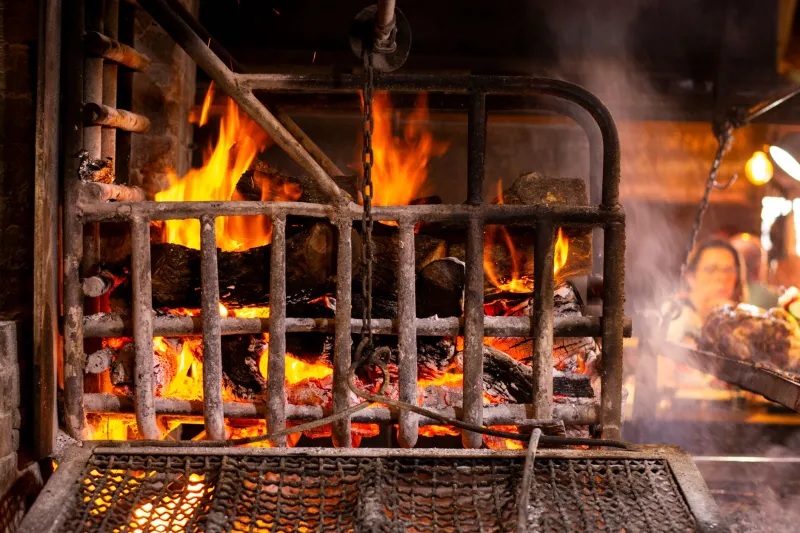
There is a well-documented psychological dimension to cooking with live fire. Researchers studying the behavioral aspects of culinary engagement have noted that open-flame cooking activates a kind of focused attention that is increasingly rare in contemporary life. The fire requires watching. The coals require tending. The cook, whether professional or amateur, must remain attuned to a dynamic, ever-changing heat source.
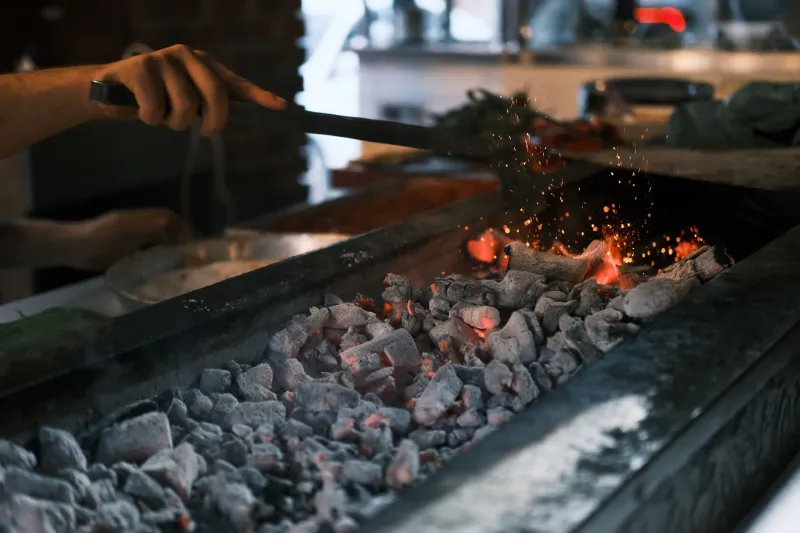
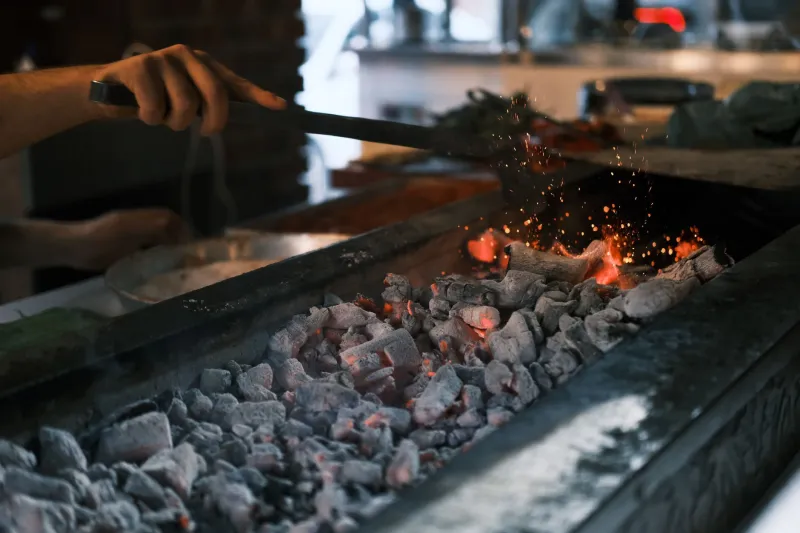
This meditative quality is something that enthusiasts describe with remarkable consistency. Building a charcoal fire — arranging the coals, lighting the chimney starter, watching the ash spread across the surface as the temperature climbs — is a ritual with a beginning, a middle, and an end. It is sequential, sensory, and deeply satisfying in a way that pressing a button simply is not.
The growing interest in what some observers are calling "intentional cooking" speaks directly to this dynamic. In an era of automation and convenience, the deliberate choice to embrace difficulty carries its own reward. Traditional charcoal grilling, with its inherent unpredictability and physical demands, has become a form of culinary mindfulness for those willing to accept its terms.
What Charcoal Actually Delivers
Beyond psychology, the case for charcoal rests on a foundation of flavor science that high-tech equipment has never fully replicated. Lump charcoal, in particular, burns at temperatures that pellet smokers struggle to match — often exceeding 700 degrees Fahrenheit when properly managed. That extreme heat is responsible for the Maillard reaction: the complex browning process that creates the deeply caramelized crust on a well-seared steak or the crackling skin on a spatchcocked chicken.
The combustion byproducts of charcoal also contribute volatile compounds that interact with the surface of the food in ways that wood pellets, processed and compressed, do not. Experienced home grillers describe the result as a cleaner, more direct smoke character — one that enhances rather than overwhelms the natural flavor of the ingredient.
Kingsford briquettes remain the dominant product in American homes, but a significant shift toward premium lump charcoal options — including imported Japanese binchotan and American hardwood varieties from producers like Jealous Devil and Rockwood — signals a more discerning consumer base. These products burn longer, cleaner, and hotter than standard briquettes, and their growing popularity reflects a home grilling community that is investing more seriously in the fundamentals of their craft.
The Return-to-Craft Movement
The broader cultural context matters here. The same impulse driving home bakers to mill their own flour, coffee enthusiasts to hand-grind single-origin beans, and cocktail aficionados to carve their own ice is now reshaping the backyard grilling landscape. Authenticity — defined not by marketing language but by genuine engagement with traditional methods — has become a meaningful value for a sizable segment of American food culture.
Charcoal grilling fits neatly within this framework. It is ancient, universal, and stubbornly resistant to technological shortcuts. Its learning curve is real. Its rewards are commensurate with the effort invested. And unlike the pellet smoker, it does not pretend to do the work for you.
Community grilling events are reflecting this shift. Charcoal-only cookoffs, once a niche format within the competitive barbecue circuit, are drawing larger fields of participants. Regional gatherings organized around traditional charcoal technique — in cities from Chicago to Charleston — are filling their rosters months in advance.
Embracing Imperfection as a Feature
Perhaps the most telling aspect of this movement is the attitude its adherents hold toward failure. The pellet smoker's appeal was, at its core, the promise of consistent results. Charcoal offers no such guarantee. Fires flare. Temperatures fluctuate. A distracted cook will overcook a beautiful cut of meat. These are not bugs in the system — they are the system.
Experienced charcoal enthusiasts argue that these moments of imperfection are precisely what accelerate mastery. Every fire is a lesson. Every failed cook is data. The feedback loop between the griller and the grill is immediate, unmediated, and honest in a way that no digital readout can approximate.
At Charcoal Dining, this philosophy sits at the very center of what we celebrate. The finest charcoal-grilled cuisine — whether emerging from a Michelin-starred kitchen or a well-seasoned kettle grill in a Columbus, Ohio driveway — is the product of a cook who has chosen to be present, engaged, and accountable to the fire.
The pellet smoker is not going away. For many home cooks, it remains a practical and capable tool. But for those who have come to understand that the process is inseparable from the result, charcoal is not a step backward. It is the only honest direction forward.