Live Fire or Bust: How America's Elite Steakhouses Are Rethinking the Kitchen
For decades, the gas range represented progress. It was controllable, consistent, and clean — everything a high-volume fine dining kitchen demanded. Yet something curious has been unfolding in the back-of-house corridors of America's most prestigious steakhouses. Quietly, and at considerable expense, a growing number of establishments are dismantling their gas infrastructure and feeding their kitchens with something far older: live charcoal and wood.
This is not a nostalgia exercise. It is a calculated, often expensive, and operationally demanding decision that chefs and restaurateurs are making with clear eyes — and they are making it because, in their estimation, gas simply cannot compete.
The Economics of Conviction
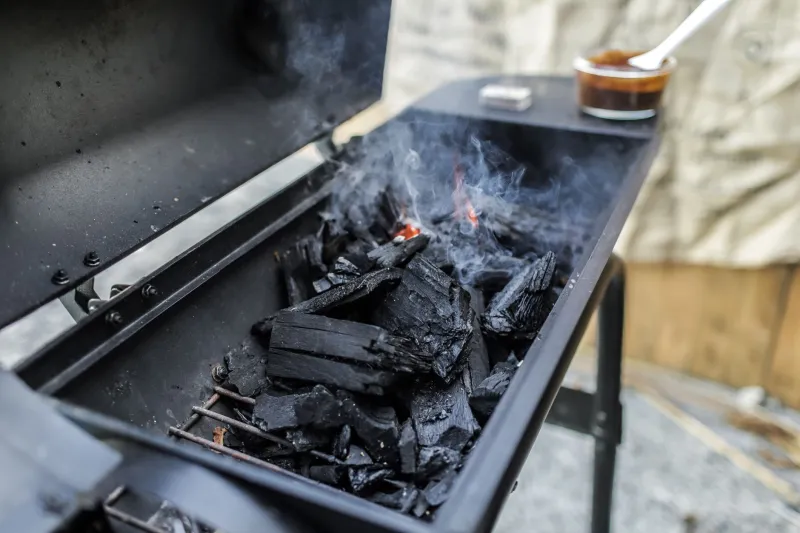
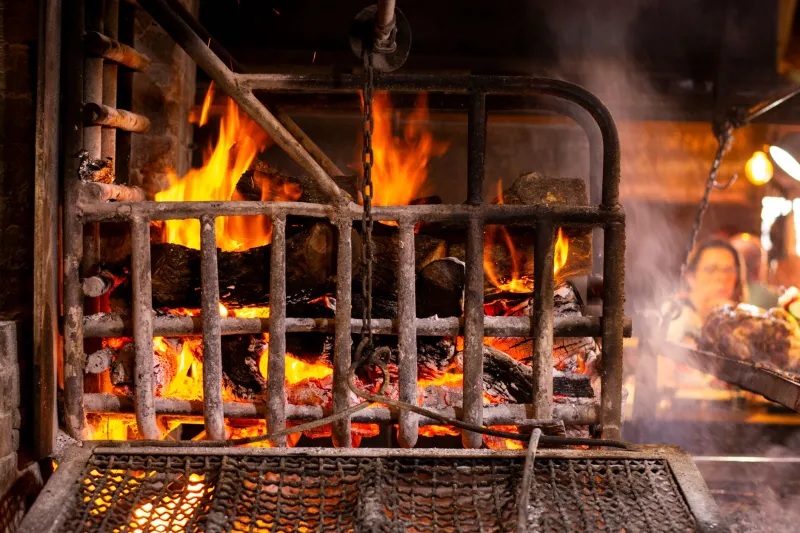
Installing a commercial charcoal hearth or wood-fired grill system is not a minor undertaking. Custom Josper ovens — the Spanish-engineered charcoal units that have become something of a talisman for serious fire-cooking establishments — can run between $15,000 and $40,000 per unit. Bespoke hearth systems built to a chef's specifications frequently exceed six figures when ventilation, masonry, and fire suppression requirements are factored in.
Beyond equipment, the ongoing fuel costs are substantially higher than gas. Premium restaurant-grade hardwood lump charcoal, sourced from suppliers who can guarantee consistent burn temperature and minimal ash output, commands a premium that accumulates meaningfully over the course of a busy week.
So why are steakhouse operators writing these checks willingly?
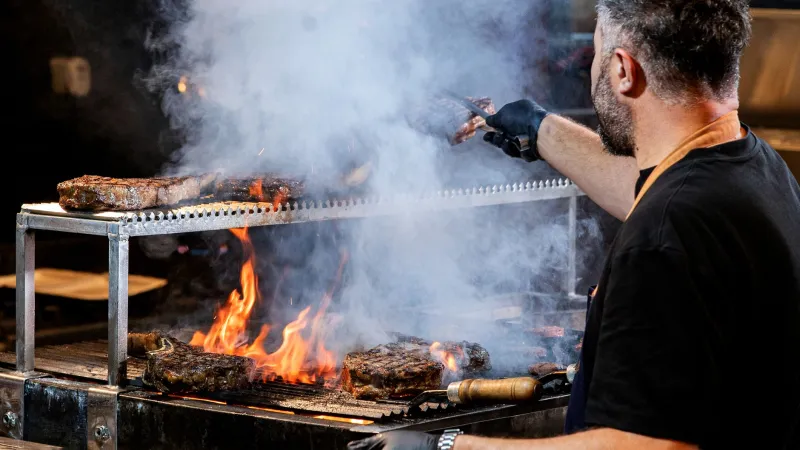
"Gas gives you heat," explains one executive chef who recently oversaw the conversion of a 40-year-old Chicago steakhouse to a fully charcoal-driven kitchen. "Charcoal gives you heat and a conversation. Every cut of beef that comes off our grill carries a story that a gas flame simply cannot tell."
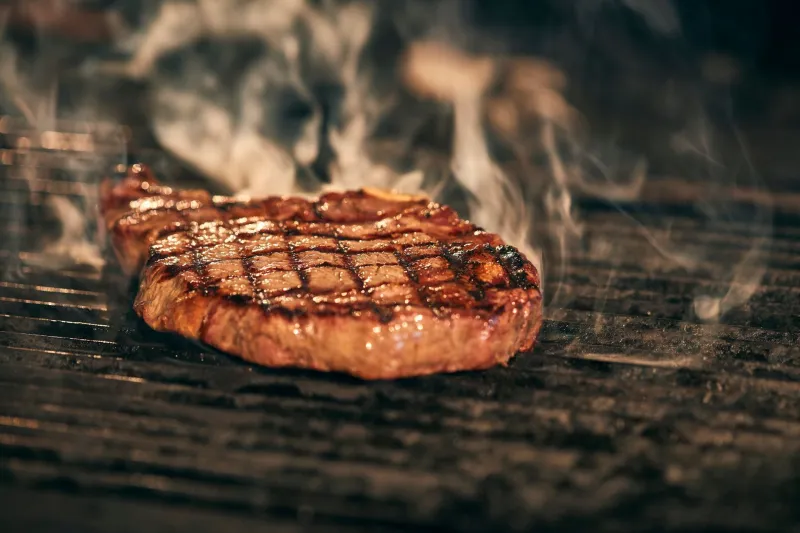
That story — written in caramelized crust, smoke-threaded fat, and the faint mineral warmth that only live embers impart — has become a defining competitive advantage in a market where differentiation is increasingly difficult to achieve.
Training for an Unpredictable Medium
The operational complexity of live-fire cooking extends well beyond the capital investment. Gas burners are, by their nature, forgiving. A cook can dial a flame up or down in seconds, maintaining a reliable thermal environment regardless of external variables. Charcoal and wood behave differently. They respond to ambient humidity, airflow, the density of the fuel load, and the accumulated heat mass of the hearth itself.
For kitchen staff accustomed to gas, the learning curve can be steep and, at times, humbling.
"We lost three line cooks in the first two months after our conversion," one steakhouse owner in Nashville acknowledged candidly. "Not because they were bad cooks — they were excellent on gas. But live fire demands a different kind of attention. You have to read the coals the way a sailor reads the wind."
This has prompted many establishments to develop formal in-house training programs, sometimes bringing in consulting chefs with deep live-fire experience to work alongside kitchen teams over extended periods. Some have partnered with culinary schools to develop curriculum modules specifically focused on charcoal management, ember temperature reading, and fuel rotation protocols.
The investment in human capital mirrors the investment in equipment — and operators who have made the commitment argue it yields comparable returns. Staff who master live-fire technique tend to develop a deeper engagement with their craft, translating into lower turnover and a more cohesive kitchen culture.
Flavor as Identity
Beyond the operational calculus, the charcoal pivot reflects something more philosophical about where fine dining is heading. In an era when tasting menus have grown increasingly cerebral and presentation-driven, there is a discernible counter-movement among serious diners who want primal pleasure alongside technical refinement.
The Maillard reaction — the chemical cascade responsible for the complex browning and crust formation on a properly seared steak — proceeds differently over charcoal than over gas. The radiant heat of glowing embers penetrates a cut of beef in a manner that promotes deeper, more even caramelization. Simultaneously, the aromatic compounds released by burning hardwood charcoal — volatile phenols, carbonyls, and furans — deposit themselves on the surface of the meat, building layers of flavor that no gas flame can introduce.
For steakhouses competing at the highest level, this flavor complexity is not a subtle distinction. It is the difference between a meal guests remember and one they merely enjoyed.
"Our regulars noticed within the first week," recalls the chef of a James Beard Award-nominated New York steakhouse that completed its charcoal conversion last year. "We didn't announce the change publicly. But the feedback started coming in immediately — people saying the ribeye tasted different, more alive. That told us everything we needed to know."
A Rejection of Convenience
Perhaps most significantly, the charcoal renaissance signals something broader about the values taking hold within American fine dining. The convenience-first mentality that shaped commercial kitchen design for much of the late twentieth century is being quietly but firmly interrogated.
Chefs who have committed to live fire speak about it in terms that echo the language of the craft beverage movement, or the farm-to-table ethos: a deliberate embrace of difficulty in service of authenticity. They are choosing the harder path not in spite of its demands, but because of them.
In a dining landscape where discerning guests are increasingly capable of detecting the difference between genuine craft and its simulation, that choice resonates. The steakhouses leading this shift are not merely changing their cooking method. They are making a statement about what they believe a great meal should feel like — and they are betting that their guests feel the same way.
Based on the lines forming outside their doors, that bet appears to be paying off.