Pink Is Not a Coincidence: The Science Behind the Smoke Ring on Charcoal-Grilled Meat
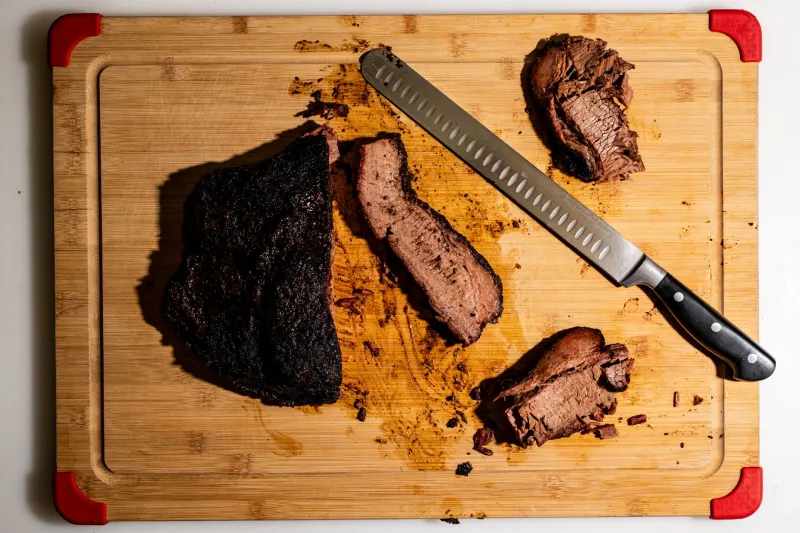
Walk into any serious barbecue establishment in the American South, the Hill Country of Texas, or the smokehouses of Kansas City, and you will likely encounter a photograph on the wall—a cross-section of brisket, its bark nearly black, its interior a deep auburn, and running between those two extremes, a band of vivid pink no wider than a finger. That band has a name. It is called the smoke ring, and in the world of charcoal cookery, it has achieved something close to mythological status.
But mythology, however compelling, is not science. And the smoke ring is, at its core, a matter of chemistry.
What the Smoke Ring Actually Is
To understand the smoke ring, one must first understand myoglobin—the protein responsible for the color of raw meat. Myoglobin is what makes a fresh-cut steak appear red or purple. When exposed to oxygen at room temperature, it brightens to the familiar cherry red consumers associate with freshness. When heat is applied and the protein denatures, it turns gray or brown, which is the color of fully cooked interior meat.
The smoke ring interrupts this process in a precise and chemically elegant way. During charcoal combustion, two gases are produced in meaningful quantities: nitric oxide and carbon monoxide. These gases penetrate the outer surface of the meat during the early stages of cooking, before the exterior proteins have fully set. Once inside, they bind to the myoglobin molecules and form a stable compound—nitrosomyoglobin—that resists the browning effect of heat. The result is a layer of meat that remains pink even after it has been fully cooked.
This is not rawness. It is chemistry.
Why Charcoal Produces It So Reliably
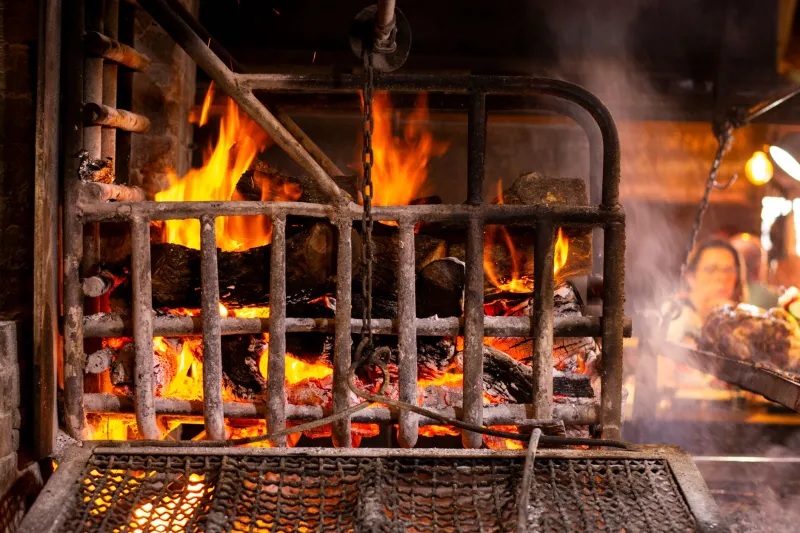
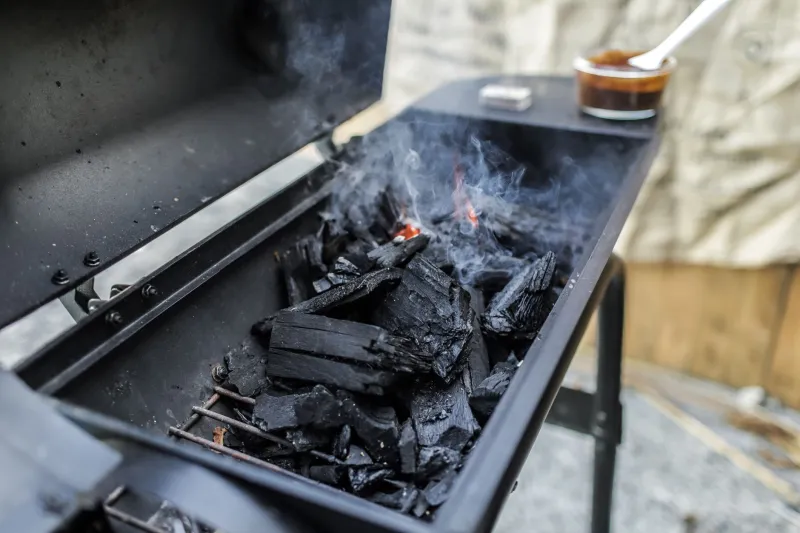
Not all heat sources generate the combustion gases necessary for a pronounced smoke ring. Electric smokers, for instance, produce very little nitric oxide or carbon monoxide, which is why meats cooked in them rarely develop the same ring depth as those cooked over wood or charcoal. Gas-fired cookers fall somewhere in between. Charcoal—particularly lump hardwood charcoal and charcoal-and-wood combinations—produces the gases most conducive to ring formation, especially during the early, lower-temperature phase of a long cook.
The thickness and depth of the ring are influenced by several variables: the moisture content of the meat's surface (a wetter surface absorbs gases more readily), the temperature at which combustion gases are introduced, the duration of the low-temperature cooking phase, and the density of the smoke itself. Pitmasters who understand these variables can, to a meaningful degree, manipulate the ring's appearance.
Chef Marcus Dillard, who operates a wood-and-charcoal-focused restaurant in Nashville, Tennessee, describes his approach with characteristic precision. "We manage our fire so that the first two hours of any long cook happen between 225 and 250 degrees," he explains. "That window is when the gases do their work. Push the temperature too fast and you seal the surface before the chemistry can happen. You lose the ring and, more importantly, you lose the depth of flavor that comes with it."
Does the Ring Actually Taste Like Anything?
This is the question that divides opinion most sharply among food scientists and culinary professionals. The short answer is: not directly. The smoke ring itself—the pink band of nitrosomyoglobin—does not have a distinct flavor. It is a visual phenomenon, not a gustatory one.
And yet the conditions that produce a well-developed smoke ring are precisely the same conditions that produce deeply flavored, properly textured smoked meat. A significant smoke ring typically indicates that the cook was managed at low temperatures for an extended period, that quality charcoal or wood was used, and that the surface of the meat was exposed to a sustained and consistent flow of combustion gases. These are not incidental factors—they are the very conditions that develop the complex, layered flavors associated with great barbecue.
Dr. Lena Forsythe, a food scientist who has consulted for several fine dining restaurants transitioning to live-fire programs, frames it this way: "The smoke ring is a reliable proxy for good process. It doesn't taste like anything on its own, but its presence tells you that the cook did everything right—the temperature, the fuel, the timing. In that sense, it absolutely correlates with quality, even if the correlation is indirect."
The Fine Dining Perspective
In upscale charcoal-driven restaurants, the smoke ring has become something of a calling card—a visual signal on the plate that communicates craft and intentionality to a discerning diner. Chefs who have built their programs around live-fire cookery understand that the ring functions almost as a guarantee: it tells the guest, before the first bite, that what they are about to eat was cooked with patience and skill.
Some chefs have gone further, treating the smoke ring as an aesthetic element in its own right. At certain fine dining establishments, cross-cut presentations of charcoal-grilled short rib or heritage pork shoulder are plated specifically to showcase the ring—its gradient from pink to deep brown serving as visual evidence of the fire's work.
There is, however, a meaningful conversation in professional kitchens about the risks of elevating aesthetics above substance. A smoke ring can be chemically induced without the low-and-slow process that typically creates it—certain curing salts, for instance, will produce the pink color without any smoke at all. Discerning chefs and knowledgeable guests are aware of this, and the most respected practitioners are quick to note that the ring must be earned, not manufactured.
Reading the Ring
For the enthusiast dining at a serious charcoal restaurant, the smoke ring offers a useful—if imperfect—guide to evaluating what is on the plate. A deep, well-defined ring, typically between a quarter and half an inch in depth, suggests a long, well-managed cook over quality fuel. A thin or absent ring may indicate a faster, hotter process or a different heat source entirely. Neither is necessarily a verdict on flavor, but the ring does invite a more informed conversation about how the meat was prepared.
What the smoke ring ultimately represents, beyond its chemistry and its aesthetics, is a commitment to process. In a culinary world that increasingly values speed and convenience, the conditions that produce it are stubbornly resistant to shortcuts. Charcoal takes time to reach temperature. Combustion gases require sustained exposure. The meat must be allowed to absorb what the fire offers, slowly and completely.
In that sense, the pink band is not merely a chemical reaction. It is a record of patience—written in the language of heat, smoke, and time.