Where the Embers Glow, Romance Follows: How Charcoal Dining Has Become America's Most Intimate First Date
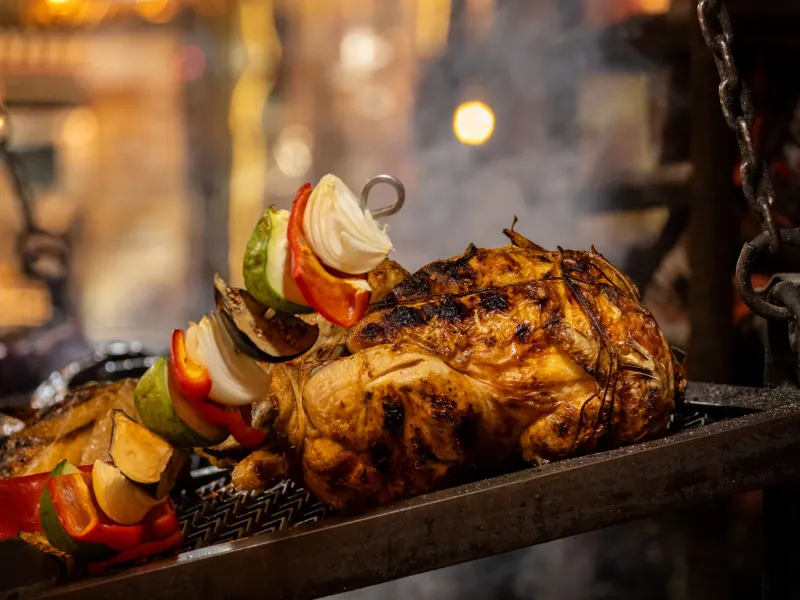
There is something disarming about sitting across from another person while a bed of glowing coals does its slow, deliberate work nearby. The light is warm and slightly unpredictable. The aromas arrive in waves — woodsmoke, rendered fat, caramelized crust — before the food ever reaches the table. Conversation, almost involuntarily, deepens. In an era defined by the swipe, the shortcut, and the algorithmically optimized match, charcoal dining has become something genuinely countercultural: a setting that demands presence.
Across the country, from the ember-lit dining rooms of New York's West Village to open-fire restaurants lining the Pacific Coast Highway, a growing number of Americans are choosing charcoal-forward establishments for their most significant social rituals — and first dates in particular. The reasons, as it turns out, are as layered as the smoke itself.
The Theater of Restraint
Most of what makes a charcoal dining experience feel romantic has nothing to do with candlelight or a curated playlist, though both may be present. It begins with the pacing. Charcoal cookery, by its very nature, cannot be rushed. A properly managed charcoal fire requires tending, reading, and adjusting — processes that impose a natural cadence on the kitchen and, by extension, on the meal itself.
Chef Marcus Delray, who oversees the open-hearth program at a celebrated Chicago steakhouse, describes this quality as the dining room's greatest gift to its guests. "When people know the food is taking time," he explains, "they stop looking at their phones. They order another glass of wine. They actually talk to each other. The fire creates permission to slow down."
That enforced deceleration is precisely what many couples say they are seeking. In a landscape where digital communication has compressed courtship into a series of rapid-fire exchanges, the unhurried arc of a charcoal meal — appetizers, a long middle course, the quiet ceremony of a properly rested cut of meat — mirrors the kind of patience that meaningful relationships require.
Smoke as Atmosphere
Beyond pacing, there is the matter of the senses. Charcoal dining engages the body in ways that conventional restaurant experiences rarely attempt. The faint drift of smoke that permeates a live-fire dining room is not incidental; it is atmospheric design. Hospitality consultant Diane Forsythe, who has advised on the experiential branding of several upscale grill-centric concepts in Los Angeles and Nashville, notes that olfactory memory is among the most powerful emotional anchors available to a restaurateur.
"Scent bypasses the analytical brain entirely," she says. "When someone smells charcoal smoke paired with a beautifully rendered piece of protein, they are not thinking about whether this is a good date. They are simply feeling it. That is an extraordinarily difficult thing to manufacture, and charcoal does it organically."
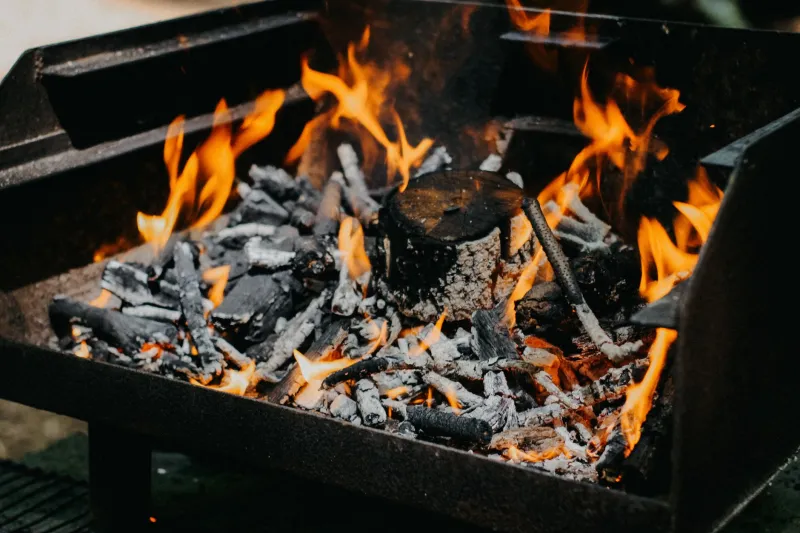
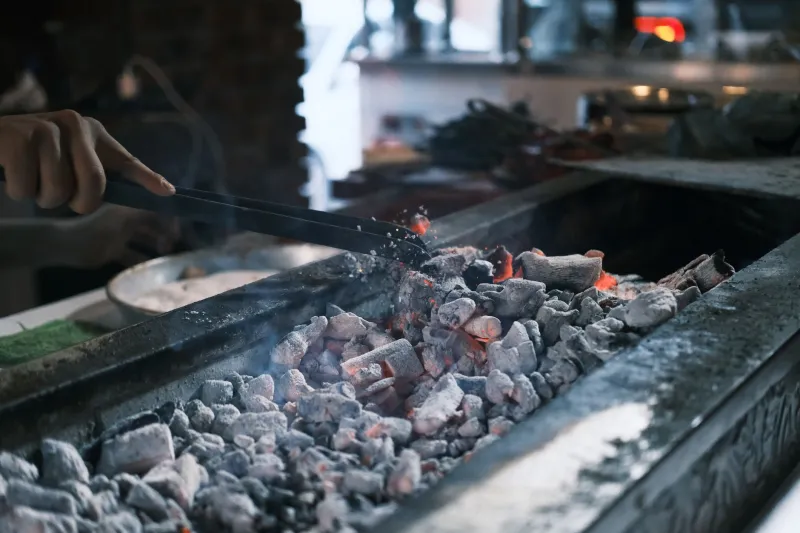
Restaurants that have built their identities around live fire have recognized this dynamic and leaned into it with intention. Open kitchen configurations — where guests can observe the grill station directly — add a visual and auditory dimension that transforms dining into something closer to performance. The hiss of fat meeting a hot grate, the orange-and-white flicker of active coals, the focused choreography of a grill cook managing multiple proteins at varying stages of doneness: these are not incidental details. They are the show.
The Intimacy of Shared Ritual
Among the couples who have made charcoal dining a cornerstone of their romantic lives, a recurring theme emerges: the shared experience of witnessing something crafted with genuine care creates a sense of occasion that more transactional dining cannot replicate.
Jordan and Claire, a couple from Austin, Texas, recall their first date at a local wood-and-charcoal grill as a turning point precisely because of its deliberateness. "There was something about watching the chef work that made us both feel like we were being trusted with something," Jordan recalls. "Like the kitchen was taking us seriously. That energy carried into the whole evening."
This sense of being honored by the craft is not accidental. Many of the finest charcoal-driven restaurants in America have developed tasting menus and prix fixe formats specifically designed to create a shared narrative arc across the meal. A progression from delicate charcoal-kissed crudo through to a long-rested prime rib cap, each course paced with intention, functions almost as a structured conversation — one that couples report mirroring in their own exchanges across the table.
Home Fire: The Intimate Scale
The romanticism of charcoal is not confined to restaurant dining rooms. A parallel and equally compelling trend has emerged among Americans who are investing in serious home grilling setups as a vehicle for intimate entertaining. Rather than outsourcing the experience to a restaurant, a growing cohort of home cooks — many of them in their thirties and forties — are building charcoal-centered evenings for two as an explicit act of courtship.
The logic is straightforward: cooking over charcoal for someone is a gesture of effort that carries unmistakable meaning. It requires preparation, attention, and a willingness to remain present through the entire process. You cannot delegate a charcoal fire. You must tend it.
"There is a vulnerability to cooking over live fire for someone you care about," observes food writer and entertaining expert Sylvia Okafor. "You are not ordering off a menu. You are committing to a process in front of them. That is romantic in the truest sense — it is an act of showing up."
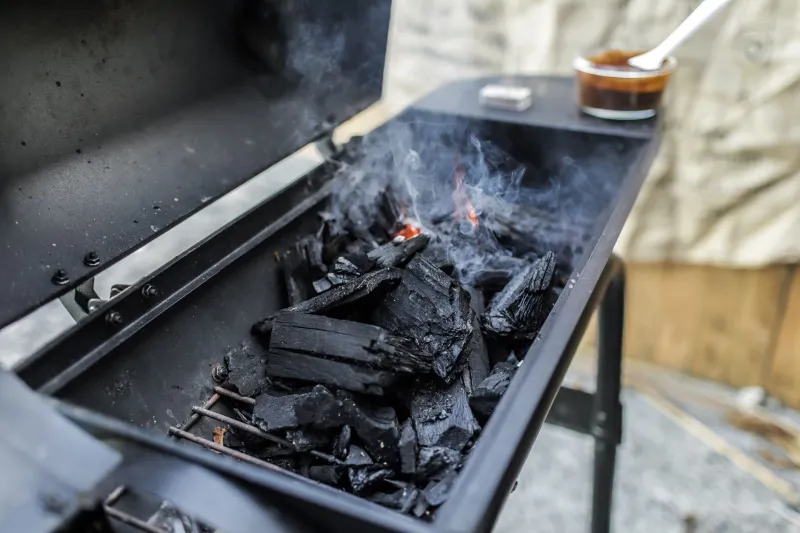
For these home entertainers, the equipment itself has become a point of pride. Ceramic kamado grills, Argentine-style parrillas with adjustable grates, and custom-fabricated charcoal hearths have entered the domestic sphere as objects of both function and aesthetic statement. The act of building and managing a fire — of understanding the difference between a coal bed at peak radiant heat and one suited for low, patient smoking — has acquired the quality of a refined skill, one that communicates something about a person's character.
Why Fire Endures
At its most essential, the appeal of charcoal as a romantic medium may be rooted in something older than any of the contemporary trends that have brought it to prominence. Fire is the original gathering point. Long before the restaurant, before the dinner party, before the curated tasting menu, human beings drew together around flame. The warmth was practical. But the closeness was something else entirely.
Contemporary charcoal dining — whether at a Michelin-recognized hearth restaurant in Manhattan or around a kettle grill on a Chicago rooftop — preserves that elemental draw while clothing it in the vocabulary of modern culinary craft. The result is an experience that feels simultaneously ancient and considered, primal and refined.
In a culture that has spent the better part of a decade optimizing intimacy out of courtship, the charcoal-fired dining room offers a quiet but insistent counterproposal: that the most memorable connections are forged slowly, in warmth, and with something genuinely at stake. The embers, patient and glowing, seem to agree.