Burning Bright: Why Gen Z Home Cooks Are Abandoning Convenience for the Ancient Art of Charcoal
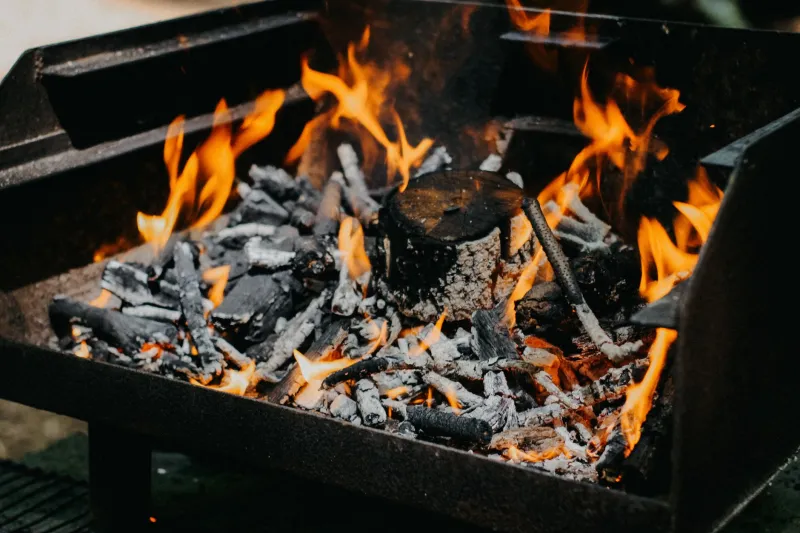
There is a particular kind of satisfaction that no app notification can replicate. It arrives sometime around the twenty-minute mark, when a chimney starter full of hardwood lump charcoal begins to glow at its edges and a faint ribbon of smoke curls upward into the afternoon air. For a growing number of young American home cooks — many of them in their early twenties, most of them entirely capable of purchasing a Wi-Fi-enabled pellet grill — this moment is precisely the point.
The data tells a story that the barbecue industry did not anticipate. According to figures compiled by the Hearth, Patio & Barbecue Association, charcoal grill sales among consumers under thirty have seen a measurable uptick over the past three years, even as the overall pellet grill market has plateaued following its pandemic-era surge. Specialty charcoal retailers, particularly those selling restaurant-grade binchotan and domestic hardwood lump varieties, report that a meaningful portion of their new customer base skews younger than expected — and increasingly urban.
The Gadget Backlash Nobody Predicted
To understand why a generation raised on convenience is gravitating toward a cooking method that demands patience, attention, and a willingness to fail, it helps to consider the broader cultural moment. Gen Z came of age inside a digital ecosystem engineered to remove friction at every turn. Food delivery apps, smart kitchen appliances, and recipe platforms that generate step-by-step instructions have made competent home cooking more accessible than ever. And yet, for a certain subset of younger cooks, that very accessibility has become the problem.
"I had a pellet grill for about eight months," says Marcus Delgado, a twenty-four-year-old line cook from Austin, Texas, who maintains an active following on social media documenting his charcoal experiments. "It was fine. Everything came out fine. But I realized I wasn't learning anything. I was just setting a temperature and walking away. That's not cooking — that's reheating."
Delgado's sentiment surfaces repeatedly in conversations with young charcoal converts across the country. The pellet grill, for all its engineering elegance, is perceived as a device that mediates between the cook and the fire — translating human intention into digital commands, then delivering a result that is consistent precisely because it is controlled. For enthusiasts who have grown skeptical of algorithmic mediation in other areas of their lives, the appeal of charcoal lies in what it removes rather than what it adds.
Fire as a Skill Worth Earning
There is a meaningful distinction, these cooks argue, between a result and a practice. Charcoal grilling is not merely a method of applying heat to protein; it is a discipline with its own vocabulary, its own failures, and its own hard-won competencies. Learning to read a coal bed — to distinguish between the fierce, direct heat of freshly lit briquettes and the gentler, more nuanced radiance of a mature ember — takes time and repetition that no manufacturer's manual can shortcut.
This orientation toward earned skill aligns with broader Gen Z attitudes toward craft and authenticity. The same generation that has driven renewed interest in sourdough fermentation, hand-thrown ceramics, and analog photography appears to be extending that sensibility to the backyard. Charcoal grilling, in this context, is not a rejection of modernity so much as a conscious investment in practices that resist automation.
"There's something genuinely humbling about a charcoal fire," says Priya Nair, a twenty-six-year-old food writer based in Chicago who recently converted her apartment building's rooftop grill setup to an all-charcoal arrangement. "It doesn't care how many YouTube tutorials you've watched. You have to actually pay attention. And when it goes well, you know it was you — not the grill's algorithm."
What the Flavor Argument Actually Means
Beyond philosophy, there is the matter of taste. Experienced chefs have long maintained that charcoal-grilled food carries a complexity that gas and pellet systems struggle to replicate — a quality that derives not from smoke alone but from the radiant heat characteristics of glowing carbon, the subtle mineral notes of specific charcoal varieties, and the way intense, direct heat interacts with fat and protein at the molecular level.
Younger cooks are arriving at this conclusion through their own experimentation, often after years of eating at restaurants where live-fire cooking has become a defining culinary statement. The popularity of wood-fired and charcoal-driven restaurant concepts in cities like Nashville, Los Angeles, and New York has effectively educated a generation of diners in the flavor signatures that only real fire produces. When those diners come home and attempt to recreate what they experienced at the table, the pellet grill frequently falls short.
"I ate at a restaurant in Brooklyn where everything came off a bincho grill," recalls Jordan Whitfield, a twenty-three-year-old graduate student in Portland, Oregon. "The chicken thighs had this crust — this caramelized, almost nutty exterior — that I had never tasted anywhere else. I spent the next six months trying to figure out how to get that at home. You cannot get that from a pellet grill. You just cannot."
The Social Dimension of Open Fire
It would be a mistake to analyze this trend purely in terms of flavor science or philosophical rebellion. Charcoal grilling is also, fundamentally, a social act — one that unfolds visibly, publicly, and at a pace that invites participation. The ritual of lighting a fire, managing its stages, and cooking in real time creates a shared experience that the set-and-forget convenience of automated grills does not.
For a generation that has documented a significant portion of its social life through screens, there appears to be genuine appetite for experiences that are physical, present, and communal. A charcoal grill in a backyard or on a rooftop becomes a gathering point in a way that a closed pellet grill simply does not. The fire draws people in. It creates conversation. It produces moments that feel, to use a word that carries considerable weight among younger consumers, real.
What This Means for the Culture of Charcoal
The implications of this shift extend beyond equipment sales figures. As younger home cooks invest more seriously in charcoal technique, they are also becoming more curious about the fuel itself — its origins, its composition, its impact on flavor. Artisan charcoal producers, premium Japanese binchotan importers, and domestic hardwood lump manufacturers are all reporting growth in a customer segment that was, until recently, largely indifferent to what burned beneath their grates.
This curiosity mirrors the trajectory that coffee, bread, and natural wine have followed over the past decade: a movement from commodity to craft, driven by consumers who want to understand and engage with every element of their practice. Charcoal, it appears, is undergoing precisely that transformation — and it is younger cooks, more than any other group, who are driving it forward.
The fire, it turns out, was never just a means to an end. For a generation increasingly willing to slow down, pay attention, and earn their results, it has become the point entirely.