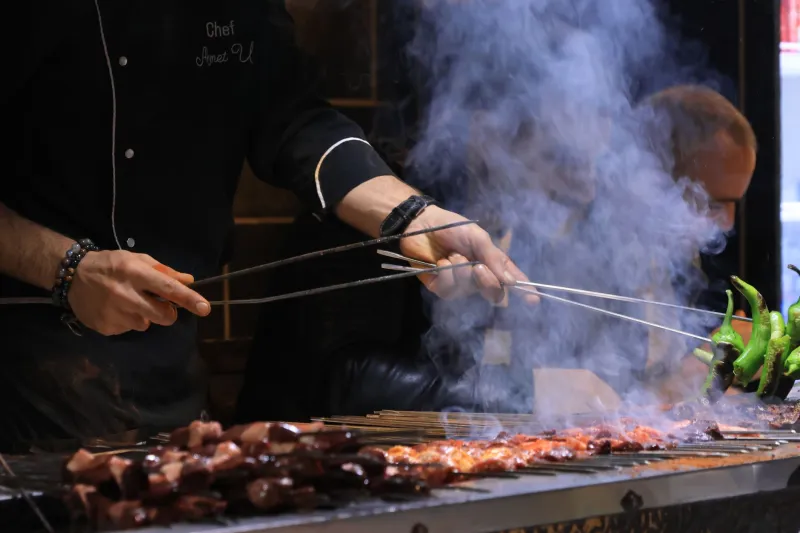
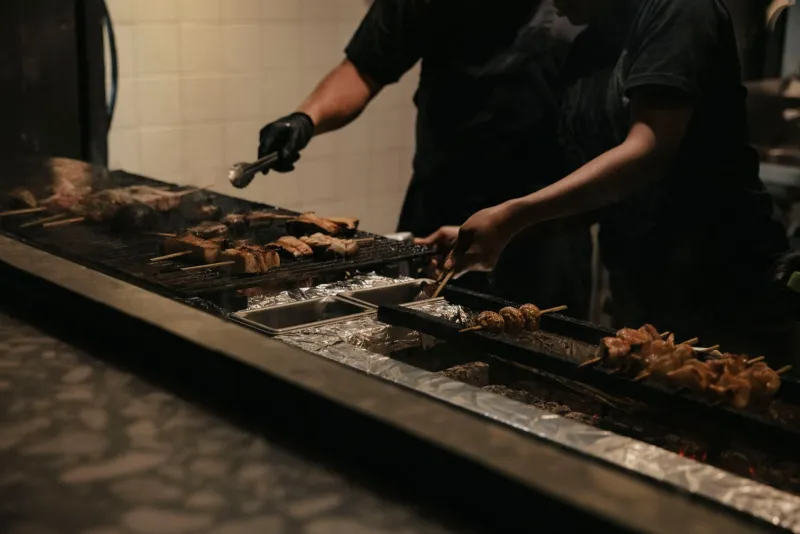
Tending the Embers: The Unsung American Chefs Who Built Everything on Fire
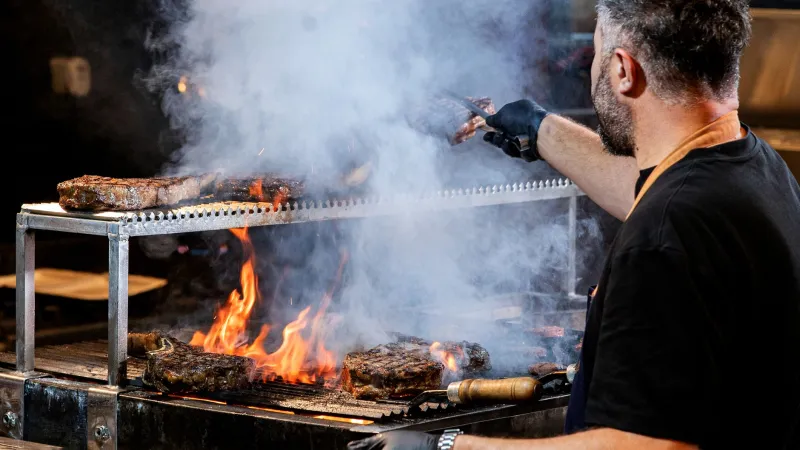
There is a particular kind of chef that the food media tends to overlook. They are not telegenic in the way that casting directors prefer, nor are they stationed in the cities that food critics visit most frequently. They do not have publicists or podcast deals. What they have, instead, is a hearth — and an almost monastic devotion to what happens when fire meets food.
Across the United States, a quiet cohort of culinary professionals has spent years — sometimes decades — constructing restaurant empires built entirely on the foundation of charcoal cookery. Their dining rooms are often modest. Their menus are frequently short. But the quality of what emerges from their kitchens has earned them something more durable than celebrity: genuine, hard-won reverence.
These are their stories.
The Pit Master Who Crossed Over
Roland Thibodaux grew up outside Baton Rouge, Louisiana, in a household where the backyard pit was the center of gravity for every family gathering. His grandfather tended oak and pecan charcoal with the patience of a man who understood that great food cannot be hurried, and Thibodaux absorbed that lesson before he could articulate it.
After a decade working in conventional restaurant kitchens — French brigade systems, immaculate mise en place, gas ranges — he returned to Louisiana and opened a 28-seat restaurant in a converted feed store outside Lafayette. The kitchen had no gas lines. That was intentional.
"I spent ten years cooking over blue flame and I was good at it," Thibodaux says, leaning against the iron door of the custom hearth he built with a local welder. "But I never felt the food. With charcoal, I feel everything. The heat, the smoke, the way the fat renders — it talks to you."
His restaurant, which does not take walk-ins and does not maintain a social media presence, operates on a single fixed menu that changes entirely every two weeks based on what local farms and Gulf suppliers can provide. Reservations typically book within hours of release. Guests have been known to drive from Houston and Atlanta for a single dinner.
The menu is not complicated in its presentation. It is complicated in its execution. A duck breast, dry-aged for seven days and finished over smoldering pecan charcoal, arrives with little more than a pool of rendered jus and a scattering of pickled muscadine grapes. The charcoal does the talking.
A Immigrant's Fire
In a narrow row house in Philadelphia's Fishtown neighborhood, Mei-Lin Castillo runs a 20-seat restaurant that blends the charcoal traditions of her Filipino mother and her Mexican-American father into a cuisine that defies easy categorization — and consistently earns it a mention on every serious food enthusiast's shortlist of the country's most interesting tables.
Castillo did not attend culinary school. She learned to cook over charcoal in two countries, absorbing the techniques of her maternal grandmother in Pampanga province — where the use of charcoal in everything from grilled meats to clay-pot braises is deeply embedded in culinary culture — and the backyard asada traditions of her paternal family in San Antonio.
"Both sides of my family cooked over fire," she explains, adjusting the damper on her custom-built grill station. "They used different woods, different techniques, different flavors. But the fire was the same. I grew up understanding that fire is the one language that doesn't need translation."
Her menu reflects that inheritance without being literal about it. A whole fish, butterflied and grilled over binchōtan-style charcoal, is seasoned with a marinade that draws on both adobo tradition and the citrus-heavy profiles of central Mexican cooking. Pork belly, slow-cooked in the residual heat of dying embers, arrives with a fermented black bean sauce that she developed over two years of experimentation.
Philadelphia's food press has taken notice, though Castillo remains skeptical of the attention. "I'm not doing anything revolutionary," she says with characteristic directness. "I'm just cooking the way my family taught me. The fire is the point. Everything else follows."
The Architect of Smoke
In Asheville, North Carolina, where the culinary scene has grown considerably more sophisticated over the past decade, chef Marcus Delray occupies a singular position. A former architecture student who abandoned his graduate program after a summer working in a wood-fired restaurant in rural Vermont, Delray approaches charcoal cooking with a structural precision that reflects his academic background.
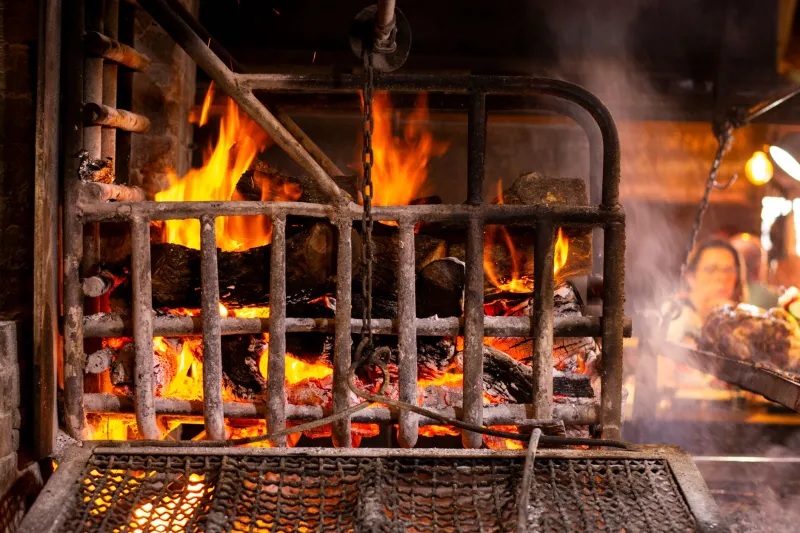
His restaurant, tucked into a converted brick warehouse on the city's south side, is built around a central hearth that Delray designed himself, working with a fabricator over 18 months to achieve a cooking environment that allows simultaneous management of four distinct heat zones — direct sear, indirect roast, ember bake, and smoke infusion — from a single fuel source.
"I think about fire architecturally," Delray explains, sketching a cross-section of his hearth on a notepad with the ease of someone who has drawn it many times before. "There's structure to it. Mass, volume, airflow, thermal dynamics. When you understand the architecture of a fire, you can design a meal the way you design a building — with intention at every level."
That intention is evident in every course. A root vegetable gratin, cooked directly in the ash bed of the hearth, develops a caramelized base note that no oven can approximate. A lamb rack, seared over live coals and then rested in the warmth of the smoke chamber, arrives at the table with a crust of extraordinary complexity and an interior of perfect, blushing pink.
Delray has declined multiple offers to open in larger markets. He is, he says, precisely where he wants to be — tending the fire he built, cooking the food he loves, for guests who understand what they are receiving.
What Fire Reveals
The chefs profiled here share more than a cooking medium. They share a philosophy — one that privileges patience over efficiency, depth over novelty, and the demands of an unruly, living heat source over the predictable comfort of a gas dial.
In an industry that often rewards spectacle and personality, they have built their reputations on something quieter and more enduring: the quality of what arrives on the plate, and the fire that put it there.
For the guests who seek them out — crossing state lines, forgoing the familiar, committing to reservations made weeks or months in advance — that is more than enough. It is, in fact, everything.