Why Diners Open Their Wallets for Smoke and Flame: The Premium Economics of Charcoal-Forward Restaurants
The Price of Fire
Walk into any serious charcoal-forward dining room in a major American city — from the live-fire temples of New York's Tribeca neighborhood to the ember-driven establishments lining the Gulch in Nashville — and the check at the end of the evening will likely give pause. Entrées hover between sixty and ninety dollars. Tasting menus breach three hundred. Wine pairings are almost beside the point when the fire itself has become the headlining act. Yet tables fill. Waitlists grow. And the diners who secure seats tend to leave not lamenting the expense but recounting the experience.
What exactly are they paying for, and does the arithmetic hold up?
The Theater of Visible Combustion
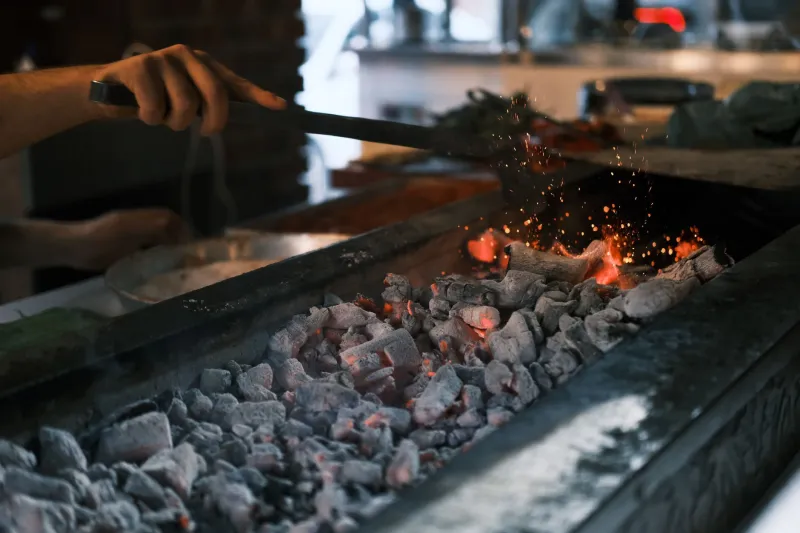
The most immediate answer is also the most honest one: spectacle commands a surcharge. When a restaurant positions its hearth or open grill as the visual centerpiece of the dining room — as establishments like Chicago's Smyth or San Francisco's Marlena have done with their open-kitchen formats — the cooking process becomes part of the hospitality offering. Diners are not simply purchasing a plate of food. They are purchasing proximity to something ancient and, in the context of fine dining, genuinely rare.
Dr. Rebecca Norris, a consumer behavior researcher at the University of Michigan who has studied experiential dining, describes this phenomenon as "participatory scarcity." "When diners can see the labor and the flame simultaneously," she explains, "they perceive the value as self-evident. The process becomes its own justification for price."
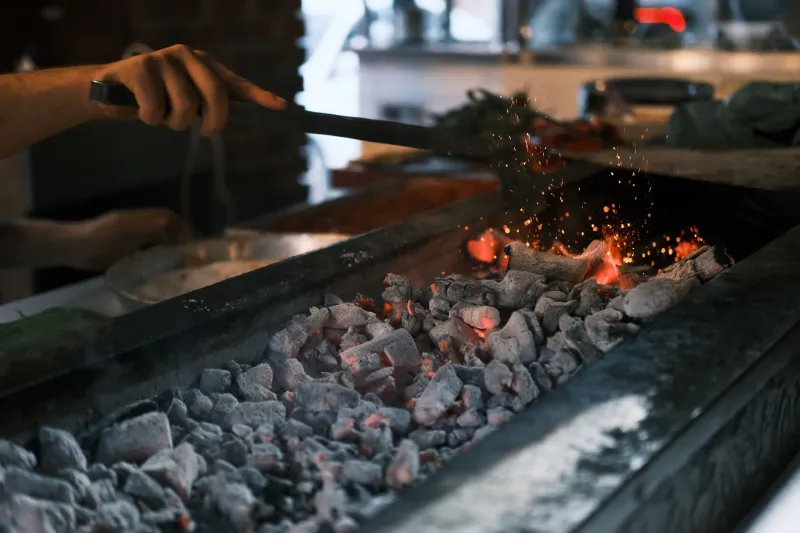
Restaurateurs have understood this intuitively for years, but only recently has the charcoal-specific format allowed them to monetize it at scale. A gas kitchen, however technically proficient, offers nothing to watch. Charcoal — with its glowing beds of Binchotan or hardwood lump, its unpredictable flare-ups, its patient management of radiant heat — is a living system, and diners respond to it as such.
The Real Cost Structure Behind the Menu Price
The theater argument alone, however, would ring hollow if the food did not justify the expense on its own terms. To understand whether it does, one must first understand what charcoal cooking actually costs a restaurant to operate.
Michael Carver, a restaurateur who opened a charcoal-focused tasting room in Austin, Texas, three years ago, speaks candidly about the operational realities. "People assume we charge more because fire is glamorous," he says. "The truth is, we charge more because fire is expensive and unforgiving. Our fuel costs alone run forty percent higher than a comparable gas operation. Our cook-to-table ratios are different because live fire requires constant human attention — you cannot walk away from a coal bed the way you can dial down a gas burner."
Labor, he notes, is the larger invisible cost. Charcoal cooking demands skilled practitioners who have trained specifically in heat management, coal rotation, and the judgment calls that no algorithm can replicate. Those individuals command higher salaries, and those salaries are reflected in the menu. "When you order the dry-aged short rib at my restaurant," Carver continues, "you're paying for twelve years of someone's accumulated knowledge of how to read a fire. That's not a premium I apologize for."
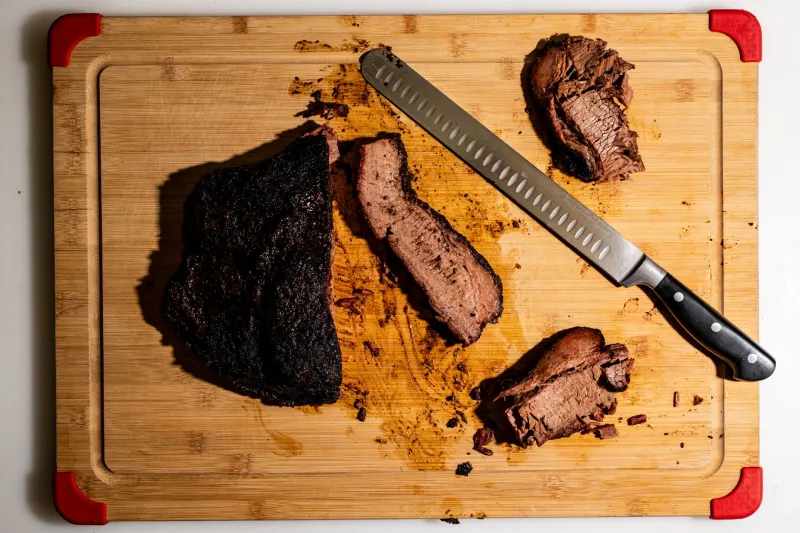
Beyond labor and fuel, premium charcoal-forward kitchens tend to source ingredients at a higher tier precisely because the cooking method amplifies rather than disguises quality. Inferior beef does not benefit from a Binchotan sear — it merely chars. The commitment to live-fire technique creates a cascading demand for superior raw product, and that, too, lands on the menu price.
The Sustainability Narrative and Its Genuine Weight
A more nuanced justification for premium pricing has emerged in recent years: the sustainability argument. Several charcoal-forward establishments now source their fuel exclusively from domestic producers using responsible forestry practices, or from compressed agricultural byproduct charcoal that repurposes materials that would otherwise be discarded. Restaurants in Portland, Oregon, and Asheville, North Carolina, have built considerable brand equity around this positioning.
Whether diners fully internalize the sustainability narrative or simply appreciate that it exists is debatable. What is not debatable is that the narrative functions as permission — a socially acceptable framework within which spending more feels not extravagant but principled. The diner who pays one hundred and ten dollars for a charcoal-grilled heritage pork chop at a restaurant that sources its charcoal from a certified sustainable producer in the Carolinas is, in their own accounting, making a values-aligned decision. The restaurant has simply made that decision available to them.
Does the Food Actually Deliver?
Stripped of theater and narrative, the foundational question remains: is charcoal-grilled food objectively better, and does that quality differential justify the premium?
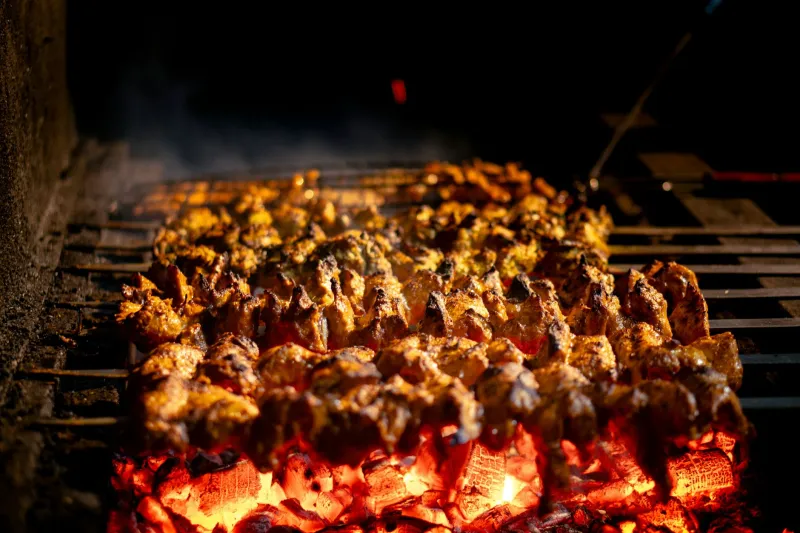
The evidence, culinary and scientific, suggests that it frequently does. Charcoal generates radiant heat at intensities that most gas systems cannot replicate without specialized infrastructure. That intensity produces Maillard browning at a depth and speed that creates textural and flavor complexity — the specific interplay of crust and interior — that is genuinely difficult to achieve through other means. The aromatic compounds introduced by combustion, particularly from hardwood-derived charcoal, add a dimension of flavor that does not exist in gas-cooked food.
This is not mere romanticism. It is chemistry, and diners — even those without a technical vocabulary for what they are experiencing — tend to register it. The return visit rate at charcoal-forward establishments consistently outpaces industry averages, according to data compiled by the National Restaurant Association's 2023 fine dining segment report. That metric is perhaps the most honest measure of whether the value proposition holds.
The Psychology of the Willing Spender
Finally, there is the matter of who precisely is filling these dining rooms and why they return. The charcoal-forward diner is not, by and large, a passive consumer. Research into the fine dining segment suggests that guests who specifically seek out live-fire restaurants skew toward what marketers call "experience collectors" — individuals for whom the story of a meal carries as much weight as its execution. They want something to recount. They want to have witnessed the fire, to have smelled the smoke in the dining room, to have watched a cook tend coals with the focused attention of a craftsman.
For that diner, the premium is not a burden. It is, in a very real sense, the point. The higher price signals that what they are about to encounter is not routine, not replicable at home, not available everywhere. Scarcity and craft, combined and made visible through flame, create a willingness to spend that few other dining formats can generate with equal consistency.
An Honest Ledger
The ember economy, then, is neither illusion nor exploitation. It is the honest result of a cooking method that demands more — more skill, more fuel, more attention, more exceptional raw material — and delivers more in return. The restaurants that sustain premium pricing over time are those that ensure the food, not merely the fire, earns the check. And the diners who return, season after season, are the clearest evidence that when charcoal cooking is practiced with genuine rigor, the value is not a matter of perception.
It is a matter of taste.