When Smoke Meets the Glass: How Sommeliers Are Rewriting the Rules of Wine Pairing for Charcoal-Driven Menus
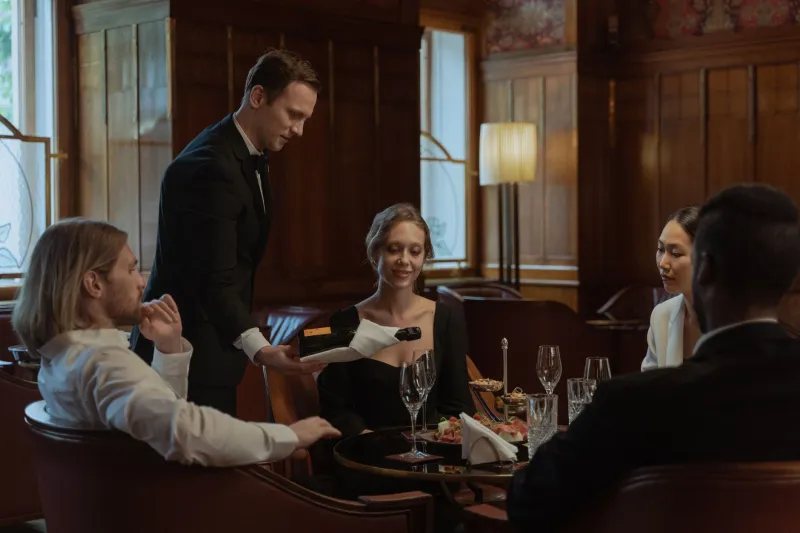
For decades, the canonical rules of wine pairing held steady: red meat calls for red wine, delicate fish deserves a crisp white, and acidity should always mirror the plate. These were the axioms that guided generations of sommeliers through their evening service. Then charcoal came to the fine dining table — and everything changed.
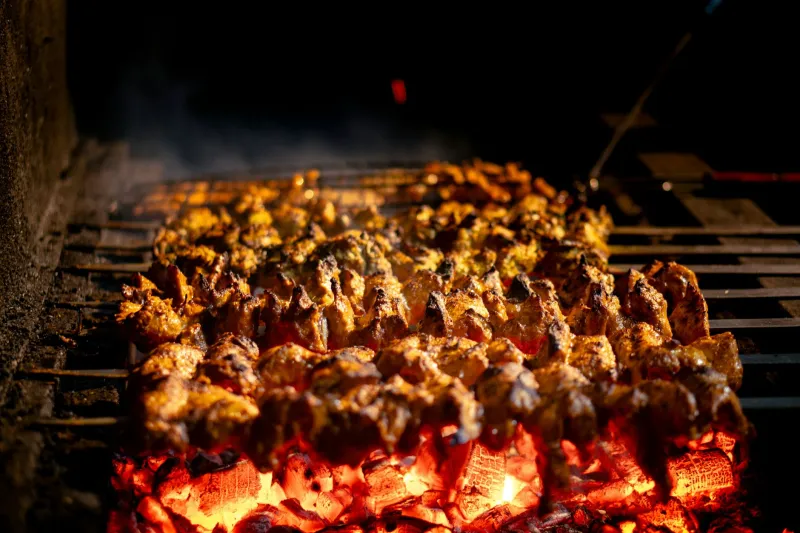
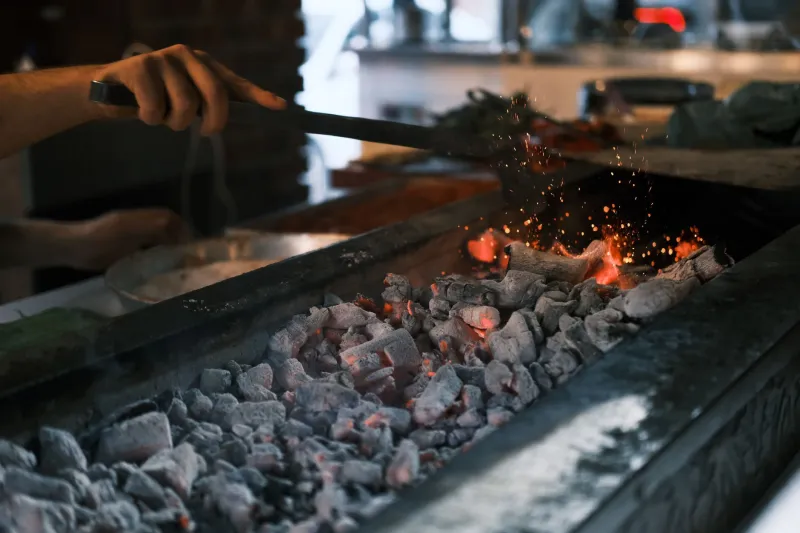
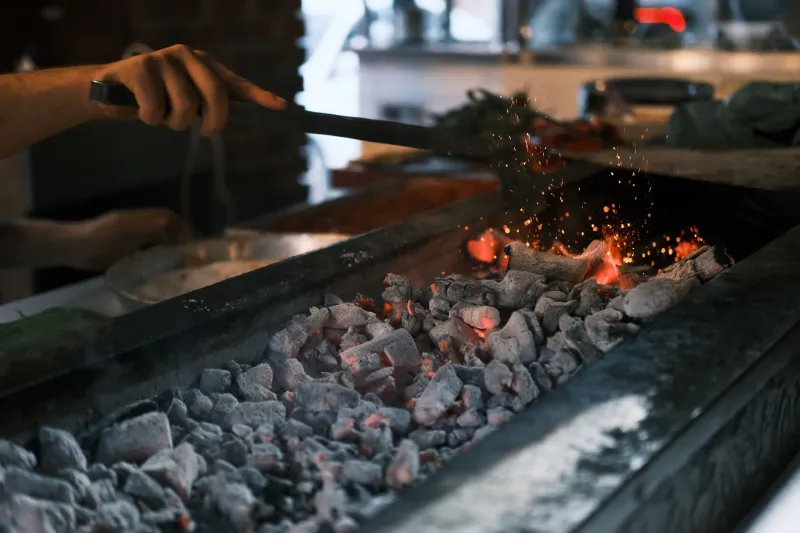
The surge of live-fire and charcoal-driven restaurants across the United States has introduced a set of flavor variables that conventional pairing wisdom was never designed to address. Smoke, char, ash, and the complex Maillard compounds produced at extreme heat create an entirely new sensory landscape on the palate. For the wine professionals navigating these menus nightly, the challenge is as exhilarating as it is demanding.
"Smoke is not a passive background note," explains Marcus Delray, wine director at a celebrated charcoal-focused restaurant in Chicago's West Loop. "It actively competes with tannin, it suppresses certain fruit characteristics, and it can make a wine taste flat or even medicinal if you haven't thought carefully about the match. You cannot simply reach for a Cabernet because the menu says 'beef.'"
The Science Beneath the Smoke
Understanding why charcoal cookery complicates wine pairing requires a brief detour into chemistry. When proteins and fats are exposed to the intense, radiant heat of burning charcoal, they undergo a cascade of reactions — caramelization, pyrolysis, and the Maillard reaction chief among them. These processes generate hundreds of aromatic compounds, including guaiacol and syringol, which are responsible for the characteristic smoky, woody, and slightly medicinal notes that define charcoal-grilled cuisine at its most expressive.
These compounds interact with wine in ways that can be deeply unpredictable. High-tannin reds, for instance, can amplify the bitter, astringent qualities of heavy char, producing a finish that lingers uncomfortably on the palate. Meanwhile, wines with elevated residual sugar — even just a gram or two — can soften the sharpness of smoke and create a bridge between the fire-driven flavors on the plate and the fruit-forward notes in the glass.
"Tannin is both your greatest ally and your most dangerous variable," says Priya Nair, a certified sommelier working at a Houston steakhouse that sources its own lump charcoal from a Texas supplier. "A wine with grippy, drying tannins will fight the char. But a wine with silky, integrated tannins — think a well-aged Barolo or a Côte de Nuits Burgundy — will actually frame the smokiness beautifully. The difference between those two outcomes can be a single vintage."
Rethinking Acidity as a Bridge
If tannin management is the first principle of smoke pairing, acidity is the second — and perhaps the more counterintuitive one. Conventional wisdom holds that high-acid wines cut through fat and richness, which is why a bright Chianti has long been recommended alongside a ribeye. With charcoal-grilled cuisine, however, the equation shifts.
The char crust formed on a piece of protein already provides a layer of bitter contrast to the interior fat and juiciness. Adding a high-acid wine on top of that bitterness can produce an unpleasant, almost sour dissonance. Several sommeliers interviewed for this piece recommend instead reaching for wines with moderate acidity and generous mid-palate fruit — varieties that can absorb the smoke rather than fight it.
"Grenache-based wines have become almost a default recommendation for me when a dish has significant char," says Delray. "The red fruit is generous and round, the tannins are gentle, and there is just enough structure to stand up to the weight of the meat. A Châteauneuf-du-Pape or a domestic Grenache from Paso Robles — these wines were practically designed for this kind of cooking, even if no one framed it that way until recently."
Unexpected Pairings That Elevate the Experience
Beyond the expected reds, some of the most compelling discoveries in smoke-driven pairing have come from unexpected corners of the wine world.
Orange wines — white wines made with extended skin contact — have emerged as a surprising match for charcoal-grilled vegetables and fish. The oxidative notes and textural grip of a well-made orange wine from Georgia (the country) or a domestic producer in the Finger Lakes can mirror the complexity of the grill in ways that a conventional Chardonnay cannot. "There is a savory, almost nutty quality to a good orange wine that resonates with smoke," notes Nair. "It is one of those pairings that sounds strange on paper and makes complete sense on the palate."
Sparkling wines, too, have found a renewed role at the charcoal table. The effervescence of a Champagne or a high-quality domestic sparkling wine acts as a palate cleanser between bites of heavily smoked protein, resetting the senses in a way that a still wine cannot. Some sommeliers have begun recommending blanc de noirs — Champagnes made from red grapes — specifically because their deeper fruit profile and subtle earthiness complement smoke more effectively than a delicate blanc de blancs.
For those inclined toward American producers, several sommeliers pointed to Zinfandel as an underappreciated partner for charcoal-grilled cuisine. Its jammy fruit and spice notes, often dismissed as too rustic for fine dining, prove surprisingly versatile when smoke is a dominant flavor on the plate. A well-structured Dry Creek Valley Zinfandel, properly cellared, can stand alongside a charcoal-grilled lamb chop with genuine elegance.
Building a Smoke-Conscious Wine Program
For restaurant wine directors developing a program around a charcoal-driven menu, the organizational logic must shift. Rather than cataloguing wines by region or grape variety alone, several practitioners have begun annotating their lists with smoke compatibility notes — a subtle but meaningful departure from convention.
"We think about our list in terms of what we call 'fire weight,'" says Delray. "A dish that is lightly kissed by the grill needs a different wine than one that has spent significant time over direct coal. We try to reflect that in how we guide guests through the list, even if the language we use at the table is more approachable."
This approach extends to staff training. At restaurants where charcoal cookery is central to the identity, sommeliers are increasingly working alongside chefs during the development of new dishes — tasting alongside the fire rather than after the fact. The goal is to understand not only the finished flavors on the plate but the arc of smoke and heat that produced them.
A New Discipline at the Table
The emergence of what some in the industry are beginning to call "smoke sommeliership" — a discipline that blends traditional wine knowledge with an understanding of combustion, heat management, and the aromatic chemistry of charcoal — reflects a broader maturation of live-fire dining in America. As charcoal-forward restaurants continue to earn critical recognition and cultivate devoted followings, the professionals who guide guests through these experiences are developing a body of knowledge that simply did not exist a generation ago.
The old rules have not been discarded entirely. Acidity still matters. Tannin still shapes the finish. Fruit weight still influences how a wine interacts with protein. But in the presence of smoke, those rules must be interpreted through a new lens — one shaped by fire, patience, and a willingness to trust the palate over the textbook.