An American Flame: How Charcoal-Driven Fine Dining Is Forging the Nation's Own Culinary Identity
American fine dining has long operated under a particular anxiety. For much of the twentieth century, the highest expression of culinary ambition in this country was, in essence, a form of European translation — French technique applied to American ingredients, Italian sensibility adapted for American palates, a constant calibration of the domestic against the imported. The assumption embedded in this orientation was rarely stated but always present: that culinary authority resided elsewhere, and that American cooking aspired toward standards it had not itself created.
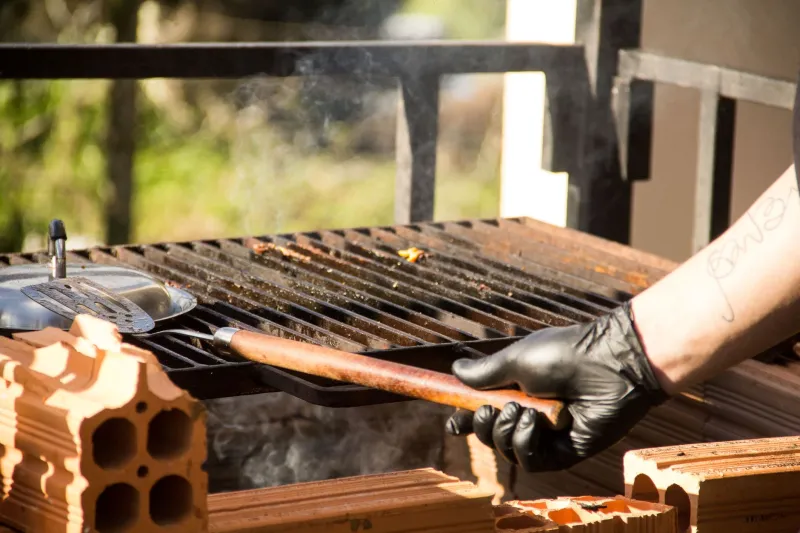
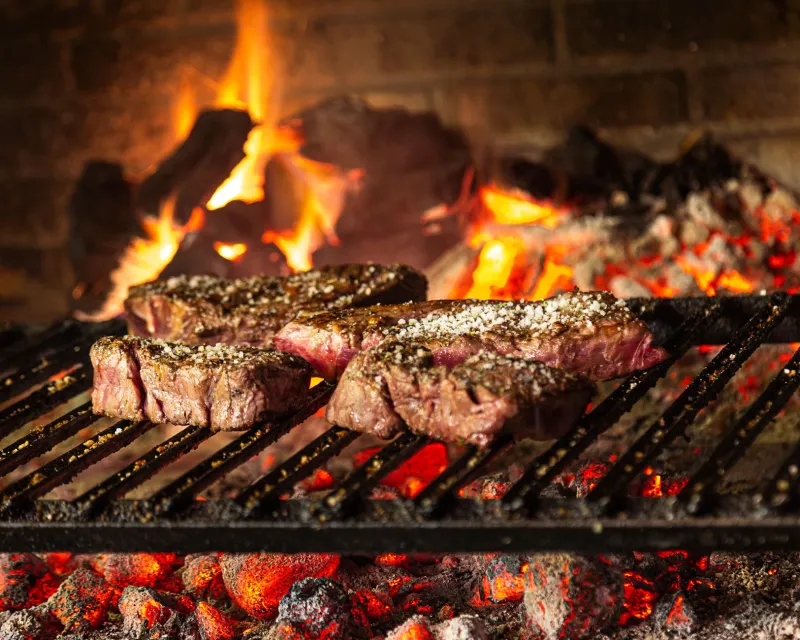
That assumption is being challenged, quietly but with growing conviction, by a movement that has its roots not in any culinary school curriculum but in something far older and far more distinctly American: the tradition of cooking over open fire.
A Tradition Older Than the Republic
Before there was a United States, there was fire cookery. The indigenous peoples of North America had developed sophisticated techniques for cooking over coals and open flame across centuries — methods that varied by region, by available fuel, and by the specific demands of local ingredients. Pit roasting in the Southwest, plank cooking in the Pacific Northwest, the slow coal-based preparations of the Southeast: these were not primitive approximations of something better. They were complete culinary systems, refined through generations of practice and deeply adapted to the landscapes that produced them.
When European settlers arrived, they did not replace these traditions so much as absorb and transform them. The American barbecue that emerged from the colonial and antebellum South — itself a synthesis of indigenous technique, African cooking knowledge, and European influence — represents perhaps the most consequential culinary invention this country has produced. It is a tradition that has fed millions, generated profound regional variation, and inspired a level of devotion that no imported cuisine has ever quite matched.
And yet, for most of the modern era, that tradition has been considered categorically separate from fine dining. Barbecue was beloved, but it was not elevated. Smoke and fire were understood as the domain of the casual, the communal, the affordable — not the refined, the precise, or the expensive.
This division is dissolving.
The Elevation of Ember
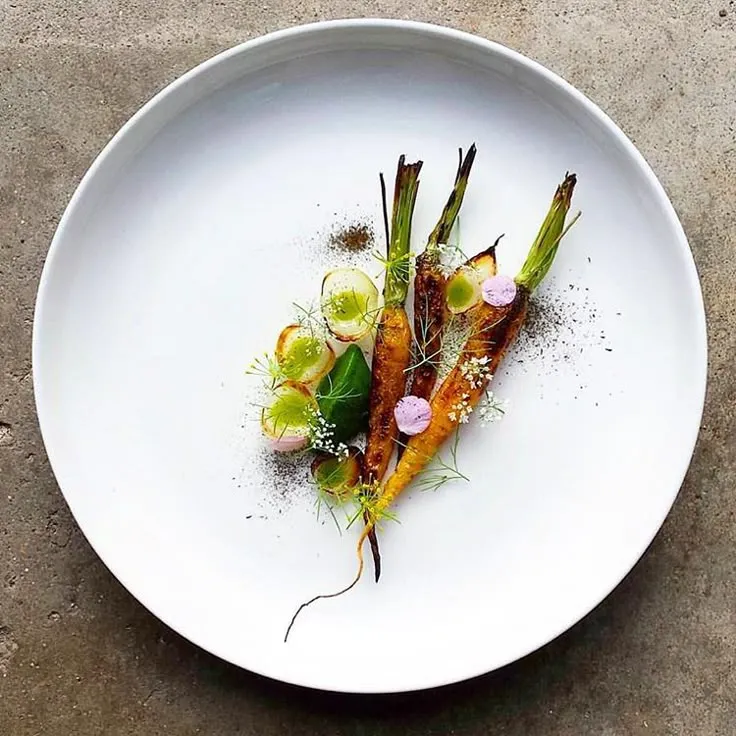
Over the past decade, a cohort of American chefs and restaurateurs has been making a sustained argument — through their menus, their kitchens, and their public statements — that charcoal-driven cooking is not merely compatible with fine dining but is, in fact, one of the most sophisticated culinary approaches available. The argument rests on several interconnected claims.
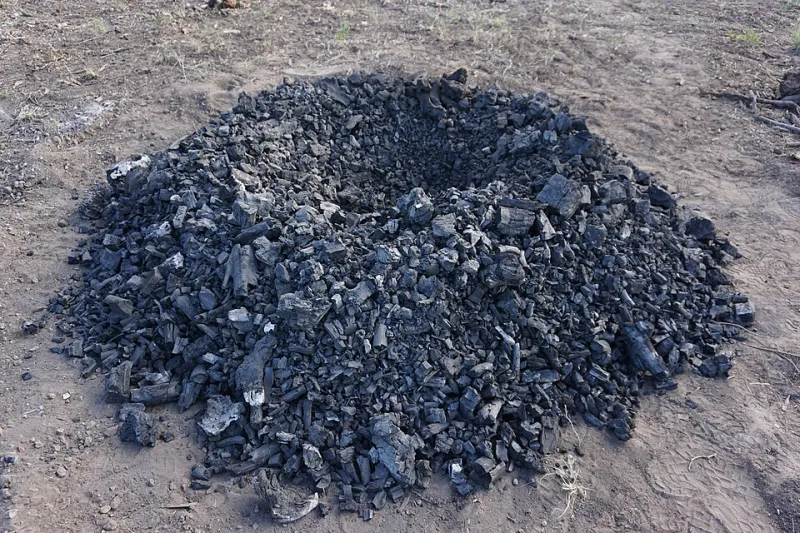
First, that cooking over charcoal demands a level of technical mastery that equals or exceeds what is required by any European classical tradition. The management of live fire — reading heat zones, adjusting airflow, understanding how different fuels affect flavor — is a complex discipline that cannot be learned quickly or practiced carelessly.
Second, that the flavors produced by charcoal cooking are uniquely expressive of American terroir. The mesquite smoke of Texas, the hickory char of the Carolinas, the applewood ember of the Northeast — these are flavors that belong to specific American landscapes in the same way that Burgundian minerality belongs to specific French soil. They are not generic. They are not interchangeable. They carry the identity of the places that produced them.
Third, and perhaps most importantly, that the communal and democratic spirit of fire cooking — its origins in shared meals, outdoor gatherings, and the feeding of many rather than few — is not a disqualification from seriousness but a source of genuine cultural depth. European fine dining has historically been aristocratic in its orientation, designed to signal exclusivity and social distinction. American fire cooking has historically been inclusive, designed to bring people together. That difference is not a deficiency. It is a defining characteristic.
A Legitimate Counterpart to European Tradition
The question worth asking is not whether charcoal-driven American fine dining can measure up to French or Italian or Spanish gastronomy. That framing concedes too much. The more productive question is whether this emerging tradition has developed sufficient depth, regional specificity, and philosophical coherence to stand as a legitimate culinary tradition in its own right.
The evidence suggests that it has. Across the country, restaurants built around live-fire charcoal cooking have developed distinct regional vocabularies — not simply cooking local ingredients over fire, but developing specific techniques, flavor profiles, and aesthetic sensibilities that reflect the particular landscapes and histories of the places where they operate. A charcoal restaurant in Charleston is doing something categorically different from one in Los Angeles or Minneapolis, and those differences are meaningful, traceable, and worth preserving.
The critical establishment has begun to acknowledge this. James Beard Award nominations and wins for chefs working in live-fire traditions have multiplied. Food media coverage of charcoal-driven restaurants has shifted from novelty framing toward serious culinary analysis. And the dining public — increasingly sophisticated and increasingly skeptical of European mimicry for its own sake — has responded with genuine enthusiasm.
What Recognition Would Require
For charcoal-driven fine dining to achieve the kind of institutional recognition that European culinary traditions enjoy, several things would need to happen. The industry would need to develop more rigorous frameworks for understanding and communicating what distinguishes one live-fire tradition from another — the equivalent of the regional appellations that give European cuisine so much of its intellectual structure. Culinary education would need to integrate fire management as a serious discipline rather than a specialty elective. And critics, guides, and awards bodies would need to evaluate charcoal-forward restaurants against criteria developed for that tradition rather than borrowed from European models.
None of this is beyond reach. Much of it is already underway.
What is most significant, perhaps, is the confidence with which the best practitioners of this tradition now speak about what they are doing. There is less apologizing, less positioning relative to European precedent, less anxiety about whether fire cooking belongs in the same conversation as classical gastronomy. There is, instead, a growing conviction that this is not an American approximation of something else — that it is, in its own right, something original.
The smoke has been rising for a long time. It is finally being recognized as a signal rather than a distraction.