Skill Over Silicon: Why Elite Restaurants Are Abandoning Temperature Tech for the Human Touch of Charcoal
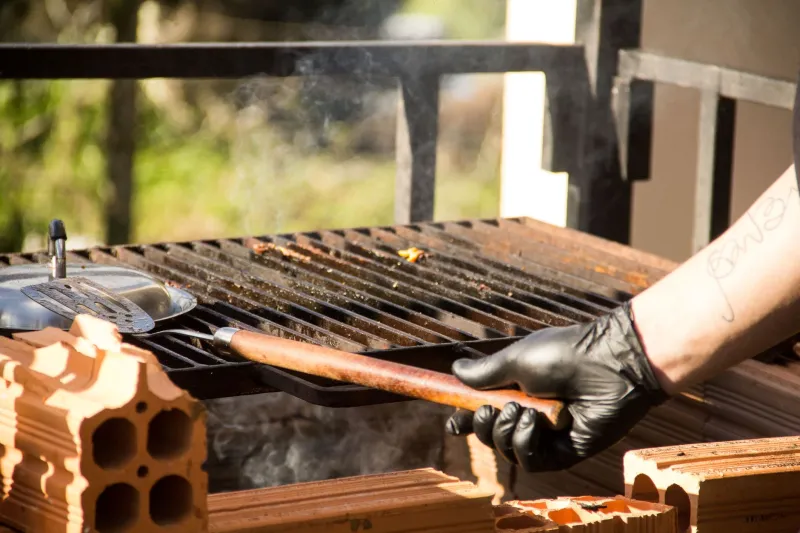
There is a particular irony embedded in the kitchens of some of America's most celebrated restaurants. Establishments that charge guests upward of three hundred dollars for a tasting menu — places that invest heavily in imported ceramics, curated wine cellars, and precisely calibrated front-of-house choreography — are, with increasing frequency, stripping their cooking stations of the most advanced heat management technology available. In its place: charcoal, instinct, and the accumulated judgment of cooks who have spent years learning to read fire.
This is the charcoal paradox. The more exclusive the restaurant, the more likely it is to embrace the most unforgiving and least controllable heat source in the culinary world.
The Case Against Control
For decades, the professional kitchen has been a site of relentless technological advancement. Induction burners promised precise, repeatable heat. Sous vide circulators eliminated the guesswork from protein cookery. Digital probes, computerized smokers, and automated convection systems gave chefs the ability to produce consistent results regardless of who was standing at the stove. Consistency, after all, was understood to be the highest virtue in high-volume fine dining.
But a countermovement has taken hold, and its practitioners argue that consistency achieved through machines is, in a meaningful sense, not cooking at all.
"When a computer holds your temperature, you are not making a decision — you are supervising one," says Marcus Ellroy, executive chef at a live-fire restaurant in Charleston, South Carolina, where all proteins are cooked exclusively over hardwood charcoal with no electronic monitoring of any kind. "The moment you remove the machine, every cook in my kitchen has to actually think. They have to be present. That changes everything about how they develop as professionals."
This sentiment is echoed across a growing cohort of kitchens committed to what some in the industry have begun calling "analog fire" — a cooking philosophy that prizes tactile knowledge, sensory attentiveness, and the kind of improvisational intelligence that no algorithm can replicate.
What Charcoal Demands
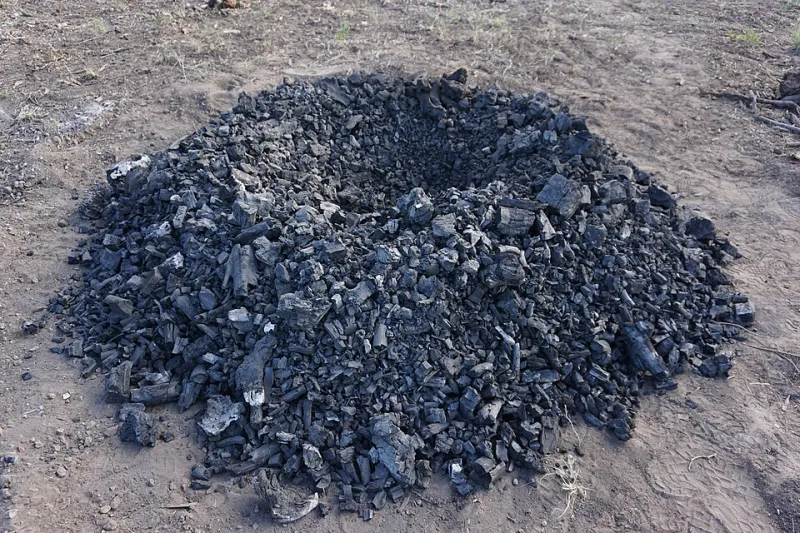
To understand why this approach reshapes kitchen culture so thoroughly, it helps to understand what charcoal actually requires of a cook. Unlike gas, which responds immediately and predictably to a dial adjustment, charcoal is a living system. Its temperature shifts based on airflow, ambient humidity, the density of the fuel itself, and the cumulative heat absorbed by the grill grates over the course of a service. A bed of coals that behaves one way at the start of an evening will behave entirely differently three hours later.
Managing this system effectively requires a cook to develop what veteran grillers describe as "fire literacy" — the ability to read visual cues like ember color, smoke behavior, and flame height, and to translate those observations into real-time adjustments without the aid of a thermometer. It is a skill that takes years to acquire and cannot be accelerated through any shortcut.
For restaurant operators who have embraced this model, that learning curve is not a liability. It is the point.
"Our training program is longer than it was when we had gas," acknowledges Claire Fontaine, culinary director of a New York tasting menu restaurant that converted its kitchen to full charcoal service eighteen months ago. "But the cooks who complete it are fundamentally different. They are more attentive, more adaptive, and more invested in the food they are producing. The charcoal selects for a certain kind of cook — one who is comfortable with uncertainty."
Reshaping the Kitchen Hierarchy
The shift toward charcoal has done more than alter cooking methods. It has quietly reorganized the power structures within professional kitchens. In a technology-dependent kitchen, a line cook's primary qualification is the ability to execute a protocol reliably. In a charcoal kitchen, that protocol does not fully exist. Every service requires judgment calls that no manual can anticipate.
This reality has elevated the role of the grill station in ways that have not been seen in American fine dining since the era before gas ranges became standard. At several charcoal-forward restaurants, the grill cook now holds a rank equivalent to the sous chef — a recognition that managing live fire at the highest level of service demands a depth of expertise that the kitchen cannot function without.
The implications for chef development are significant. Young cooks who train in these environments are acquiring a form of culinary intelligence that their peers in conventional kitchens are not. They are learning to cook, rather than learning to operate equipment — a distinction that, in the view of many chefs committed to this philosophy, matters enormously.
The Competitive Logic of Imperfection
For restaurateurs, the decision to abandon temperature control technology is not purely philosophical. There is a competitive argument embedded in the choice, and it is one that the fine dining market appears to be rewarding.
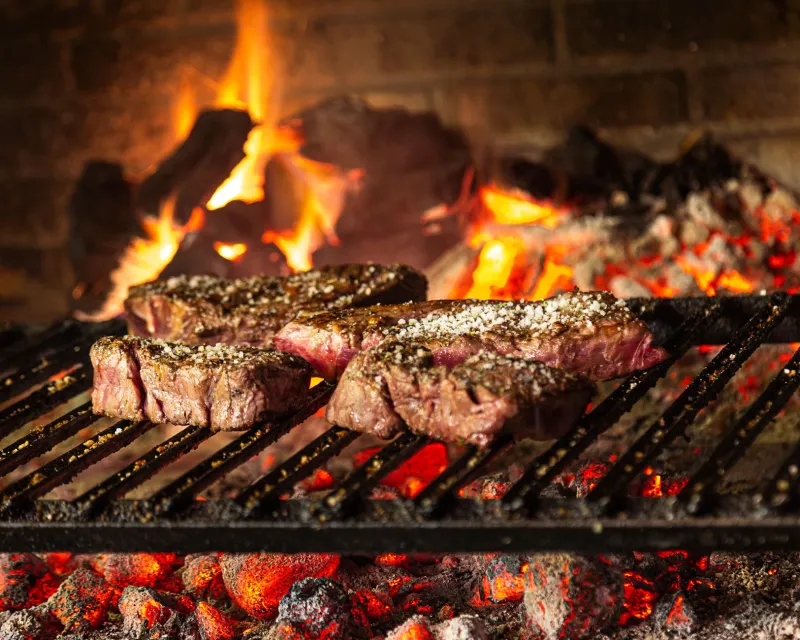
In an industry where differentiation is increasingly difficult to achieve, the visible and audible presence of live charcoal — the glow of embers, the smell of smoke threading through a dining room, the sound of fat meeting fire — creates an experiential signature that no other cooking method can replicate. Guests are not simply eating food cooked over charcoal. They are witnessing a performance of skill that they understand, on some intuitive level, to be rare.
And rarity, in the luxury market, commands a premium.
"Our guests are sophisticated," says Ellroy. "They have eaten in excellent restaurants all over the world. What they have not experienced in most of those places is a cook standing three feet from an open fire, making decisions in real time with no safety net. That is something they remember. That is something they tell people about."
The charcoal paradox, it turns out, is not a paradox at all. In choosing the most demanding and least forgiving heat source available, these restaurants are making a precise calculation: that the skills required to master charcoal are sufficiently rare, and sufficiently visible, to justify every complication they introduce. The fire is not a problem to be managed. It is the point of the entire enterprise.