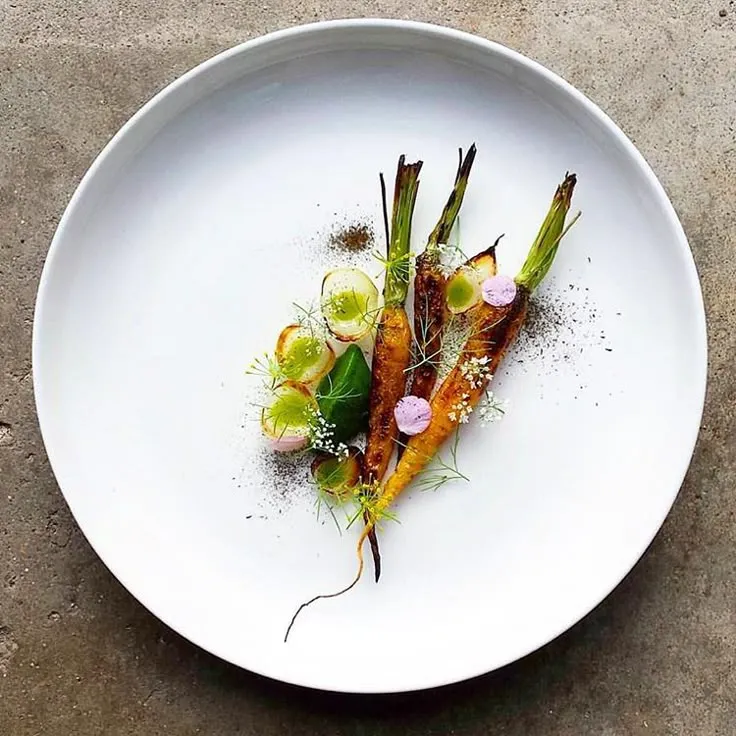
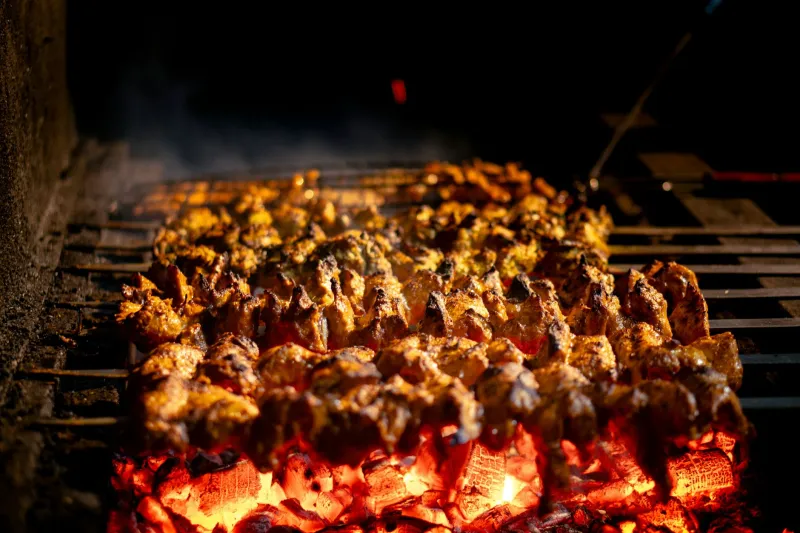
Rooted in Smoke: How American Chefs Are Sourcing Local Charcoal to Define a Sense of Place
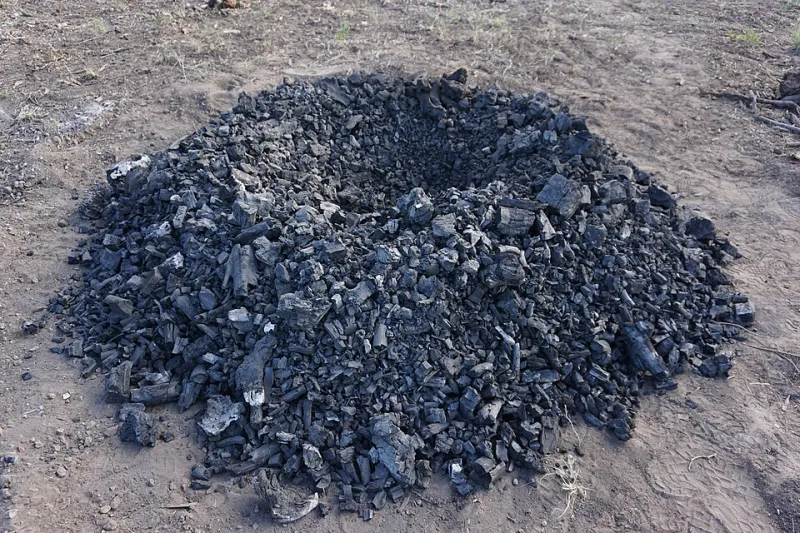
Photo: GIZ Bush Control and Biomass Utilisation Project, CC BY-SA 4.0, via Wikimedia Commons
There is a moment, familiar to anyone who has stood close to a properly fired grill, when the smoke itself tells a story. It is not merely heat. It carries memory — of forest floors, of river valleys, of the particular density of hardwood grown in a specific county of a specific state. For a growing number of America's most serious charcoal-forward restaurants, that story has become the foundation of an entirely new culinary philosophy.
Call it charcoal terroir.
The concept borrows freely from the language of wine. In viticulture, terroir describes the irreducible influence of geography — soil composition, rainfall, elevation, microclimate — on the character of a grape. Applied to fire cookery, the principle is strikingly similar: the species of wood burned, the method by which it is converted to charcoal, and the regional ecology from which it originates all conspire to shape what ends up on the plate. The result is a form of culinary regionalism expressed not through a local vegetable or a heritage breed, but through the very fuel that transforms raw ingredients into something extraordinary.
The Wood Beneath the Coal
Not all charcoal is created equal, and the differences extend far beyond the supermarket divide between briquettes and lump. Lump charcoal — produced by burning whole wood pieces in a low-oxygen environment — retains the aromatic compounds and burning characteristics of its source timber in ways that compressed briquettes, which typically incorporate binders and fillers, simply cannot replicate.
In the American South, where hickory and pecan dominate the hardwood landscape, pit masters and fine dining chefs alike have long understood that local charcoal carries a sweetness and a particular density of smoke that defines regional barbecue identity. Move north to the Appalachian corridor, and white oak becomes the dominant fuel — burning long, clean, and with a subtler smoke that chefs in cities like Asheville and Knoxville increasingly prize for its versatility across proteins and vegetables alike.
On the West Coast, the calculus shifts again. Coastal live oak, available throughout California's Central Valley and foothills, produces a charcoal prized for its high heat output and relatively neutral smoke profile — a quality that has made it a favorite among chefs in Los Angeles and San Francisco who wish to express the ingredient rather than announce the fire. In the Pacific Northwest, alder and fruitwoods from the region's orchards introduce fruity, delicate smoke notes that pair with the area's celebrated salmon and Dungeness crab in ways no imported charcoal could approximate.
Sourcing as Philosophy
For Chef Marcus Holloway of Ember & Basin in Charleston, South Carolina, the decision to source charcoal exclusively from a single family-operated mill in the Lowcountry was not merely a supply chain preference — it was a statement of culinary intent. "The wood that grows here has absorbed this landscape," Holloway explains. "When I cook over it, I'm not just adding smoke. I'm adding context. I'm adding the story of this particular place."
Holloway's approach involves working directly with the mill to specify wood species ratios and char density, a level of engagement more commonly associated with farm-to-table vegetable sourcing than with fuel procurement. His kitchen maintains detailed logs correlating charcoal batches with cooking outcomes — burn temperature curves, ash residue characteristics, and the sensory impressions left on specific proteins.
This degree of intentionality is increasingly common among chefs who have made live fire the defining idiom of their cuisine. In Austin, Texas, where mesquite has long been both celebrated and contested — its aggressive smoke polarizing even devoted barbecue enthusiasts — a cluster of fine dining operators are experimenting with blended charcoal: mesquite combined with post oak in varying ratios, allowing them to modulate smoke intensity course by course within a single tasting menu.
The Parallel to Wine Terroir
The comparison between charcoal sourcing and viticulture is more than rhetorical convenience. Both disciplines require the practitioner to develop an intimate understanding of how geography mediates flavor — and both demand a willingness to surrender a measure of control to the natural world.
A wine producer cannot dictate the precise mineral composition of the soil; a charcoal-focused chef cannot fully standardize the moisture content of timber harvested after an unusually wet winter. In both cases, the practitioner's skill lies in working with natural variation rather than against it. The result, at its finest, is a product that could not have originated anywhere else.
Sommeliers at several of the country's most ambitious charcoal-forward restaurants have begun factoring charcoal provenance into their wine pairing logic — recognizing that a dish cooked over California live oak will present differently than the same preparation cooked over Mississippi hickory, and that the accompanying wine should reflect that distinction.
Sustainability and the Local Fuel Economy
Charcoal terroir carries an implicit argument for regional fuel economies — and, by extension, for sustainable forestry practices. Chefs who source locally are, in many cases, supporting small-scale producers who manage woodlands with long-term ecological health in mind. Sustainably harvested hardwood, managed through selective cutting rather than clear-felling, can represent a genuinely renewable resource, particularly when sourced from producers certified by organizations such as the Forest Stewardship Council.
The economics, however, are not always straightforward. Premium lump charcoal from small regional producers commands prices that can be two to four times higher than commodity alternatives, a cost that inevitably flows through to the menu. For restaurants operating at the fine dining tier, this is often an acceptable trade-off. For those at higher volume, the calculus becomes more complex.
A New Vocabulary for Fire
What charcoal terroir ultimately offers is a new vocabulary for describing and discussing live fire cookery — one that elevates the conversation beyond technique and into the realm of identity. When a chef in New Mexico builds a fire over piñon charcoal, or when a Maryland restaurateur sources lump from locally fallen cherry wood, the fuel itself becomes an argument: that cooking over fire is not a generic act, but a specific one, rooted in a particular landscape and a particular tradition.
For diners increasingly attuned to provenance — who their farmer is, which boat caught their fish, which orchard grew their apples — the question of where the charcoal came from is a natural extension of an existing sensibility. It is, in the most literal sense, the foundation of every dish that emerges from a charcoal-driven kitchen.
The fire, it turns out, has an address.