From Commodity to Craft: The Artisan Charcoal Producers Redefining What American Chefs Burn
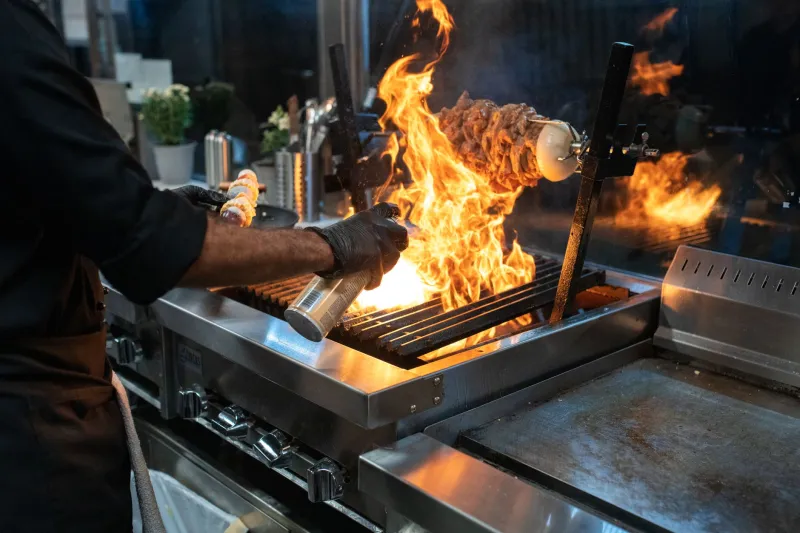
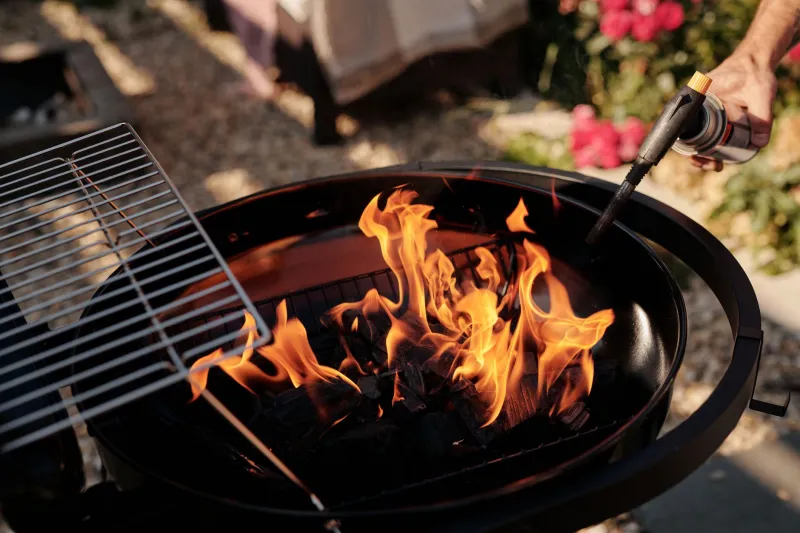
For most of the twentieth century, charcoal occupied an unremarkable corner of the American culinary imagination. It was a means to an end — a bag of compressed briquettes stacked near the lighter fluid at the hardware store, purchased without ceremony and burned without consideration. That era is ending. Across the country, a generation of small-batch producers is treating charcoal not as a commodity but as a raw ingredient deserving the same obsessive attention a sommelier might give to a reserve Burgundy.
The implications for fine dining are profound.
The New Charcoal Economy
The artisan charcoal movement does not have a single birthplace, but its geography is telling. Operations have emerged in the Pacific Northwest, the hardwood forests of Appalachia, the citrus groves of Florida, and the coconut-processing corridors of Hawaii. Each region brings its own botanical character to the process, and the chefs paying closest attention understand that what burns beneath a grill grate is as consequential as what rests upon it.
Producers such as Jealous Devil, based in Florida and sourcing Quebracho hardwood from South America, and the smaller regional operations scattered across the Carolinas and the Ozarks have demonstrated that lump charcoal made from single-origin wood burns differently — hotter, cleaner, and with a chemical signature that leaves a measurable imprint on food. Independent operations working with fruit woods like apple, cherry, and peach are finding receptive audiences among chefs who prize the delicate sweetness these materials impart.
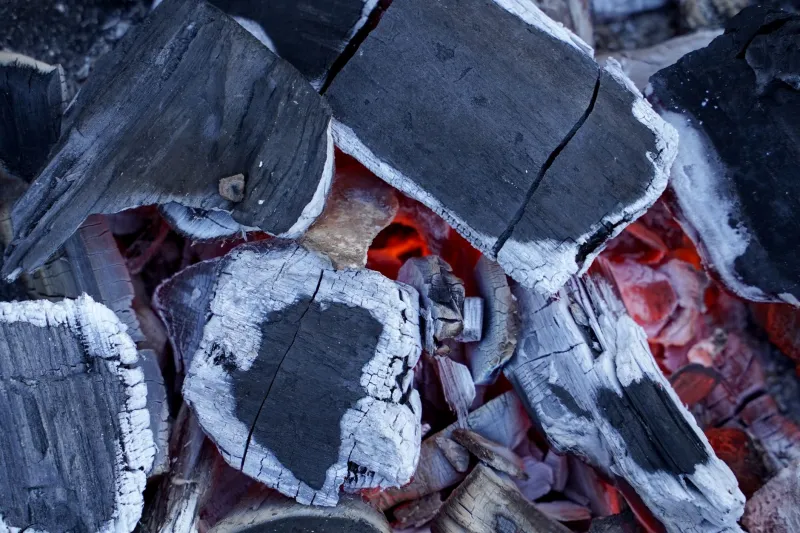
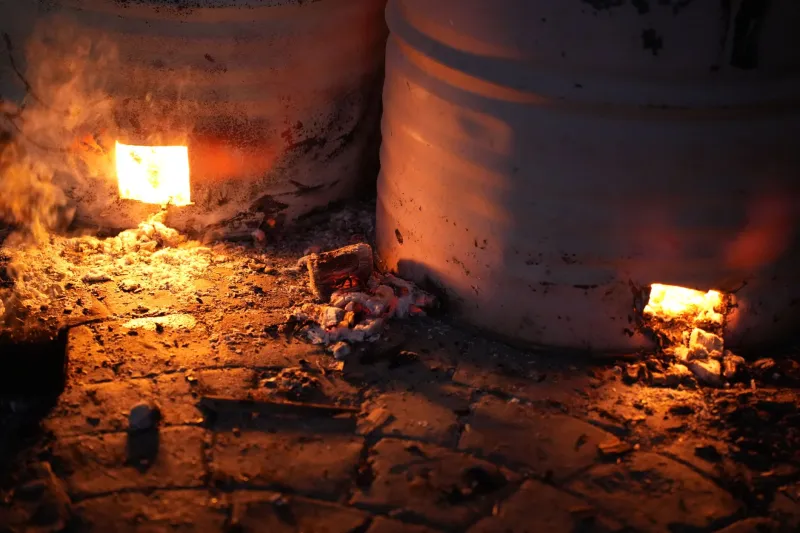
What distinguishes the finest artisan producers is not simply their raw material but their method. Traditional charcoal production — pyrolysis, the controlled combustion of organic matter in low-oxygen environments — has remained fundamentally unchanged for centuries. What has changed is the precision applied to it. Small-batch producers are monitoring kiln temperatures with digital accuracy, controlling burn duration to the minute, and testing moisture content before packaging. The result is a product with predictable, reproducible performance: a quality that professional kitchens demand above almost everything else.
Chef Collaborations and Proprietary Blends
Perhaps the most significant development in this emerging ecosystem is the direct collaboration between producers and working chefs. What began as informal conversations — a chef calling a supplier to ask whether a particular wood species was available in quantity — has evolved into structured partnerships producing proprietary charcoal varieties designed for specific culinary applications.
In Chicago, at least two James Beard Award–recognized kitchens have worked with regional suppliers to develop blends that balance heat intensity with aromatic output, creating a fuel profile tailored to their signature proteins. On the West Coast, chefs exploring Japanese-influenced live-fire cookery have partnered with importers bringing authentic Binchotan — the dense white charcoal prized in Japanese yakitori culture — while simultaneously funding domestic trials to produce comparable products from American hardwoods.
The conversation between producer and chef has become genuinely technical. Chefs are specifying desired burn temperatures, asking for information on volatile organic compound output, and requesting samples for controlled kitchen trials before committing to a seasonal supply. Producers, in turn, are learning the language of professional kitchens: consistency, yield, ash production, and the subtle question of how a particular fuel interacts with different proteins and vegetables under varying heat conditions.
This dialogue is reshaping what producers make. Several have introduced tiered product lines — a high-heat lump for searing, a lower-intensity blend for long cooks, and a finishing charcoal designed to be added late in the process for aromatic effect. The vocabulary of specialty coffee or craft brewing has migrated, organically, into the world of fuel.
Coconut Husk, Fruit Wood, and the Question of Terroir
Among the more provocative claims circulating in fine dining circles is the notion that charcoal, like wine, expresses something of the landscape that produced it. The concept of fuel terroir remains contested, but the chefs and producers advancing it are not speaking loosely. Coconut shell charcoal, which burns at exceptionally high temperatures with minimal smoke and almost no ash, produces a clean, neutral heat that allows the natural character of premium proteins to remain undisguised. Mesquite charcoal from the American Southwest delivers an assertive, slightly bitter smoke that suits robust cuts and game meats. Cherry wood charcoal from Michigan orchards introduces a faint sweetness that works in harmony with duck, pork, and certain vegetables.
These are not imagined distinctions. Food scientists studying the Maillard reaction — the complex series of chemical exchanges responsible for browning and crust formation — have noted that the gaseous compounds released during charcoal combustion interact with surface proteins and fats in ways that vary depending on the fuel's botanical origin. The implications for flavor are real, even if the mechanisms remain incompletely understood.
For chefs committed to sourcing with intention, the logic of extending that rigor to fuel is intuitive. If the provenance of a heritage pork loin or a line-caught halibut matters, why should the medium through which heat is applied remain an afterthought?
The Supply Chain Challenge
The artisan charcoal movement faces genuine obstacles. Production is slow, kiln capacity is limited, and the economics of small-batch manufacturing make it difficult to compete on price with industrial suppliers. A premium lump charcoal from a domestic artisan producer may cost three to five times what a restaurant would pay for a commercial alternative. For high-volume operations, that differential is prohibitive. For the small, tasting-menu-format kitchens that define the cutting edge of American fine dining, it is increasingly viewed as a justifiable line item — one that contributes directly to the flavor of every dish that passes over the fire.
Distribution remains another friction point. Unlike wine or specialty food products, charcoal lacks an established network of fine dining–focused distributors. Many chefs currently source directly from producers, managing their own logistics and inventories. Several producers have spoken of the need for an industry infrastructure that does not yet exist — something analogous to the specialty produce distributors who helped bring farmers' market culture into professional kitchens in the 1990s.
A Fuel Worthy of the Food It Serves
The broader significance of the artisan charcoal movement extends beyond the restaurants it currently serves. It represents a maturation of American culinary culture — a willingness to examine every variable in the cooking process and refuse to accept that any element is beneath consideration. The best chefs in this country have spent decades demanding better ingredients, better equipment, and better technique. It was perhaps inevitable that they would eventually turn their attention to what burns beneath everything else.
The producers answering that call are, in their own way, as serious as the chefs they supply. They are foresters, chemists, and craftspeople who have chosen to make something elemental — fire itself — with the same care that a cheesemaker brings to a wheel of aged cheddar or a distiller brings to a single malt. That seriousness is beginning to find its audience.
At Charcoal Dining, we believe the flame is never incidental. What feeds it, it turns out, is the story worth telling.