The Collective at the Coals: Inside the Pop-Up Movement Redefining American Live-Fire Dining
The address arrives by text message, usually forty-eight hours before service. A warehouse in South Brooklyn. A rooftop in Logan Square. A converted carriage house on the edge of Nashville's Germantown neighborhood. The details are sparse, the instructions brief: arrive at seven, wear layers, bring nothing but an appetite.
This is the operating logic of a new and rapidly expanding phenomenon in American fine dining — the charcoal-focused pop-up collective, a hybrid of supper club, culinary showcase, and live-fire theater that has quietly become one of the most discussed developments in the country's restaurant culture.
Origins of an Unlikely Movement
The pop-up format is not new. Temporary restaurant experiences have existed in various forms for decades, from charity benefit dinners to guest chef collaborations hosted by established venues. What distinguishes the current wave is something more specific: the centrality of charcoal as both the cooking method and the conceptual anchor of the entire experience.
The movement's roots are traceable, at least in part, to the disruptions of the early 2020s, when a generation of highly trained chefs found themselves without kitchens, without stages, and without the infrastructure of the traditional brigade system. Some responded by retreating into catering or recipe development. Others used the interruption as an opportunity to reimagine what a dining experience could be — stripped of the overhead of a permanent restaurant, freed from the constraints of a fixed menu, and built entirely around the most primal cooking technology available.
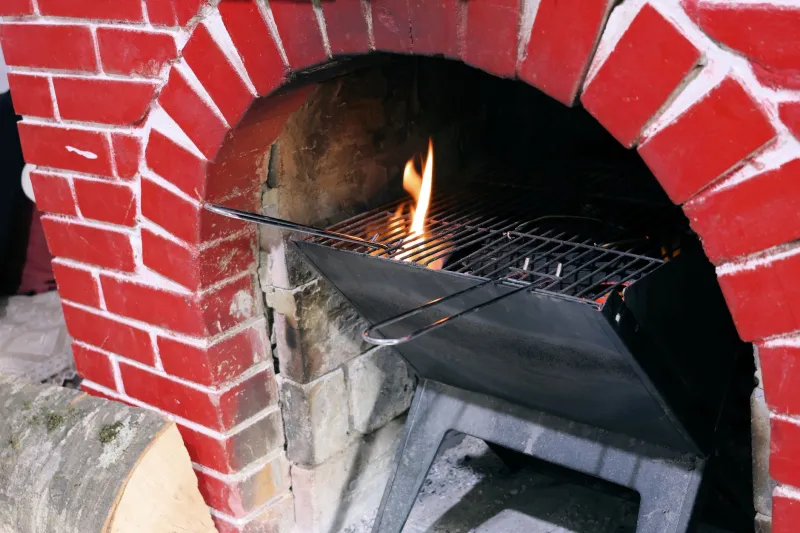
Charcoal, as several of these chefs have noted in conversation, has a particular advantage in the pop-up context: it requires no gas lines, no commercial hood systems, no built-in ventilation infrastructure. A skilled cook with quality charcoal, a reliable grate, and a well-chosen protein can produce food of extraordinary quality in spaces that would be entirely unsuitable for conventional restaurant service.
The Operators Shaping the Form
In Chicago, a collective operating under the name Ember Table has been staging ticketed dinners in rotating locations throughout the city since 2022. The group, which comprises three chefs with backgrounds in Michelin-recognized kitchens, limits each event to twenty-two guests and structures the evening around a single live-fire station positioned at the center of the dining space. The menu changes with each event, but the fuel — a rotating selection of American hardwood charcoals sourced from small producers — is treated as a named ingredient in every course description.
Tickets, priced between $195 and $240 per person depending on the wine pairing option, sell out within hours of release, typically through a newsletter list that has grown to more than four thousand subscribers without a single paid advertisement. The collective covers its costs through ticket sales alone, with no investors, no landlord, and no front-of-house payroll beyond the chefs themselves.
In Los Angeles, a different model has taken hold. Chef-driven pop-up series operating out of permitted commercial kitchen spaces in the Arts District and Boyle Heights have begun attracting national attention, in part because several of their operators have chosen to document the experience in real time across social platforms, offering followers an unfiltered view of mise en place, fire management, and plating under conditions that are, by design, more demanding than those of a conventional kitchen.
On the East Coast, Brooklyn and Philadelphia have emerged as particularly active markets. One recurring series hosted in a Bushwick industrial space has developed a format in which two or three guest chefs collaborate on a single menu, each responsible for courses that showcase their individual relationship with live-fire technique. The result is a meal that reads almost like a conversation — a comparative study in the ways different culinary perspectives interpret the same fundamental tool.
The Economics of Fire Without Fixed Walls
The financial logic of the charcoal pop-up collective is, in several respects, more favorable than that of a traditional restaurant, though it is not without its own complications.
Overhead is substantially reduced. Without a permanent lease, the largest single expense in conventional restaurant economics is eliminated. Equipment costs are manageable: a serious portable charcoal setup, including high-quality grills, fire management tools, and fuel storage, represents a one-time investment that amortizes quickly across multiple events. Food costs, while not trivial given the premium ingredients these collectives typically source, are more predictable than in a restaurant context because guest counts are fixed in advance.
The challenges, however, are real. Permitting is inconsistent across cities and jurisdictions, and several operators have described navigating health department requirements as the single most time-consuming aspect of running a pop-up series. Venue relationships require constant maintenance; the ideal space for a charcoal-centered dinner — open, ventilated, flexible — is not always easy to secure. And the absence of a permanent front-of-house team means that service, however intimate and personal, relies entirely on the chefs themselves to manage the guest experience from arrival to dessert.
Still, the margins, when events are well-executed and fully subscribed, compare favorably to what many of these chefs earned in conventional restaurant employment. Several have described the pop-up model as the first context in which they have felt genuine economic agency over their own culinary work.
What the Guest Receives That a Restaurant Cannot Offer
Beyond the economics, the pop-up collective has introduced something into American dining culture that permanent restaurants struggle to replicate: genuine proximity to the act of cooking.
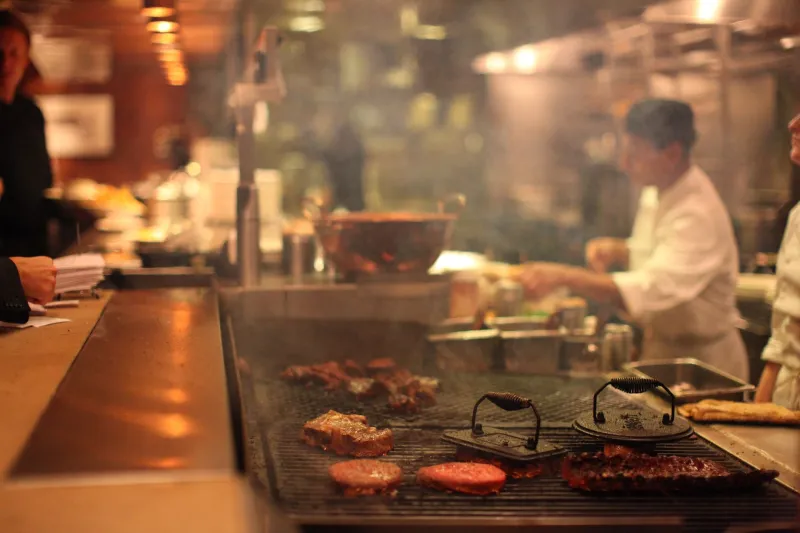
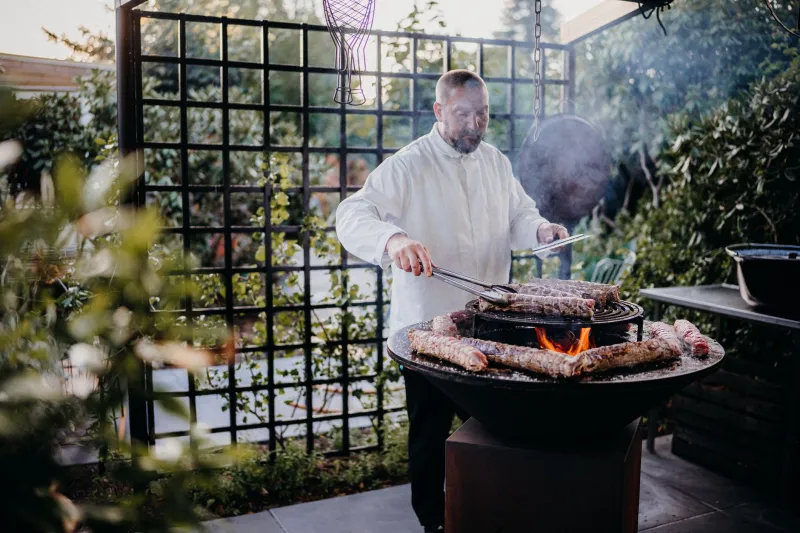
In a traditional fine dining environment, the kitchen is architecturally and operationally separated from the guest. The fire, the smoke, the decisions made in real time over a live grate — these remain invisible, translated only in the finished plate. In the pop-up format, particularly those built around a central charcoal station, the guest witnesses the entire process. They smell the fuel ignite. They hear the fat hit the coals. They watch a chef make decisions about heat and timing that no recipe can fully prescribe.
This transparency has proven to be among the most valued aspects of the experience, according to operators who solicit post-event feedback. Guests describe feeling not merely fed but genuinely educated — returned to an understanding of cooking as a physical, sensory, and fundamentally human act.
The Road Ahead for the Collective Model
As the pop-up collective movement matures, a number of its most successful operators are beginning to face a familiar dilemma: whether to translate their momentum into a permanent space, and whether doing so would preserve or diminish what makes the format compelling.
Some have chosen to remain itinerant, reasoning that the transience is itself part of the value proposition. Others are exploring hybrid models — residencies within existing restaurants, or semi-permanent spaces that retain the intimate scale and live-fire focus of the pop-up without the full overhead of a conventional establishment.
What seems clear is that the charcoal pop-up collective has moved well beyond novelty. It has become, for a meaningful segment of American dining culture, a preferred mode of experiencing live-fire cuisine at its most direct, most personal, and most alive.