Where Delicate Meets Daring: How Coastal Seafood Chefs Are Mastering the Art of Charcoal Fire
For decades, the American charcoal kitchen has been spoken of in the language of beef — the sear of a ribeye, the bark on a brisket, the thunderous char on a dry-aged porterhouse. It is a vocabulary built for boldness, for proteins that can absorb punishment and emerge triumphant. Seafood, by contrast, has historically been afforded a more cautious treatment: the gentle sauté, the careful poach, the restrained broil. The assumption that live fire and delicate ocean proteins are fundamentally incompatible has persisted for years.
That assumption is now being systematically dismantled — one perfectly charred fillet at a time.
Along both American coasts, a cohort of forward-thinking chefs is rewriting the rules of seafood cookery by placing fish, shellfish, and crustaceans directly into conversation with charcoal's distinctive heat and smoke. What they are discovering is not merely a new cooking method, but an entirely different philosophy of flavor — one that honors the ingredient's inherent delicacy while coaxing from it depths that no conventional technique can replicate.
The Temperature Question: Rethinking Heat for Seafood
The most fundamental challenge in charcoal seafood cookery is thermal control. A well-marbled strip steak benefits from the ferocious, even unforgiving heat that a fully loaded charcoal chimney produces. A fillet of Pacific halibut or a cluster of Maine clams does not share that tolerance. Overcook a piece of fish by even thirty seconds, and the proteins seize irreparably — no amount of skilled plating will rescue it.
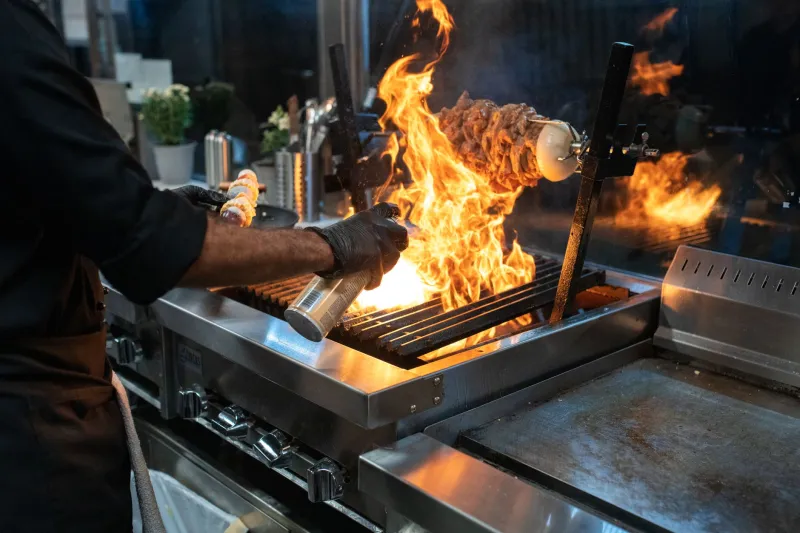
This reality has prompted coastal chefs to develop a far more nuanced relationship with their grills than their steakhouse counterparts typically require. Rather than building a single, roaring coal bed, many are constructing what some in the industry call a "graduated heat landscape" — a grill surface that moves from high-intensity zones near the center to gentler, ambient-heat areas at the periphery. Fish can then be positioned precisely according to its thickness, fat content, and desired finish.
Chef Marisol Vega, who helms a celebrated seafood-focused restaurant on the San Diego waterfront, describes her approach with characteristic precision. "I think of my charcoal setup the way a painter thinks of a palette," she explains. "You're not applying the same pressure to every part of the canvas. A thin piece of local yellowtail needs a quick, confident pass over high heat — maybe eight seconds a side — then it moves somewhere quieter to finish. A thick swordfish steak earns a longer relationship with the coals."
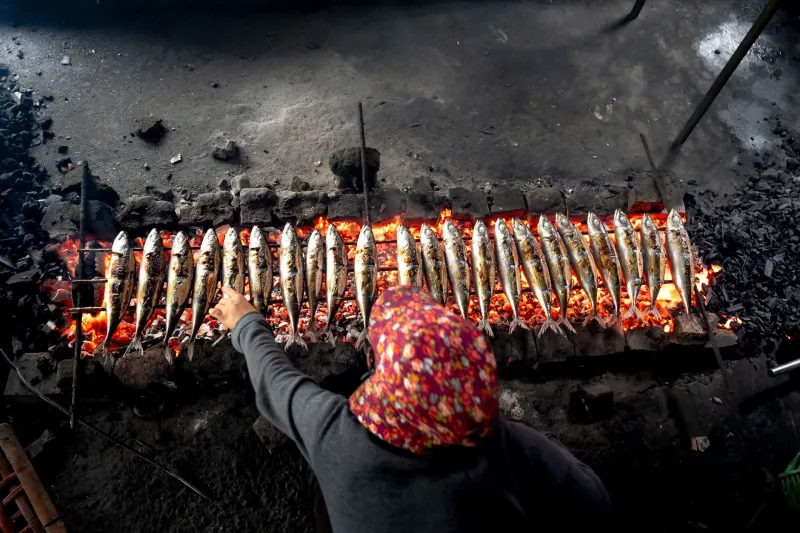
Vega and her team have also experimented extensively with charcoal variety, finding that different fuel sources produce meaningfully different results on seafood. Binchotan, the dense Japanese white charcoal increasingly favored by American fine dining kitchens, burns at a steadier, more radiant temperature with minimal smoke — a quality that suits lean, mild fish like flounder or branzino, where clean heat is preferred over assertive flavor. Lump hardwood charcoal from American oak or hickory, by contrast, lends a subtle smokiness that complements richer species like salmon or king mackerel.
Shellfish and the Slow Ember: A Study in Patience
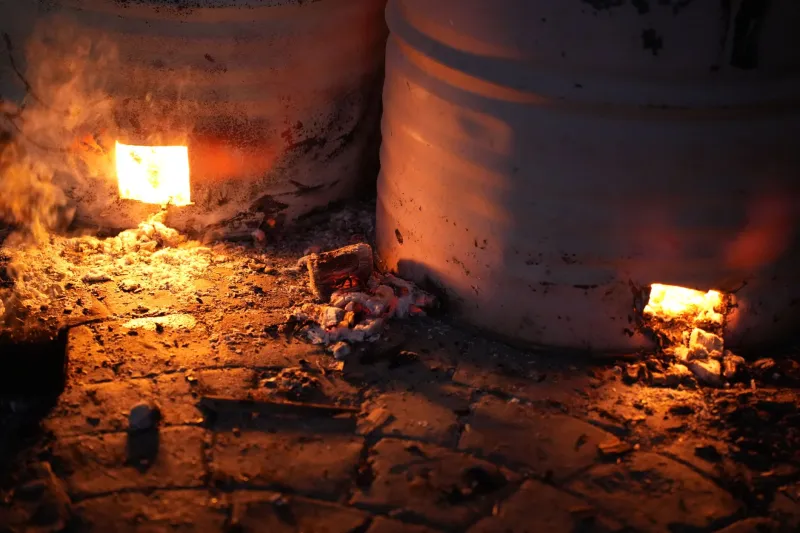
If fin fish demands precision and speed, shellfish rewards something closer to patience and intuition. Oysters, clams, mussels, and scallops respond to charcoal in ways that have genuinely surprised even experienced live-fire cooks. The heat of the embers — particularly in the dying stages of a coal bed, when the fire has settled into a steady, low-intensity glow — creates conditions ideal for shellfish cookery that no other method quite replicates.
At a acclaimed restaurant on the Maine coast, Chef Daniel Okafor has built an entire section of his menu around what he calls "ember shellfish" — preparations in which bivalves are placed directly onto the grate above cooling coals and allowed to steam open in their own liquor. The result is something between a roast and a steam: the shells char slightly on the outside, the interior fills with a concentrated, smoke-touched broth, and the meat inside retains a tenderness that conventional steaming rarely achieves.
"The charcoal changes the character of the liquor entirely," Okafor says. "When a littleneck clam opens over embers, the brine inside takes on this mineral, almost savory quality — it tastes more of the sea than a clam cooked any other way. Our guests notice it immediately, even those who can't articulate exactly what they're tasting."
Okafor has further refined his shellfish program by incorporating smoke-infused charcoal variants — specifically, charcoal to which dried seaweed and fennel fronds have been added during the burn. The resulting fuel imparts a coastal aromatic quality that he describes as "the smell of low tide rendered edible."
Crustaceans Over Coal: Lobster, Crab, and the Case for Live Fire
Perhaps no seafood category has benefited more dramatically from the charcoal renaissance than crustaceans. Lobster, in particular, has long occupied an almost untouchable position in American fine dining — boiled or steamed to a vivid red, served with clarified butter, and treated with a reverence that bordered on the ceremonial. The idea of placing a lobster over live coals once seemed almost transgressive.
Chef Priya Nair, whose restaurant on the Massachusetts coast has earned significant attention for its unconventional approach to New England classics, recalls the skepticism she encountered when she first introduced a charcoal-grilled lobster to her menu. "My sous chef thought I'd lost my mind," she says, laughing. "We were used to thinking about lobster as something precious — something to be protected from heat, not exposed to it. But the grill changed everything about how we understood that ingredient."
Nair's technique involves splitting live lobsters, brushing the cut surfaces with a compound butter incorporating preserved lemon and smoked paprika, and placing them shell-side down over a medium-high lump charcoal fire. The shell acts as a natural heat conductor and vessel, protecting the meat from direct flame while the charcoal's radiant heat penetrates from below. The result — a lobster tail with a gently caramelized surface, a faint smokiness, and a richness amplified by the butter melting into the hot shell — has become one of the most requested dishes on her menu.
A New Vocabulary for the Coast
What unites these chefs — despite their geographic distance and their different approaches to fuel, temperature, and species — is a shared conviction that charcoal is not a blunt instrument. Used with knowledge and discipline, it is among the most expressive tools available to a seafood cook. The heat is responsive. The smoke is adjustable. The results, when the technique is mastered, are revelatory.
The broader American dining public is beginning to recognize this. As live-fire cooking has moved from novelty to expectation in many urban markets, guests are arriving at coastal restaurants with a new sophistication — an understanding that the flavors charcoal imparts are not accidental, but carefully authored. The char on a piece of grilled striped bass is not a flaw to be apologized for; it is a signature, a mark of craft, a point of pride.
The charcoal renaissance, it turns out, was always destined to find the sea.