When Smoke Meets the Cellar: How Beverage Directors Are Pairing Wine and Spirits with Charcoal's Unique Flavor Signatures
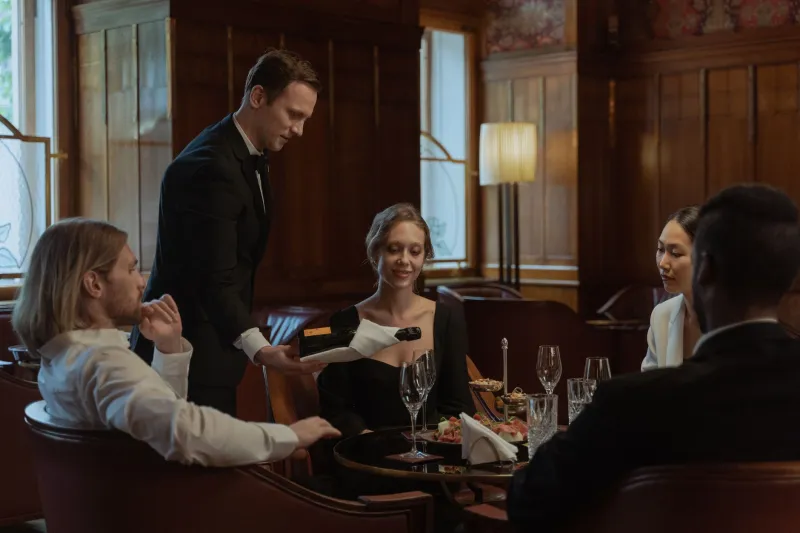
For decades, the sommelier's domain began and ended at the plate. What arrived on it — whether a roasted duck breast or a simply seared halibut — was the kitchen's concern. The beverage director's task was to complement the protein, the sauce, the seasoning. Today, at a growing number of America's most ambitious restaurants, that calculus has shifted in a quietly revolutionary direction. The fuel itself has entered the conversation.
"When our chef changed from a mixed hardwood lump to a Japanese binchotan for the omakase service, I had to rethink three pairings entirely," says Marcus Helle, beverage director at a celebrated live-fire restaurant in Chicago's West Loop. "Binchotan burns so cleanly that it doesn't impose a smoke flavor — it concentrates the ingredient. Suddenly the Grüner Veltliner I'd been recommending felt too assertive. We moved to a Chablis premier cru and the whole sequence clicked into place."
This is not an isolated conversation. Across the United States — from Houston's wood-fire dining rooms to the ember-driven tasting menus of the Pacific Northwest — beverage professionals are developing what some are beginning to call a fluency in charcoal.
Understanding the Fuel Before the Bottle
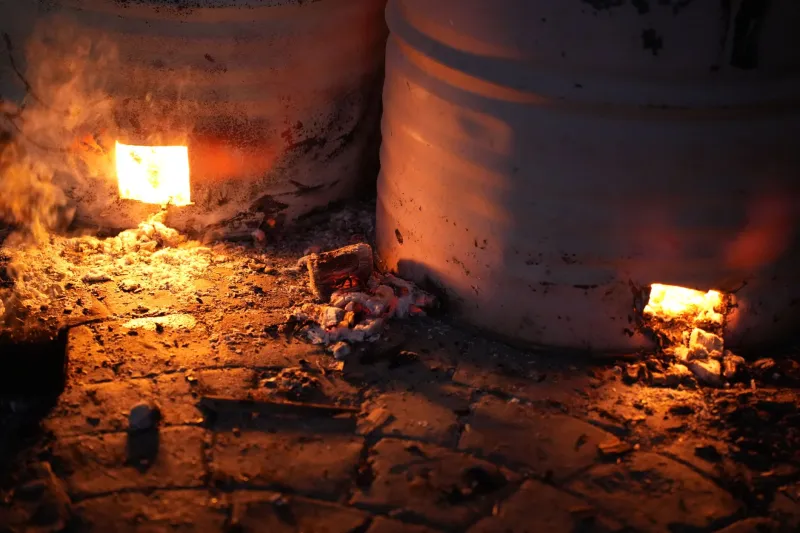
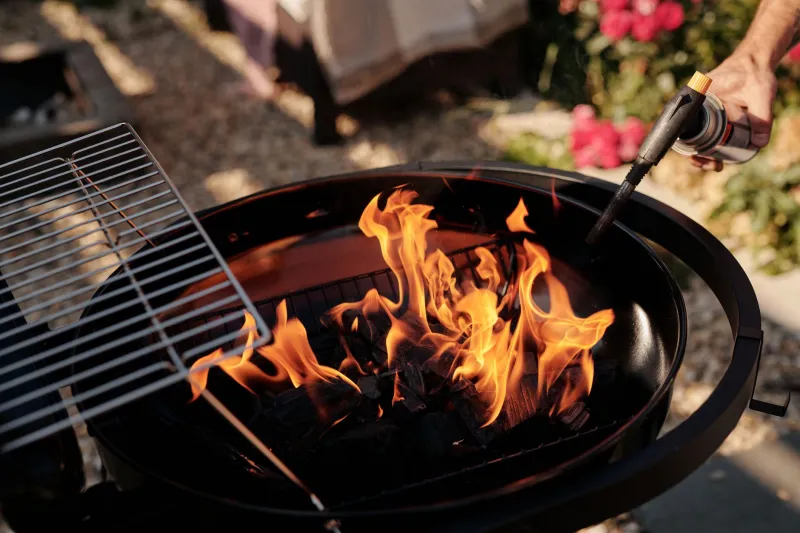
The foundation of any intelligent pairing in this context begins with an honest accounting of what different fuels actually contribute to a dish. Charcoal is not a monolithic ingredient. Lump hardwood charcoal, made from a single wood species — hickory, oak, cherry, pecan — carries residual aromatic compounds that survive the carbonization process and transfer, in subtle but measurable ways, to food cooked over it. Compressed briquettes, particularly those made with binders and fillers, may introduce additional flavor variables. And smoking woods added directly to the fire — apple, alder, mesquite, peach — layer an entirely distinct aromatic register on top of the base fuel.
Beverage directors who have invested time in understanding these variables describe a mental map not unlike the one they use when navigating regional wine styles. Hickory-smoked proteins tend toward bold, bacon-adjacent smoke signatures with a slightly sweet undertone — pairings that favor wines with enough fruit concentration and structural tannin to stand alongside rather than disappear beneath the smoke. Think Central Coast Zinfandel or a Rhône-style Grenache blend from California's Paso Robles region.
Cherry wood, by contrast, produces a lighter, fruit-kissed smoke that integrates more delicately with the food's natural flavors. Here, the beverage director has considerably more latitude. "Cherry smoke over a duck breast is a gift," says Lydia Okonkwo, wine director at a fine dining restaurant in Atlanta that sources its own artisan lump charcoal. "You're already working with a protein that has inherent richness and gaminess, and the cherry softens those edges. That opens the door to Pinot Noir in a way that straight hickory never would."
The Case for Cocktails at the Fire
Wine is not the only beverage discipline being reshaped by this conversation. At several high-profile restaurants, bar programs have been deliberately engineered to engage with smoke in ways that feel complementary rather than competitive.
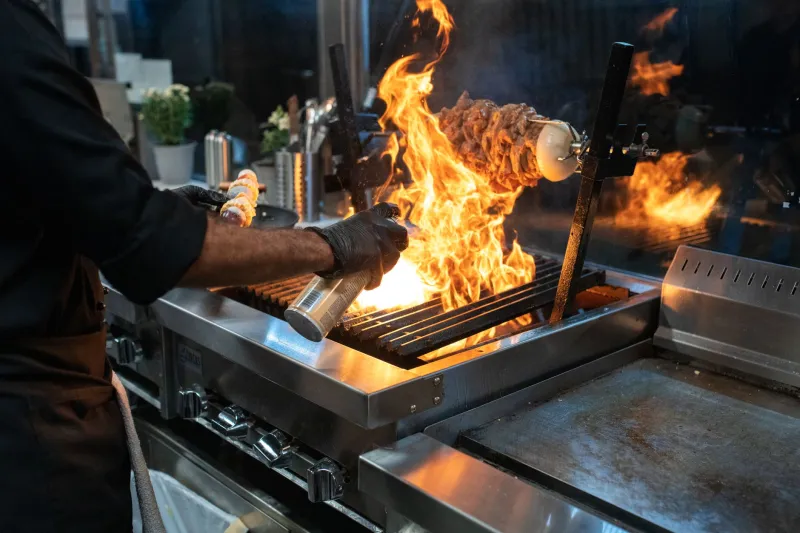
Mesquite is perhaps the most polarizing fuel in a fine dining context — its assertive, almost medicinal smoke can overwhelm delicate preparations — but skilled beverage professionals have found it a surprisingly productive partner for certain spirits. Aged mezcal, with its own deeply smoky profile derived from roasting agave in underground pits, creates a harmonic resonance with mesquite-grilled beef that some guests describe as almost elemental. "It's not contrast, it's convergence," explains Tomás Reyes, bar director at a Texas steakhouse that has built its cocktail program explicitly around the kitchen's charcoal selections. "We're not trying to cut through the smoke. We're deepening it, giving it a second dimension."
Reyes has taken this philosophy further, developing a series of smoked cocktails that mirror the specific wood profile used on a given evening's menu. When the kitchen burns post-oak lump — the traditional fuel of Central Texas barbecue — his team incorporates a post-oak tincture into an old fashioned variation built on Texas bourbon. The result is a drink that feels less like an accompaniment and more like an extension of the meal's central theme.
Binchotan and the Art of Restraint
No discussion of charcoal and beverage pairing is complete without addressing binchotan, the Japanese white charcoal that has become something of a cult ingredient among American fine dining chefs. Made from ubame oak through a process of extreme high-temperature carbonization, binchotan burns at intense, consistent heat with virtually no smoke. Its contribution to flavor is one of concentrated purity — it amplifies rather than alters.
For beverage directors, this restraint is both a freedom and a challenge. "Binchotan is the most wine-friendly fuel there is, because it doesn't compete," says Helle. "But that also means the wine has nowhere to hide. The food is so precisely itself that you need to be equally precise in what you pour."
The pairing philosophy around binchotan-grilled fish and seafood at several omakase and kaiseki-influenced American restaurants has trended toward high-acid, mineral-driven whites — aged white Burgundy, Sancerre, dry Alsatian Riesling — that honor the ingredient's integrity without imposing a secondary narrative. For binchotan-seared wagyu or A5 Japanese beef, the calculus shifts toward wines of similar concentration and composure: structured Nebbiolo, older Barolo vintages, or even a well-aged domestic Cabernet Franc from Virginia or New York's Finger Lakes region.
Building the Integrated Experience
What separates restaurants genuinely practicing this discipline from those merely gesturing at it is the degree of communication between kitchen and beverage program before service begins. At the most sophisticated operations, the beverage director is informed of fuel changes in advance — sometimes weeks ahead, when a new charcoal supplier is being evaluated — and adjusts the pairing notes accordingly.
"We taste together," says Okonkwo. "The chef grills a sample over the new lump, and I sit down with a glass of whatever I'm considering recommending. It sounds simple, but most restaurants don't do it. They treat the wine list as fixed and the kitchen as a separate universe."
That separation, increasingly, feels like a missed opportunity. Charcoal-driven cuisine is defined by its commitment to fire as a living, variable element — one that shifts with the quality of the fuel, the density of the wood, the weather conditions on a given night. A beverage program that meets that variability with equal attentiveness does not merely complement a meal. It completes it.
The charcoal sommelier, as a formal title, does not yet exist. But the thinking behind it is already reshaping how America's finest restaurants approach the most primal of culinary elements — and the most civilized of dining rituals — as a single, unified experience.