Same Cut, Different Universe: How Fine Dining and the Smokehouse Approach Charcoal Cooking from Opposite Ends
A brisket is a brisket — until it isn't. Depending on whether it lands on the prep table of a Michelin-starred kitchen or a beloved roadside smokehouse, that same cut of beef will be treated as an entirely different culinary object. The philosophies, temperatures, timings, and finishing techniques that separate fine dining charcoal cookery from traditional barbecue reveal a profound divide in intention, not just presentation.
Both traditions honor fire. Both depend on charcoal's singular capacity to impart depth, complexity, and a certain irreproducible character that gas and electric cooking simply cannot manufacture. And yet, the moment a pitmaster and a tasting-menu chef each reach for the same ribeye, they begin moving in fundamentally opposite directions.
The Philosophy of Heat
In a traditional American smokehouse, low and slow is doctrine. A brisket might spend twelve to sixteen hours in a smoker held between 225°F and 250°F, the collagen dissolving gradually into gelatin, the fat rendering through the muscle fibers at a pace that demands patience above all else. The charcoal here functions as a sustained heat source, its role subordinate to time. The smoke — thick, persistent, and deeply penetrating — is the flavor architect.
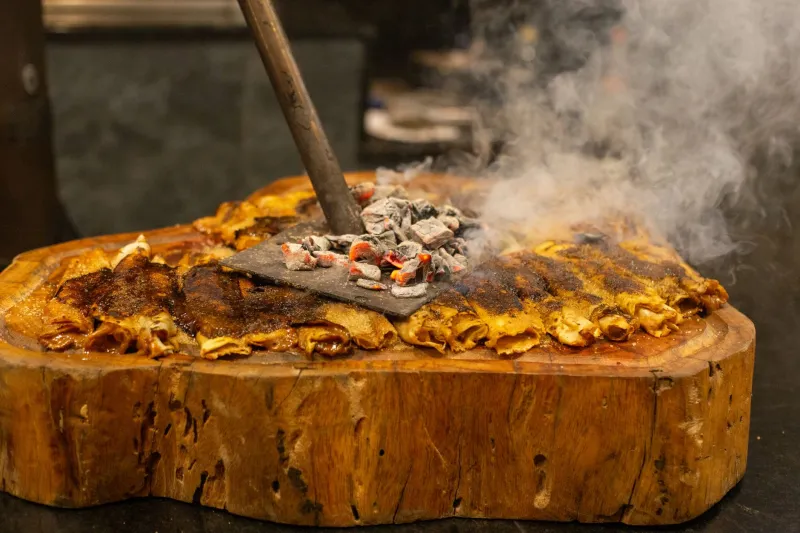
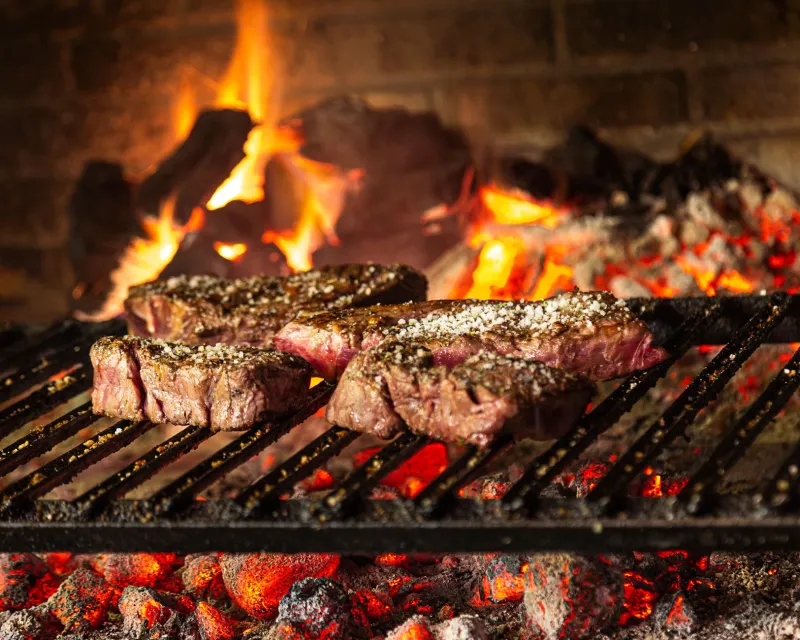
Fine dining charcoal cookery operates on an almost opposing set of thermal principles. A tasting-menu kitchen working with brisket is unlikely to serve a slab of it; instead, a chef might isolate the flat, trim it to a precise weight, and subject it to a controlled high-heat sear over hardwood lump charcoal burning at 600°F or above. The goal is not total transformation through prolonged exposure, but rather a fleeting, intense encounter with flame — one that produces a specific crust, a deliberate level of interior doneness, and a smoke character that is whisper-light rather than all-consuming.
This distinction matters enormously. The smokehouse seeks saturation; the fine dining kitchen seeks punctuation.
Meat Selection: Grade, Source, and Specification
Both worlds care deeply about sourcing, though they express that care differently. A great Texas pitmaster will speak reverently about choice or prime briskets from specific regional processors, prizing consistent fat content and dependable marbling that will survive the long cook without drying out. Volume matters in a smokehouse context — a busy operation might run dozens of briskets simultaneously, requiring uniformity across the board.
At the fine dining level, sourcing becomes almost obsessively individualized. Chefs may work with heritage breed cattle — Wagyu crosses, Akaushi, or pasture-raised Black Angus from a single farm — selecting cuts with fat structures and muscle compositions that behave predictably under extreme, rapid heat. A ribeye destined for a twelve-course tasting menu might be dry-aged in-house for forty-five days before it ever approaches the charcoal grill, a preparation step that would be economically and logistically impractical in any volume-oriented barbecue operation.
The chicken thigh presents a similarly instructive contrast. At a casual smokehouse, it is typically rubbed generously with a spice blend — paprika, garlic, brown sugar, cayenne — and cooked indirectly until the skin renders and the meat pulls easily from the bone. In a fine dining setting, that same thigh might be deboned, brined in a precisely salted solution for a calculated number of hours, and then kissed briefly over binchotan charcoal — the dense Japanese white charcoal prized for its near-odorless burn and intense, focused radiant heat — before being finished with a brush of cultured butter infused with charred leek ash.
Temperature Control: Intuition vs. Engineering
The pitmaster's relationship with temperature is intimate and largely intuitive. Decades of experience translate into an almost physical sensitivity to the fire — the way the smoke changes color, the sound of the wood settling, the smell of the meat at different stages of the cook. Thermometers are consulted, certainly, but they confirm rather than direct.
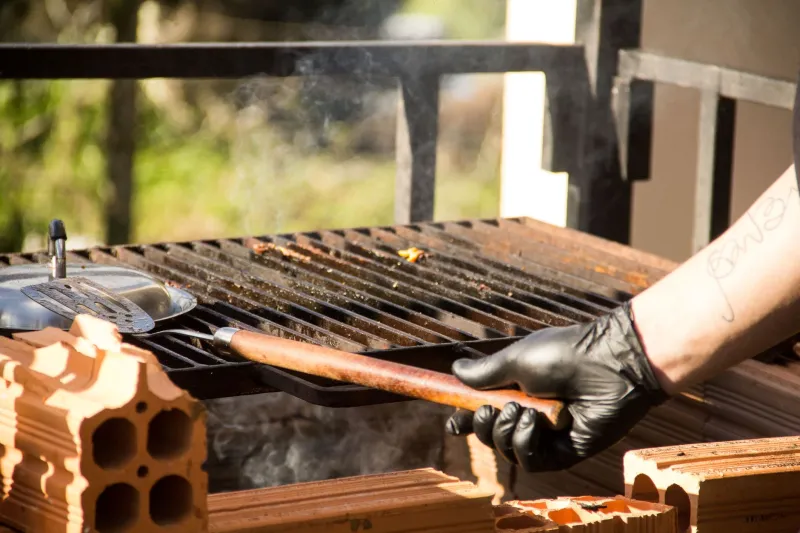
Fine dining kitchens bring a different kind of rigor. Chefs may use infrared thermometers to map the precise temperature gradient across a charcoal grill's surface before committing a protein to it. They might rotate a piece of fish every forty-five seconds to ensure symmetrical exposure, or pull a lamb chop from the grill two degrees before target temperature and allow carryover cooking to finish the work. The charcoal itself is often selected with scientific specificity — different densities of lump charcoal produce different heat outputs and burn durations, and a knowledgeable chef will choose accordingly.
This is not to suggest that one approach is superior. The pitmaster's intuition is itself a form of mastery, accumulated over years in ways that no thermometer can replicate. But the mechanisms by which each tradition manages heat reflect their broader values: the smokehouse prizes communal, time-honored process; the tasting-menu kitchen prizes surgical control.
Finishing Techniques and the Meaning of Presentation
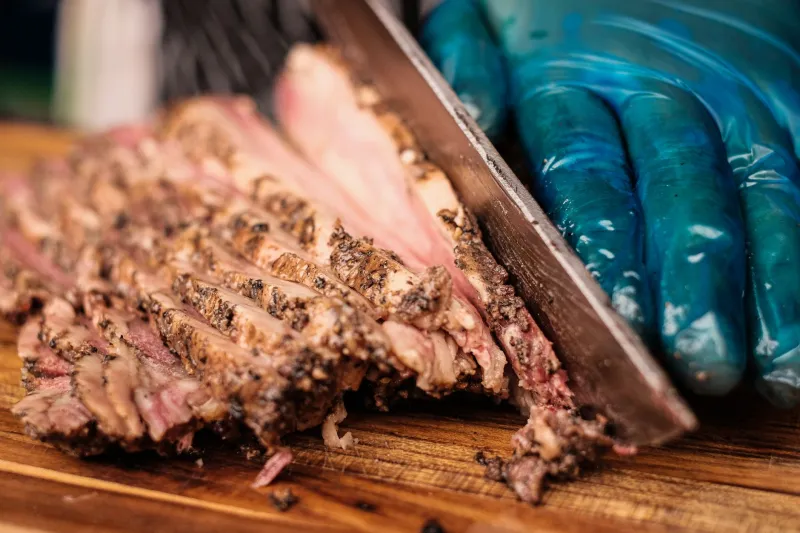
Perhaps nowhere is the divide more visible than in how each tradition finishes and presents its proteins. A properly smoked brisket is sliced thick on butcher paper, its bark — that darkened, spiced exterior crust — celebrated as the crowning achievement of the cook. The presentation is intentionally unadorned. The meat speaks for itself, and anything more would be considered an affectation.
In fine dining, the char is a starting point rather than a conclusion. A charcoal-grilled element might be rested, then sliced thin against the grain and fanned across a warm plate with a pool of bone marrow emulsion beneath it. The char marks are positioned deliberately. A scattering of microgreens or a single pickled element might be added not for garnish's sake but because its acidity is calculated to balance the fat rendered during the cook. The smoke flavor is one voice in a carefully composed chord.
Two Traditions, One Fire
What unites these radically different approaches is the honest acknowledgment that charcoal cooking demands respect. Whether the goal is a twelve-hour brisket that feeds a hundred or a four-ounce wagyu medallion served to twelve, the fire insists on attentiveness. It cannot be set and forgotten. It rewards those who study it and punishes those who do not.
The finest barbecue joints and the most celebrated charcoal-forward restaurants in America share this quality: they are helmed by people who have made a genuine commitment to understanding flame. The techniques diverge, the outcomes look nothing alike, and the price points occupy entirely different economic universes. But the underlying covenant with fire is the same — and that, ultimately, is what makes charcoal cooking one of the most enduring and democratic of all culinary traditions.