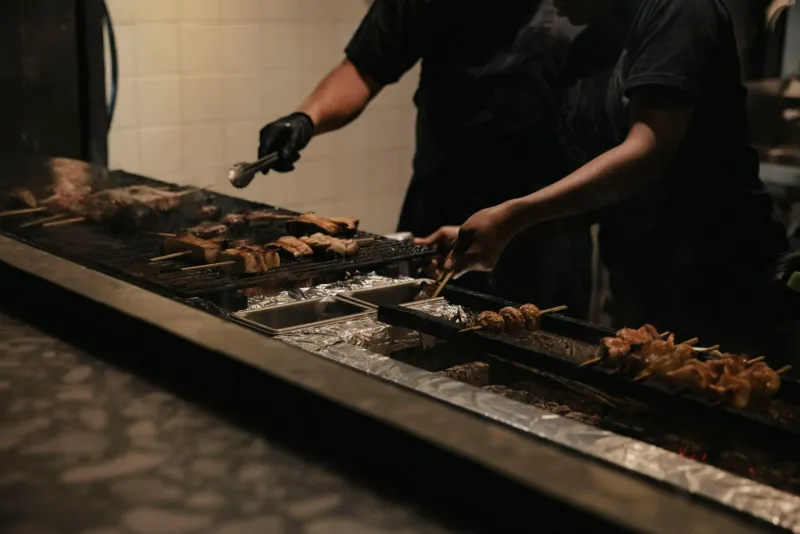
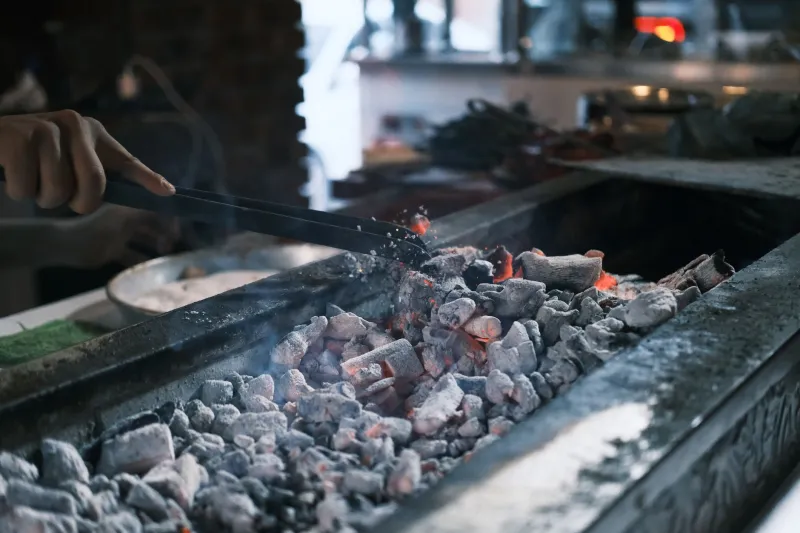
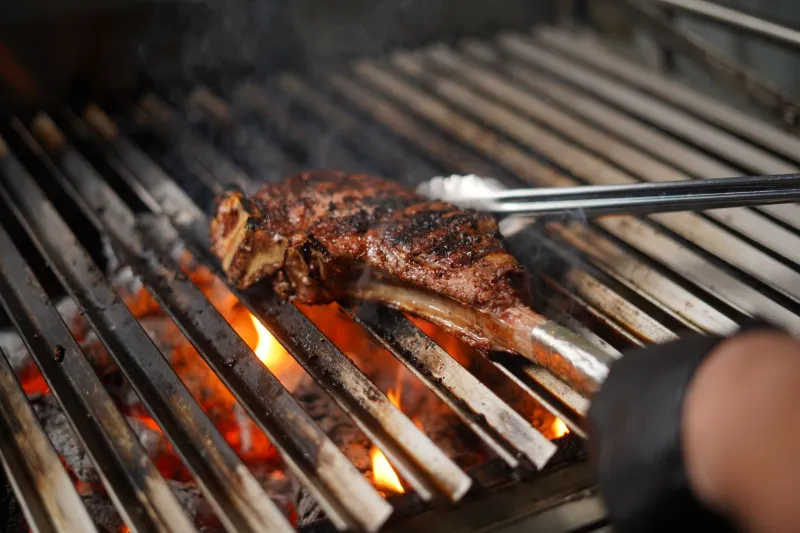
The Hidden Economy of Fire: What Elite Restaurants Actually Spend on Premium Charcoal
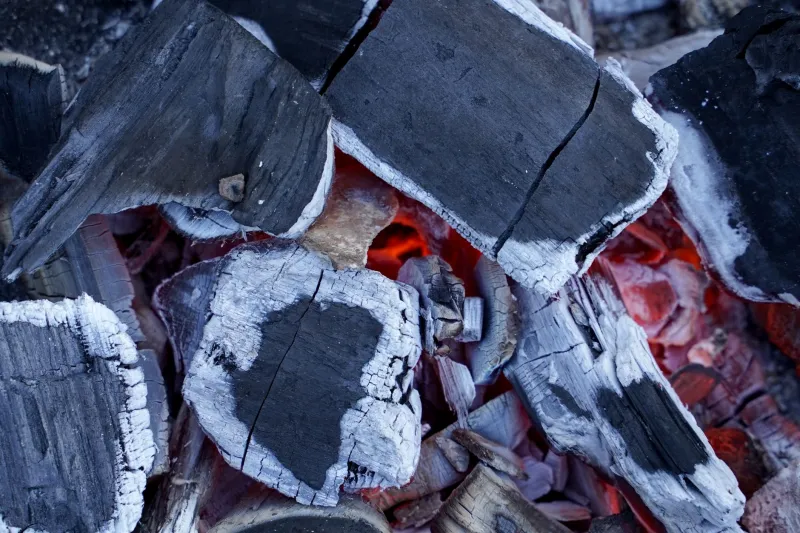
When a diner at a celebrated American grill restaurant orders a dry-aged ribeye kissed by live fire, the bill reflects the cut of beef, the cellar selection, and the white-tablecloth service. What it rarely reflects — at least not visibly — is the forty-dollar bag of imported binchotan charcoal that burned beneath it, or the months-long waiting list a chef navigated to secure that supply. The economics of premium charcoal are, by most accounts, one of the best-kept financial secrets in fine dining.
And yet, for the chefs and restaurateurs who have built their identities around charcoal cookery, this expenditure is not incidental. It is foundational.
Commodity Versus Craft: A Price Gap That Defies Easy Explanation
At the broadest level, charcoal is charcoal. Walk into any hardware store before a summer weekend and you will find twenty-pound bags of briquettes selling for under fifteen dollars. These products serve their purpose admirably for the backyard cook. But when a Michelin-recognized kitchen in Chicago or a wood-fire steakhouse in Nashville evaluates its charcoal program, the conversation moves into an entirely different register.
Artisanal lump charcoal produced from sustainably harvested American hardwoods — oak, hickory, pecan, or fruitwoods — can retail between thirty and seventy dollars for a similar weight. Japanese binchotan, made from ubame oak and prized for its near-smokeless burn and extraordinary heat consistency, commands prices that routinely exceed one hundred dollars per kilogram at wholesale. For restaurants burning through significant quantities weekly, these figures accumulate rapidly.
The price differential is not arbitrary. Artisanal producers spend considerably more time and labor on their burns, often using traditional kiln methods that require days rather than hours. The resulting product burns longer, cleaner, and with greater temperature stability — qualities that translate directly into culinary outcomes. For a chef attempting to execute precise doneness on a forty-five-dollar entrée, that consistency has genuine monetary value.
The Supply Chain Nobody Talks About
What makes the economics of premium charcoal particularly precarious is the fragility of the supply networks that sustain it. Unlike industrial briquette manufacturers, most artisanal charcoal producers operate at modest scale. A single producer in the Carolinas or the Pacific Northwest may supply a handful of high-profile restaurants, and any disruption — drought affecting timber availability, equipment failure, or the producer simply choosing to step back — can leave a kitchen scrambling.
Several executive chefs interviewed for this piece described the same unsettling experience: building a menu around the flavor profile of a specific charcoal, only to face supply interruptions that forced mid-season substitutions. One chef in San Francisco recounted switching producers twice in an eighteen-month period, each time recalibrating recipes because the burn temperature and smoke character differed enough to affect the finished dish.
This vulnerability has led some restaurants to adopt what might be called charcoal diversification strategies — maintaining relationships with two or three producers simultaneously, stockpiling inventory during periods of availability, and even investing in dedicated storage infrastructure to extend shelf life. These are not trivial operational decisions. They require capital, space, and ongoing supplier management.
How Chefs Justify the Expense
The arithmetic of charcoal costs, when examined honestly, presents a genuine challenge. A busy restaurant grilling for two hundred covers per evening may burn through substantial quantities of premium fuel nightly. Annualized, the premium paid over commodity charcoal can represent a meaningful line item — one that does not appear on the menu in any transparent way.
Chefs justify this expenditure through several lenses. The first is quality of outcome: premium charcoal burns at higher, more consistent temperatures, produces less ash interference, and imparts subtler, more nuanced smoke characteristics. For a kitchen committed to excellence, these are not luxuries but prerequisites.
The second justification is brand identity. Restaurants that have positioned themselves as serious practitioners of live-fire cookery cannot credibly maintain that identity while burning the same fuel available at a suburban gas station. The charcoal choice is, in a sense, a statement of culinary philosophy — one that sophisticated diners increasingly recognize and reward.
Finally, some chefs frame premium charcoal as an ingredient rather than a supply cost, a perspective that fundamentally changes how the expense is categorized and communicated. When the fuel is understood as a flavor-delivery mechanism with its own terroir and character, the economics begin to resemble those of a specialty ingredient — expensive, yes, but integral to the dish.
When Supply Breaks Down: The Real Cost of Disruption
The true financial exposure of a premium charcoal dependency becomes clearest when supply chains fail. During periods of widespread supply disruption — whether driven by weather events, shipping delays, or producer capacity constraints — restaurants relying on specific imported or artisanal products face a difficult set of choices.
Substituting a lower-quality charcoal affects the product. Sourcing emergency supply from secondary markets often means paying significantly above standard wholesale prices. In some cases, chefs have temporarily altered menus to reduce dependence on charcoal-intensive preparations, accepting a compromise to the dining experience that no one openly advertises.
These disruptions, while rarely catastrophic in isolation, underscore a structural tension in the fine-dining charcoal economy: the more a restaurant's identity depends on a specific fuel, the more exposed it becomes to that fuel's availability and pricing volatility.
Pricing Strategy and the Invisible Surcharge
Rarely does a restaurant menu itemize charcoal costs the way it might highlight the provenance of a heritage breed or a single-origin ingredient. The expense is absorbed into the broader cost structure of a dish and reflected, imprecisely, in the final price. This invisibility is both a commercial necessity and a missed storytelling opportunity.
A growing number of chefs and restaurateurs are beginning to change this calculus — not by adding a charcoal surcharge, but by incorporating the fuel's story into how they present and describe their food. Tasting menu narratives that explain the specific charcoal used, staff training that equips servers to speak knowledgeably about fuel sourcing, and printed materials that treat charcoal with the same reverence given to the protein — these approaches transform an operational cost into a point of differentiation.
For the diner, understanding that the ember beneath a dish was produced by a small-batch American maker, burned in a traditional kiln, and selected specifically for its compatibility with a particular wood-fired preparation adds a dimension of craft that justifies — and contextualizes — the price on the plate.
A Fuel Worth the Investment
The charcoal paradox, then, is less a contradiction than a reflection of how fine dining has always operated: the most meaningful elements of a great meal are frequently the least visible. Premium charcoal costs more, demands more logistical care, and offers no guarantee of supply continuity. Yet for the restaurants that have committed to it, the alternative — compromising the fire at the heart of everything they do — is simply not a viable option.
In that sense, what appears disposable is anything but. It is the invisible architecture of flavor, burning quietly beneath the surface of every exceptional plate.