One Constraint, Infinite Possibility: Inside the Restaurants That Cook Exclusively Over Charcoal
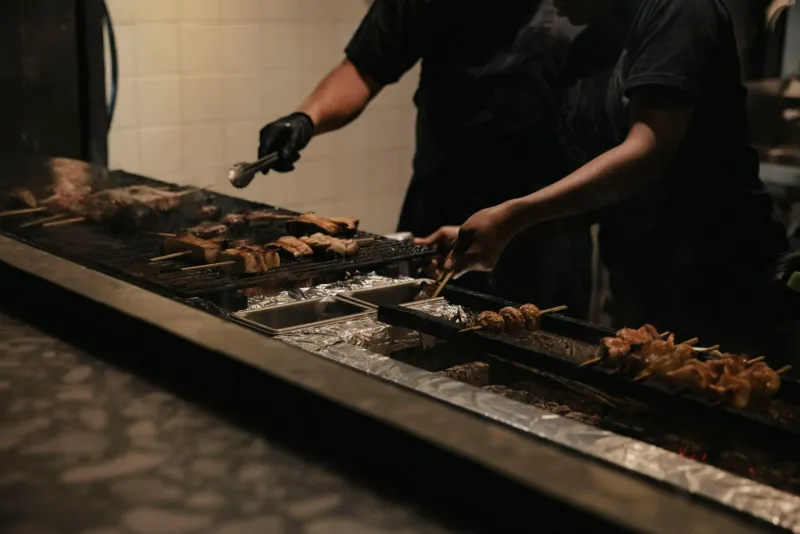
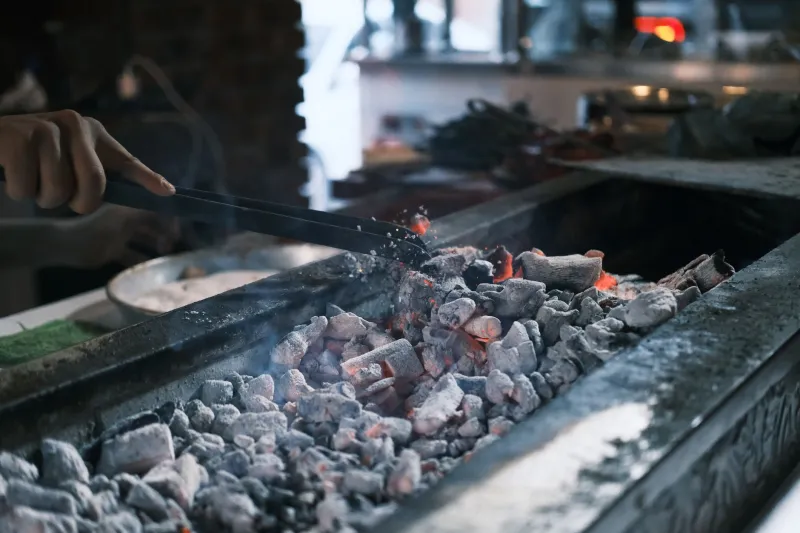
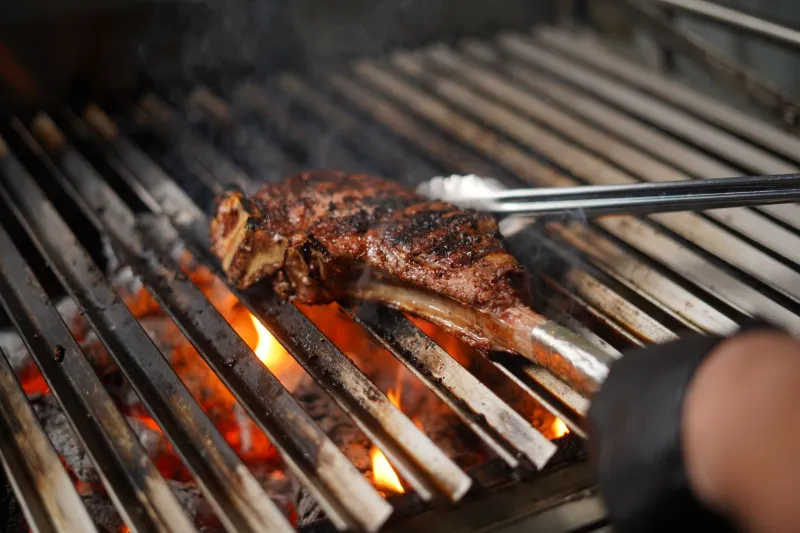
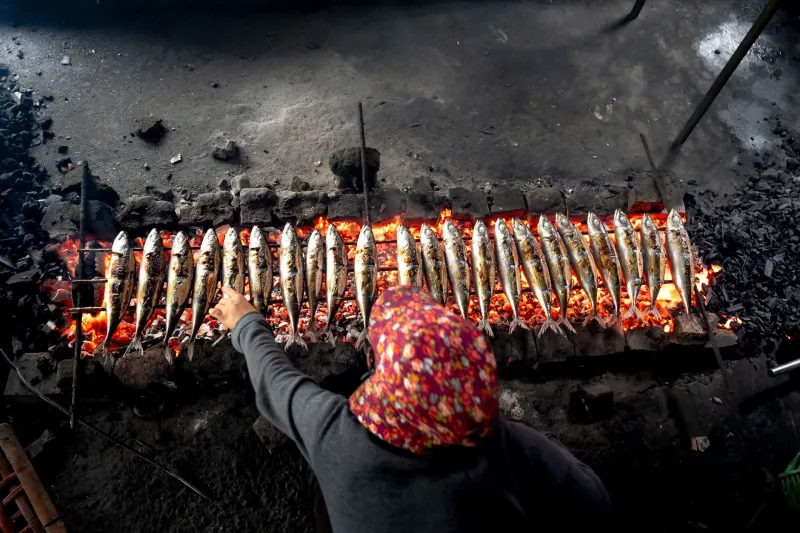
There is a particular kind of audacity required to open a fine dining restaurant in America today and declare, without apology, that every dish — from the first amuse-bouche to the final petits fours — will be shaped by a single, ancient heat source. No induction burners humming beneath copper sauciers. No gas flames coaxed to a precise simmer. No combi ovens cycling through calibrated humidity programs. Only charcoal. Only fire. Only the patient, demanding art of reading heat through instinct and experience.
This is not a marketing conceit. For a small but growing cohort of American chefs, the charcoal-only kitchen is a sincere philosophical commitment — one that has quietly begun to challenge the assumptions that have governed fine dining's ingredient hierarchy for decades.
The Hierarchy That Charcoal Disrupts
Traditional fine dining has long operated on an unspoken tiered logic: certain ingredients are elevated, others are merely supporting. The seared foie gras, the butter-poached lobster, the precisely tempered chocolate ganache — these are the dishes that announce a kitchen's ambitions. And crucially, they are dishes that have historically demanded the kind of surgical temperature control that only gas or electric equipment can reliably provide.
Charcoal, by contrast, has occupied a lower rung in that hierarchy. It has been associated with the backyard, the regional smokehouse, the casual steakhouse. Even as live-fire cooking gained serious culinary credibility over the past decade, it was often positioned as a complement to a broader kitchen arsenal — a dramatic flourish rather than a foundational discipline.
What the charcoal-only movement proposes is something more radical: that the constraint itself is the point. That by removing every other option, the kitchen is forced to reimagine which ingredients deserve attention, and how.
"When you cook only over charcoal, you stop asking what technique suits the ingredient and start asking what the fire wants to give you," says Marcus Hale, executive chef of Ember & Meridian, a thirty-seat tasting menu restaurant in Asheville, North Carolina, that has operated without a gas line since its opening. "The menu doesn't come from a list of luxury products. It comes from an honest conversation with the fire."
Rethinking the Delicate and the Precise
The most common objection to charcoal-only cooking at the fine dining level concerns delicacy. How does one poach, temper, or gently warm without the granular control that modern equipment provides? The answer, it turns out, involves a level of technical sophistication that rivals anything found in a Michelin-starred kitchen.
Chefs working within this constraint have developed methods that use the geometry of the fire as precisely as any dial or digital readout. Elevated grates positioned at carefully measured distances from the coals. Ceramic vessels placed in the cooler periphery of the hearth to achieve gentle, even heat. Covered chambers built directly into custom-fabricated grills that function, in effect, as charcoal-powered convection ovens.
At Grate & Grain in Charleston, South Carolina, chef Yolanda Ferris has spent three years refining a technique for preparing delicate custards entirely over hardwood lump charcoal. "People assume custard is impossible without precise electric heat," she says. "But it isn't. It requires patience and spatial awareness. You learn to read the coal bed the way a pastry chef reads a probe thermometer. Eventually, the fire tells you what you need to know."
Ferris's charcoal-set egg custard — infused with smoked bonito and finished with a shaving of cured egg yolk — has become the dish most frequently cited in reviews of her restaurant. Its existence owes entirely to the constraint that seemed, at first, to make it impossible.
The Menu as a Map of the Fire
One of the more striking consequences of the charcoal-only philosophy is the way it reshapes menu architecture. In a conventional fine dining kitchen, the progression of courses follows an ingredient logic: lighter proteins before richer ones, delicate flavors before robust ones. The kitchen's tools are neutral conduits for that progression.
In a charcoal-only kitchen, the menu must also account for the arc of the fire itself. A coal bed that burns hot and clean at the start of service will have mellowed into a bed of low, radiant embers by the final savory course. Thoughtful chefs have begun to design menus that move in concert with that arc — deploying high-heat searing early, transitioning to slow ember-roasting mid-service, and arriving at the end of the meal with techniques suited to the fire's quieter final hours.
"Our menu is essentially a portrait of a single fire's life," explains Daniel Okonkwo, chef-owner of Ashfall in Detroit, Michigan, which opened to considerable local attention last year as the city's first exclusively charcoal-driven tasting menu restaurant. "The first course is always something that needs intense, direct heat. By the time we reach dessert, we're working with coals that are almost spent — and that gentle, residual warmth is perfect for certain preparations. The fire writes the menu as much as I do."
Innovation Born from Restriction
The culinary history of constraint-driven innovation is long and well-documented. Some of the most celebrated techniques in French cuisine emerged from the limitations of wood-fired hearths. The richness of American barbecue tradition owes everything to the particular properties of smoke and low heat. Constraint, in the kitchen as in any creative discipline, has a remarkable tendency to produce results that abundance cannot.
What the current generation of charcoal-only chefs is discovering is that their constraint is generative in ways they did not fully anticipate. Ingredients that seemed too humble for a fine dining menu — certain cuts of secondary muscle, root vegetables, dried legumes — reveal unexpected complexity when subjected to the particular alchemy of charcoal heat. Dishes that seemed to require elaborate technique are sometimes better served by the simple, direct honesty of the fire.
"I've taken things off my menu that I thought were essential," says Ferris, "and replaced them with things I would never have considered before. The fire has a democratizing effect on ingredients. It doesn't care about prestige. It cares about what it can transform."
A Shift in What Excellence Means
The charcoal-only movement is not, ultimately, a rejection of fine dining's pursuit of excellence. It is a redefinition of where that excellence resides. For the chefs committed to this approach, mastery is not demonstrated by the ability to execute a classical French sauce or to deploy a centrifuge in the name of culinary science. It is demonstrated by the ability to coax extraordinary results from a discipline that offers no shortcuts, no digital safety nets, and no room for complacency.
The fire, as these chefs will tell you, is an honest partner. It rewards attention and punishes inattention. It produces results that no other heat source can replicate — not because it is superior in every technical sense, but because it is alive in a way that no burner or element can ever be.
In a dining landscape that has grown increasingly sophisticated in its tools and increasingly complex in its techniques, there is something quietly revolutionary about the restaurant that chooses, above all else, to tend its fire well.