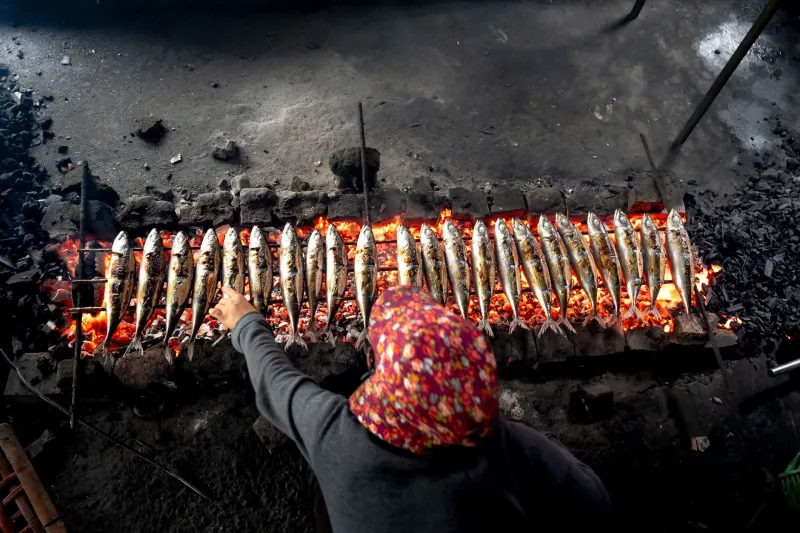
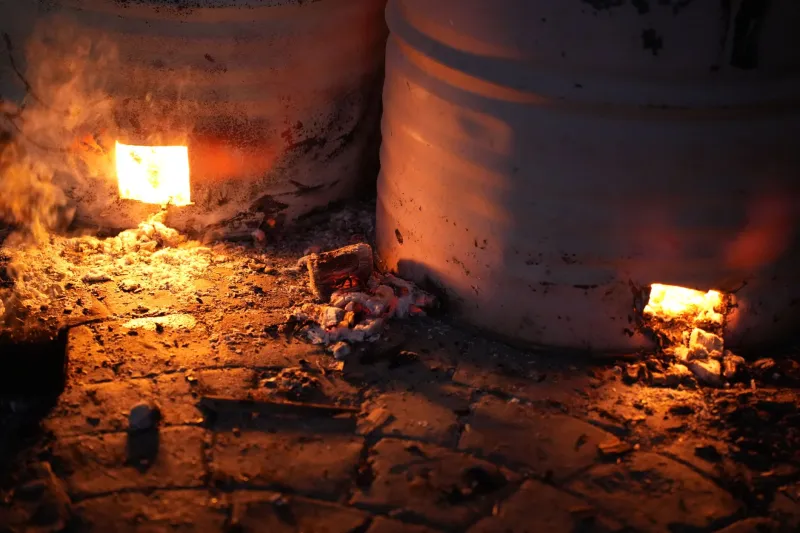
Smoke Signals: The Closely Guarded Fuel Sourcing Secrets Behind America's Most Celebrated Grills
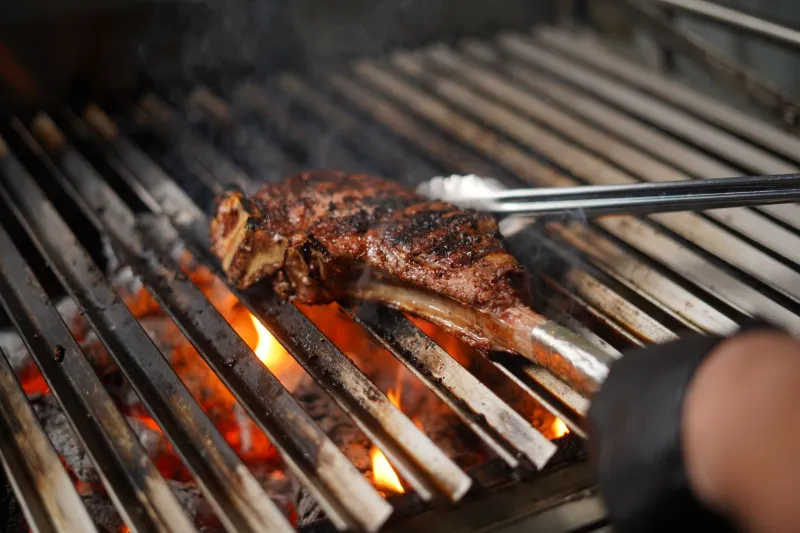
When a guest settles into their seat at one of America's premier live-fire dining establishments and draws in the first breath of that distinctive, wood-kissed warmth rising from the kitchen, they are experiencing something far more deliberate than it appears. That aroma — layered, complex, and unmistakably specific — is the product of relationships, logistics, and culinary philosophy that many of the country's most celebrated chefs guard with extraordinary discretion.
Charcoal sourcing, once an afterthought relegated to purchasing departments and bulk distributors, has evolved into something closer to a proprietary formula. And in an industry where differentiation is everything, the fuel beneath the grate has become as strategically significant as the proteins resting above it.
The Supplier Relationship as Trade Secret
Ask a top-tier pitmaster or a Michelin-recognized executive chef about their charcoal source, and you are likely to encounter a careful pause before a carefully worded non-answer. This reticence is not accidental. In conversations with several culinary directors at fine dining establishments across the country, a consistent theme emerged: the supplier relationship is treated with the same confidentiality as a signature sauce recipe.
"We don't advertise where we source because the moment we do, everyone else starts calling the same producer," explained one executive chef at a celebrated live-fire restaurant in Nashville, who requested anonymity to protect those very supplier relationships. "It took us three years to find someone whose output was consistent enough for our kitchen, and consistent enough to anchor our entire menu around."
This concern is well-founded. The artisan charcoal market in the United States remains relatively small, and the number of producers capable of delivering restaurant-grade hardwood charcoal at meaningful volume — with the kind of seasonal reliability that a serious kitchen demands — is more limited than most diners would imagine.
Hardwood Selection: Where Flavor Begins
The conversation around charcoal quality almost always begins with the wood itself. Unlike commercial briquettes, which rely on compressed sawdust, fillers, and binding agents to achieve uniformity, the lump hardwood charcoal favored by elite kitchens derives its character entirely from the species of tree from which it was made.
Post oak, long the backbone of Central Texas barbecue tradition, burns long and hot with a subtle, almost nutty sweetness. White oak, abundant across the Appalachian range, delivers a cleaner, more neutral combustion that allows the protein's own character to emerge. Mesquite, native to the American Southwest, burns at intense temperatures and imparts a bold, slightly resinous flavor that demands experienced hands at the grill. Each species creates a fundamentally different culinary environment, and the chefs who understand this treat wood selection as the first step in flavor development — not an afterthought.
"You wouldn't use the same salt on every dish," observed one consulting chef who has helped open live-fire concepts in New York and Los Angeles. "Why would you use the same fuel on every protein? The wood is the beginning of the flavor story."
The Consistency Challenge Across Seasons
Perhaps the most underappreciated complexity in restaurant charcoal sourcing is the challenge of maintaining consistency as seasons shift. Hardwood moisture content varies with rainfall and harvest timing. Kiln operations fluctuate based on energy costs and demand. A charcoal batch produced in October may behave meaningfully differently than one produced in March from the same producer using nominally identical wood.
For a restaurant whose entire brand identity is built around a specific flavor profile, these variations are not minor inconveniences — they are existential threats to the consistency that guests expect.
Sophisticated operations manage this through several strategies. Some maintain significant inventory reserves, purchasing in large enough quantities during peak quality windows to buffer against seasonal variability. Others work with multiple regional suppliers simultaneously, blending outputs to achieve a stable composite profile. A smaller number have gone further still, investing in proprietary kiln operations or entering into exclusive supply agreements that give them meaningful influence over production methods.
"We essentially co-developed our charcoal with our supplier," said one chef-owner at a nationally recognized restaurant in Charleston, South Carolina, speaking in general terms to avoid identifying the producer. "We told them what burn temperature we needed, what ash output was acceptable, how much smoke volatility we could tolerate. They adjusted their process. That's a relationship you don't give away."
Regional Identity as Culinary Signature
Beyond the practical dimensions of heat and combustion, charcoal sourcing has taken on a philosophical dimension for some of the country's most thoughtful live-fire practitioners. Just as a winemaker speaks of terroir — the way geography and soil express themselves in the glass — a growing cohort of chefs speaks of the regional identity embedded in locally sourced hardwood charcoal.
A restaurant in the Ozarks burning hickory from the surrounding hills is not merely making a logistical choice. It is making a statement about place, about rootedness, about the integrity of a culinary identity that extends from the soil beneath the trees to the plate before the guest. This philosophy has real commercial resonance in an era when diners increasingly seek authentic, localized experiences that cannot be easily replicated elsewhere.
Several restaurants have begun incorporating their sourcing narrative — in broad strokes, at least — into their dining room storytelling, referencing regional hardwood origins on menus or through server dialogue without disclosing the specific producer relationships that make those choices possible.
The Supplier's Perspective
On the production side, artisan charcoal makers speak of the restaurant relationships that have defined their growth with a mixture of pride and pragmatism. For small-batch producers, a single long-term restaurant account can represent a meaningful portion of revenue, creating mutual dependency that both parties have reason to protect.
"When a chef calls me at the beginning of the season and says they need the same product they had last year, that's the highest compliment," said one hardwood charcoal producer operating out of the mid-Atlantic region, who likewise declined to identify specific restaurant clients. "It means I did something right. And it means they're going to do everything they can to make sure nobody else finds me."
This dynamic has created a quiet, informal ecosystem of exclusive or semi-exclusive supply arrangements operating largely outside public view — a charcoal underground, of sorts, that mirrors the private-label wine and specialty produce sourcing strategies long practiced by the fine dining world.
The Competitive Frontier
As live-fire cooking continues its ascent through the upper registers of American fine dining, the strategic importance of fuel sourcing will only intensify. Chefs who have invested years in developing a particular smoke profile — and the supplier relationships that sustain it — possess something genuinely difficult to replicate. That difficulty is, of course, precisely the point.
For the guest, the mystery is part of the experience. The fire that greets each dish carries within it a story of regional forests, careful craft, and culinary intention that most will never fully know. And for the chefs who tend those fires, that inscrutability is not a failure of transparency. It is, by design, the most carefully tended ingredient on the menu.